

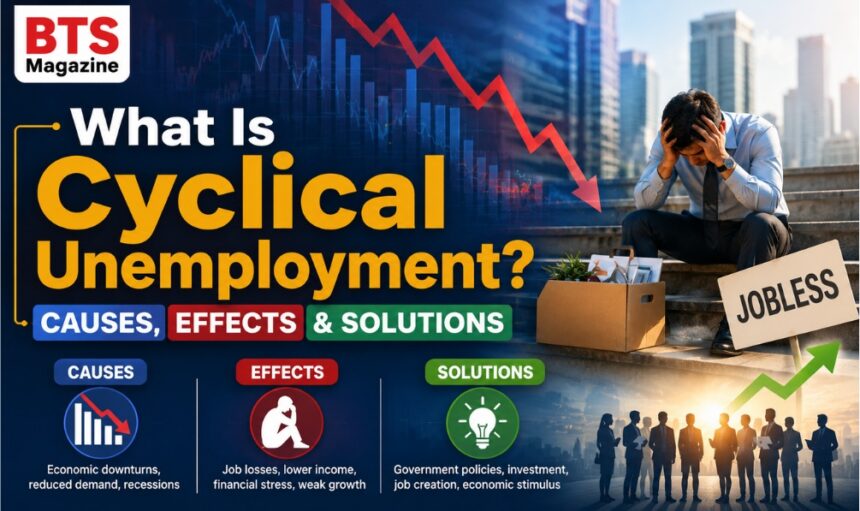
Imagine you work at a car factory. Business is booming, so the company hires more people. Then a recession hits. People stop buying cars, so the factory cuts jobs. That job loss is a classic example of cyclical unemployment.
This type of unemployment rises and falls with the health of the economy. When times are good, it shrinks. When times are bad, it grows. In this guide, you’ll learn what cyclical unemployment is, why it matters, its causes and effects, and simple ways to fight it.
What Is Cyclical Unemployment?
Cyclical unemployment is job loss caused by ups and downs in the economy. It happens when demand for goods and services drops during a recession or slowdown. Businesses earn less, so they cut jobs. When the economy recovers and demand rises again, these lost jobs usually come back.
You can learn more about the wider picture of joblessness on the Wikipedia page for unemployment.
What Causes Cyclical Unemployment?
The main causes are tied to the business cycle. Common triggers include:
- Falling consumer demand – people buy less, so businesses need fewer workers.
- Economic recessions – slowdowns force companies to reduce staff.
- Drops in business investment – firms stop expanding and stop hiring.
- Financial crises – banking or market shocks freeze spending.
- Global downturns – trouble in one country can spread to others.
Why Is Cyclical Unemployment Important?
Cyclical unemployment matters because it shows how healthy an economy is. Rising numbers often signal a recession, while falling numbers point to recovery. Governments, businesses, and workers watch it closely to make smart decisions about spending, hiring, and saving.
Understanding this economic downturn indicator helps you prepare for tough times. It also guides leaders when they design policies to protect jobs and boost growth.
Key Features and Effects
Cyclical unemployment has a few clear traits that set it apart from other types of joblessness.
Main features:
- It is temporary and linked to the business cycle.
- It affects many industries at once, not just one.
- It rises in recessions and falls in booms.
- It usually reverses when the economy improves.
Common effects on society:
- Lower income for families and less spending power.
- Reduced tax revenue for governments.
- More stress and health issues for jobless workers.
- Slower economic growth overall.
- Skill loss when people stay out of work too long.
These effects can feed each other. Less spending leads to more layoffs, which leads to even less spending. Breaking this cycle is key.
Step-by-Step Guide: How to Respond to Cyclical Unemployment
Everyone has a role to play. Here’s how governments, businesses, and workers can act.
For Governments
- Cut interest rates to make borrowing cheaper and boost spending.
- Increase public spending on roads, schools, and projects to create jobs.
- Offer stimulus payments to help people spend again.
- Support small businesses with grants or tax breaks.
- Expand job training programs to keep skills sharp.
For Businesses
- Plan cash reserves during good times to survive slow periods.
- Retrain staff instead of firing them right away.
- Offer reduced hours as an alternative to layoffs.
- Explore new markets to keep demand steady.
For Workers
- Build an emergency fund to cover several months of costs.
- Learn new skills to stay flexible and in demand.
- Network with people in your field.
- Stay open to jobs in growing industries.
Common Mistakes to Avoid
When fighting cyclical unemployment, people and leaders often slip up. Watch out for these errors:
- Waiting too long to act – early moves work best.
- Cutting government spending during a downturn – this can make things worse.
- Ignoring worker retraining – skills fade fast when unused.
- Panic layoffs – businesses lose skilled staff they later need.
- Relying on one income source – this leaves families exposed.
- Confusing it with other types – cyclical unemployment differs from structural or frictional unemployment.
Expert Tips / Pro Tips
Here are some smart moves to stay ahead of economic swings.
- Track the business cycle. Follow news on growth, spending, and interest rates.
- Diversify your income. A side gig can protect you during layoffs.
- Keep learning. In-demand skills lower your risk of long-term joblessness.
- Save during booms. Good times don’t last forever, so build a buffer.
- For businesses: Focus on flexible staffing models that adjust with demand.
- For policymakers: Combine short-term stimulus with long-term training plans.
Pro tip: The fastest way to reduce cyclical unemployment is to boost demand. When people and governments spend more, businesses hire again.
FAQs
1. What is cyclical unemployment in simple words?
It is job loss that happens because of a weak economy. During recessions, demand falls and companies cut jobs. When the economy recovers, those jobs often return.
2. What is a real example of cyclical unemployment?
During the 2008 financial crisis, millions lost jobs as spending dropped. As the economy recovered, many of those jobs came back. That rise and fall is cyclical unemployment.
3. How is cyclical unemployment different from structural unemployment?
Cyclical unemployment is temporary and tied to the business cycle. Structural unemployment is long-term and caused by changes in skills, technology, or industries.
4. How can cyclical unemployment be reduced?
It can be reduced by boosting demand. Governments cut interest rates, increase spending, and offer stimulus. Businesses avoid layoffs, and workers build skills and savings.
5. Is cyclical unemployment permanent?
No. It is usually temporary. Once the economy grows again, demand rises and lost jobs tend to return.
6. Who is most affected by cyclical unemployment?
Workers in industries tied to spending, like manufacturing, construction, and retail, are hit hardest during downturns.
7. What causes cyclical unemployment to rise?
It rises when consumer demand falls, businesses invest less, or a recession hits the economy.
Conclusion
Cyclical unemployment is a natural part of the ups and downs in any economy. It grows during recessions and shrinks when growth returns. While it can hurt families and slow progress, it is usually temporary and can be managed.
The key is to act early. Governments can boost demand, businesses can plan ahead, and workers can save and learn new skills. Together, these steps soften the blow and speed up recovery.
Want to protect yourself from economic swings? Start building your emergency fund and learning a new skill today. Small steps now can keep you steady when the next downturn comes.
Read also: Mathematics in action solution: Complete Guide with Answers, Examples and Step-by-Step Explanations