
Ever ordered a custom pizza with your exact toppings, made fresh just for you? That simple idea sits at the heart of a business term you may have seen: Mto. If you’ve spotted it on an invoice, a product page, or a supply chain report and felt confused, you’re not alone.
- What is Mto?
- Why is Mto Important?
- Mto matters because it cuts waste, lowers storage costs, and gives customers exactly what they want. Businesses only make what’s sold, so they avoid unsold stock. Shoppers get personalized products. This makes Made-to-Order a smart, flexible choice for many modern companies.
- Key Features / Benefits
- How Mto Works: Step-by-Step Guide
- Common Mistakes to Avoid
- Expert Tips / Pro Tips
- FAQs
- What does Mto stand for?
- Is Mto the same as Made-to-Stock?
- What industries use the Mto model?
- Does Mto take longer than buying in-store?
- Is Made-to-Order more expensive?
- Can small businesses use the Mto approach?
- Conclusion
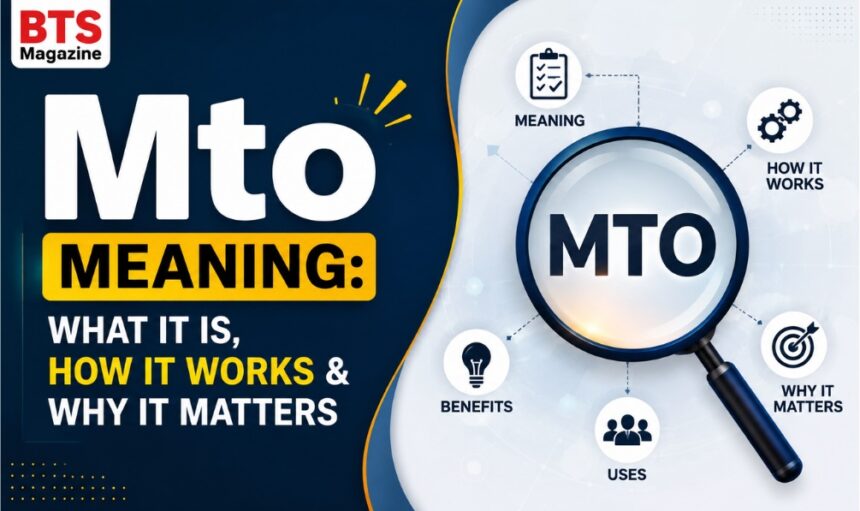
In this guide, you’ll learn what Mto means, how it works, and why it matters for businesses and shoppers alike. We’ll keep things simple, share real examples, and help you use this knowledge with confidence.
What is Mto?
Mto stands for Made-to-Order, a business model where a product is built only after a customer places an order. Instead of sitting on a shelf, the item is created based on the buyer’s exact needs. This reduces waste and allows for customized, personal products.
The Mto abbreviation is most common in business, manufacturing, and supply chain settings. But keep in mind that Mto meaning can shift depending on the field.
In other contexts, “Mto” might refer to something entirely different, like a name, a place, or a technical code. Always check the situation. Still, when people talk about business or shopping, what Mto means is almost always Made-to-Order.
Think of a tailor sewing a suit to fit your body, or a furniture maker building a table to your chosen size. That’s Made-to-Order in action.
Why is Mto Important?
Mto matters because it cuts waste, lowers storage costs, and gives customers exactly what they want. Businesses only make what’s sold, so they avoid unsold stock. Shoppers get personalized products. This makes Made-to-Order a smart, flexible choice for many modern companies.
Understanding why Mto matters helps you see the bigger picture. Traditional stores often guess how much to produce, and guessing wrong leads to waste.
With Made-to-Order, that guessing game shrinks. Companies build only what customers actually request. This is better for budgets and often better for the planet, too.
For shoppers, the appeal is clear. You get a product shaped around your taste, not a one-size-fits-all item.
Key Features / Benefits
Made-to-Order comes with several standout perks. Here’s what makes it valuable:
- Less waste: Nothing is built until it’s needed, so unsold inventory drops.
- Lower storage costs: Fewer items sit in warehouses.
- Personalization: Customers choose colors, sizes, or features.
- Better cash flow: Payment often comes before production starts.
- Higher perceived value: Custom products feel special and premium.
The main trade-off is time. Since items are built after ordering, delivery takes longer than grabbing something off a shelf.
How Mto Works: Step-by-Step Guide
How to use the Mto model: A customer places an order first. The business then sources materials, builds the product to those exact specs, and ships it. Nothing is made ahead of time, so each item matches the buyer’s request. This keeps waste low and personalization high.
Here’s how Mto works in a simple flow:
- Customer places an order. They pick options like size, color, or features.
- Order is confirmed. The business reviews details and often collects payment.
- Materials are gathered. Only the supplies needed for that order are sourced.
- Production begins. The item is built to the exact specifications.
- Quality check happens. The finished product is inspected.
- Delivery is made. The completed item ships to the customer.
Mto in manufacturing
A factory might build heavy machinery only when a client signs a contract. This avoids costly unsold equipment sitting idle.
Mto in retail
An online shop may sell custom sneakers. You pick the design, and the shoes are made just for you before shipping.
Mto for customized products
Think engraved jewelry, tailored clothing, or personalized mugs. Each item is created after the order lands. You can explore the broader concept on the Made-to-order Wikipedia page.
Common Mistakes to Avoid
Even a smart model like Made-to-Order can go wrong. Watch out for these slip-ups:
- Promising unrealistic delivery times. Custom work takes longer, so be honest.
- Poor communication. Keep customers updated on progress.
- No clear specs. Vague orders lead to mistakes and returns.
- Ignoring supplier reliability. Late materials delay everything.
- Skipping quality checks. One flawed custom item can hurt trust fast.
The biggest mistake is overpromising speed. Set clear expectations from the start, and you’ll keep customers happy.
Expert Tips / Pro Tips
Want to make Made-to-Order work smoothly? Try these practical tips:
- Set clear timelines. Tell customers exactly when to expect their order.
- Use order-tracking tools. Real-time updates build trust and reduce worry.
- Partner with reliable suppliers. Fast, steady materials keep production on schedule.
- Offer smart customization limits. Too many choices can overwhelm buyers.
- Automate where possible. Software can handle order details and reduce errors.
Pro tip: Start small. Test the Mto model on one product line before rolling it out across your whole catalog.
FAQs
What does Mto stand for?
Mto most often stands for Made-to-Order, a model where products are built only after a customer orders them. In other fields, the meaning may differ, so always check the context.
Is Mto the same as Made-to-Stock?
No. Made-to-Stock means products are built in advance and stored. Made-to-Order means items are created only after a purchase. The two models are opposites.
What industries use the Mto model?
Manufacturing, furniture, fashion, jewelry, and custom electronics often use Made-to-Order. Any business offering personalized or built-to-spec products can benefit from it.
Does Mto take longer than buying in-store?
Yes. Since items are made after you order, delivery takes more time than buying ready-made products off a shelf. The trade-off is a more personalized result.
Is Made-to-Order more expensive?
Often, yes. Custom work and made-just-for-you production can cost more. But many buyers feel the personalization and quality are worth the extra price.
Can small businesses use the Mto approach?
Absolutely. Small shops often thrive with Made-to-Order because it reduces upfront costs and unsold stock. It’s a flexible way to grow without heavy inventory risk.
Conclusion
Mto stands for Made-to-Order, a model where products are built only after a customer places an order. It cuts waste, lowers storage costs, and delivers personalized products people love.
Now that you know what Mto means and how Mto works, you can spot it in business, retail, and custom product settings with ease. If you run a business, consider testing this model on one product line. If you’re a shopper, look for Made-to-Order options when you want something truly your own.
Ready to explore Made-to-Order for yourself? Start with one small custom order and see the difference firsthand.
Read also: Musol Solvent vs Other Solvents: Key Differences Explained