

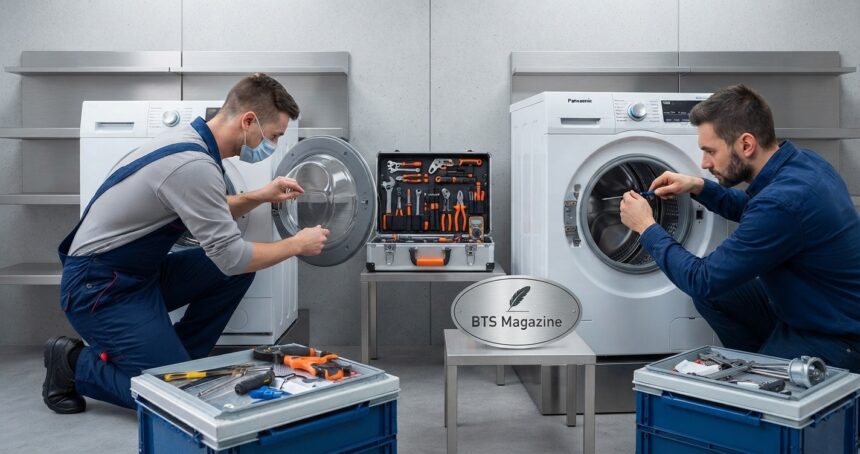
A washing machine can make laundry much easier—until it suddenly stops spinning, refuses to drain, leaks water, or makes a strange noise. The good news is that many common washing machine problems have simple causes that you can check before calling a professional.
- What Is Washing Machine Repair?
- Why Is Washing Machine Repair Important?
- Key Benefits of Proper Washing Machine Repair
- 10 Common Washing Machine Problems and Easy Fixes
- 1. Washing Machine Won’t Turn On
- 2. Washing Machine Is Not Spinning
- 3. Washing Machine Won’t Drain
- 4. Washing Machine Is Leaking Water
- 5. Washing Machine Makes Loud Noises
- 6. Washing Machine Vibrates or Moves
- 7. Washing Machine Is Not Filling With Water
- 8. Washing Machine Uses Too Much Water
- 9. Clothes Come Out Too Wet
- 10. Washing Machine Has a Bad Smell
- Step-by-Step Washing Machine Repair Guide
- Step 1: Identify the Symptom
- Step 2: Disconnect Power
- Step 3: Check Simple Causes
- Step 4: Check for Error Codes
- Step 5: Test the Machine
- Step 6: Know When to Stop
- Common Mistakes to Avoid
- Expert Tips for Washing Machine Maintenance
- FAQs About Washing Machine Repair
- 1. Can I repair a washing machine myself?
- 2. Why is my washing machine not spinning?
- 3. Why won’t my washing machine drain?
- 4. How much does washing machine repair cost?
- 5. Should I repair or replace my washing machine?
- 6. How can I prevent washing machine problems?
- 7. When should I call a professional?
- Conclusion
This washing machine repair guide explains 10 common faults, their likely causes, and practical fixes. Whether you have a front-load or top-load machine, these troubleshooting steps can help you understand what is wrong and when professional repair is the safer choice.
What Is Washing Machine Repair?
Washing machine repair means diagnosing and fixing problems that prevent a washer from filling, washing, draining, spinning, or operating correctly. Some repairs involve simple tasks such as cleaning a filter or adjusting a hose, while others require replacement parts or a qualified technician.
Before starting any repair, switch off the washing machine and unplug it from the electrical outlet. If water or electricity is involved, safety should always come first.
Why Is Washing Machine Repair Important?
Ignoring a small washing machine problem can turn it into a much bigger and more expensive issue. A minor leak, for example, may eventually damage flooring or nearby cabinets.
Timely washing machine repair can help you:
- Prevent further damage
- Reduce water and electricity waste
- Keep clothes washing properly
- Avoid unnecessary replacement costs
- Extend the life of the appliance
- Identify serious problems early
If your washer repeatedly develops the same fault, professional diagnosis is usually better than repeatedly trying temporary fixes.
Key Benefits of Proper Washing Machine Repair
A properly repaired washer should provide more than just a quick solution. Good maintenance and repair can improve the machine’s overall performance.
Better Washing Performance
A machine that fills, agitates, drains, and spins correctly can clean clothes more effectively.
Lower Operating Costs
Problems such as blocked filters, poor drainage, or incorrect water levels can make the machine work harder than necessary.
Longer Appliance Life
Replacing a worn component before it damages other parts can help extend the useful life of your washing machine.
Fewer Unexpected Breakdowns
Regular cleaning and basic inspections can catch many issues before they become major failures.
For general background on how washing machines work, you can also explore Wikipedia’s washing machine overview.
10 Common Washing Machine Problems and Easy Fixes
1. Washing Machine Won’t Turn On
If the washer is completely dead, first check the simplest possibilities.
Possible causes:
- Power cable is loose
- Circuit breaker has tripped
- Outlet is not working
- Door or lid is not properly closed
- Internal electrical fault
Easy fix: Test the outlet with another appliance and make sure the washer’s plug is firmly connected. Check the breaker if necessary.
If the outlet works but the washing machine remains completely unresponsive, an electrical component may need professional testing.
2. Washing Machine Is Not Spinning
A washer that fills and washes but does not spin is a common complaint.
Possible causes include:
- Unbalanced load
- Too many clothes
- Blocked drainage system
- Faulty lid or door switch
- Worn drive components
Easy fix: Stop the cycle and redistribute the clothes evenly. Avoid filling the drum beyond the manufacturer’s recommended capacity.
If the machine still refuses to spin after balancing the load, further diagnosis may be required.
3. Washing Machine Won’t Drain
Standing water inside the drum usually means the drainage system needs attention.
Possible causes:
- Blocked drain filter
- Kinked drain hose
- Clogged pump
- Foreign object in the drainage system
- Failed drain pump
Easy fix: Unplug the machine and inspect the drain hose for bends or blockages. If your model has an accessible drain filter, clean it according to the manufacturer’s instructions.
Never reach into a pump or moving mechanism while the appliance is connected to power.
4. Washing Machine Is Leaking Water
Water underneath a washer should not be ignored.
Check the following areas:
- Water inlet hoses
- Drain hose
- Door seal
- Detergent drawer
- Pump filter area
Easy fix: Turn off the water supply and unplug the appliance. Look for loose hose connections, cracks, or damaged seals.
A damaged door gasket or internal component may require replacement.
5. Washing Machine Makes Loud Noises
A washer can make some noise during operation, especially during high-speed spinning. However, sudden banging, grinding, or knocking deserves attention.
Try this first: Stop the cycle and check whether the load is uneven. Also make sure the machine is sitting level on the floor.
Small objects such as coins, buttons, or zippers can also create unusual sounds.
If you hear persistent grinding or a loud mechanical rumble, stop using the machine until the cause is identified.
6. Washing Machine Vibrates or Moves
A washer that walks across the floor during spinning may not be sitting correctly.
Common causes:
- Uneven floor
- Incorrectly adjusted feet
- Unbalanced laundry
- Overloaded drum
- Installation problem
Adjust the leveling feet and use a spirit level if available. The machine should sit firmly on the floor without rocking.
7. Washing Machine Is Not Filling With Water
If the washer starts but does not fill, check the water supply first.
Make sure:
- The water valve is open
- Inlet hoses are not kinked
- The inlet connection is secure
- The inlet screen is not clogged
If water pressure is normal but the machine still does not fill, a water inlet valve or related control component may be faulty.
8. Washing Machine Uses Too Much Water
Modern washers are designed to use water efficiently. An unusually high water level may indicate a problem.
Potential causes include:
- Faulty water-level sensor
- Incorrect cycle selection
- Control-system problem
- Excessive detergent or unsuitable detergent
Check the selected wash program and detergent instructions first. If the machine consistently fills beyond its normal level, professional inspection may be needed.
9. Clothes Come Out Too Wet
If clothes are soaking wet after a completed cycle, the machine may not have reached its proper spin speed.
Start by checking for:
- Unbalanced laundry
- Blocked drain
- Overloaded drum
- Incorrect cycle
- Drainage problem
Run a suitable spin cycle after redistributing the clothes. If water remains inside the drum, focus on the drainage system before investigating the spin mechanism.
10. Washing Machine Has a Bad Smell
A musty smell often develops when moisture, detergent residue, and dirt remain inside the machine.
To reduce odors:
- Leave the door or lid open after washing
- Clean the detergent drawer
- Clean the door seal
- Empty and clean the drain filter when appropriate
- Run the manufacturer’s recommended cleaning cycle
Avoid mixing different cleaning chemicals. Always follow the appliance manufacturer’s cleaning instructions.
Step-by-Step Washing Machine Repair Guide
When troubleshooting a washer, avoid randomly replacing parts. Use a simple process.
Step 1: Identify the Symptom
Determine exactly what the machine is doing—or not doing.
For example, “not working” is less useful than “fills with water but does not spin.”
Step 2: Disconnect Power
Unplug the washing machine before inspecting accessible components. If there is standing water, take extra care around electrical connections.
Step 3: Check Simple Causes
Inspect the power supply, hoses, load balance, door or lid, and drainage system.
Step 4: Check for Error Codes
If the machine displays an error code, look it up in the manufacturer’s manual for the exact model.
Step 5: Test the Machine
After making a safe adjustment, run the appropriate short cycle and observe the result.
Step 6: Know When to Stop
Do not continue DIY repair if the problem involves exposed wiring, burning smells, damaged electrical components, a leaking internal part, or complicated mechanical components.
Common Mistakes to Avoid
Many DIY washing machine repairs go wrong because people rush the diagnosis.
Avoid these mistakes:
- Replacing parts without testing the cause
- Working on a plugged-in appliance
- Overloading the drum
- Ignoring unusual sounds
- Using too much detergent
- Forcing blocked components
- Ignoring repeated error codes
- Using incompatible replacement parts
A quick fix is useful only when it actually solves the underlying problem.
Expert Tips for Washing Machine Maintenance
A few simple habits can prevent many washing machine problems.
- Clean accessible filters regularly.
- Check hoses for cracks and bulges.
- Do not overload the drum.
- Use the correct detergent for your washer.
- Keep the appliance level.
- Leave the door or lid open after a cycle when appropriate.
- Remove small objects from pockets before washing.
- Follow the manufacturer’s maintenance schedule.
Pro tip: If a washer suddenly starts behaving differently, stop and identify the change rather than repeatedly running new cycles. Early diagnosis can prevent a small problem from becoming a major repair.
FAQs About Washing Machine Repair
1. Can I repair a washing machine myself?
Yes, some basic problems can be handled safely at home, such as an unbalanced load, blocked accessible filter, kinked hose, or leveling issue. Electrical and complex mechanical repairs are better handled by a qualified professional.
2. Why is my washing machine not spinning?
An unbalanced load, overloaded drum, drainage problem, or faulty component can prevent spinning. Redistribute the clothes and check drainage first.
3. Why won’t my washing machine drain?
A clogged filter, blocked or kinked drain hose, foreign object, or faulty drain pump can stop water from leaving the machine.
4. How much does washing machine repair cost?
Repair costs vary widely depending on the appliance model, faulty component, labor rates, and location. A simple hose or filter issue is usually much less expensive than replacing a motor, pump, control board, or drum-related component.
5. Should I repair or replace my washing machine?
Consider the machine’s age, repair cost, condition, energy efficiency, and availability of replacement parts. If major repairs repeatedly occur, replacement may make more financial sense.
6. How can I prevent washing machine problems?
Regular cleaning, correct loading, proper detergent use, hose inspections, and following the manufacturer’s maintenance instructions can reduce common washer problems.
7. When should I call a professional?
Call a qualified technician when the machine has electrical faults, burning smells, internal leaks, repeated error codes, serious mechanical noises, or a problem that remains after basic troubleshooting.
Conclusion
Washing machine repair does not always require an expensive service call. Many common problems, including drainage issues, unbalanced loads, leaks from accessible connections, vibration, and unpleasant odors, can be traced to simple causes.
Start with safe and basic checks, follow your appliance manual, and avoid replacing parts without knowing what has failed. For electrical, internal, or complicated mechanical faults, professional repair is the safer option.
A little regular maintenance can also go a long way. Keeping filters, hoses, seals, and the drum clean can help your washing machine perform reliably for years.
Read also: What Is the CapCut Logo? Meaning, History & Design