

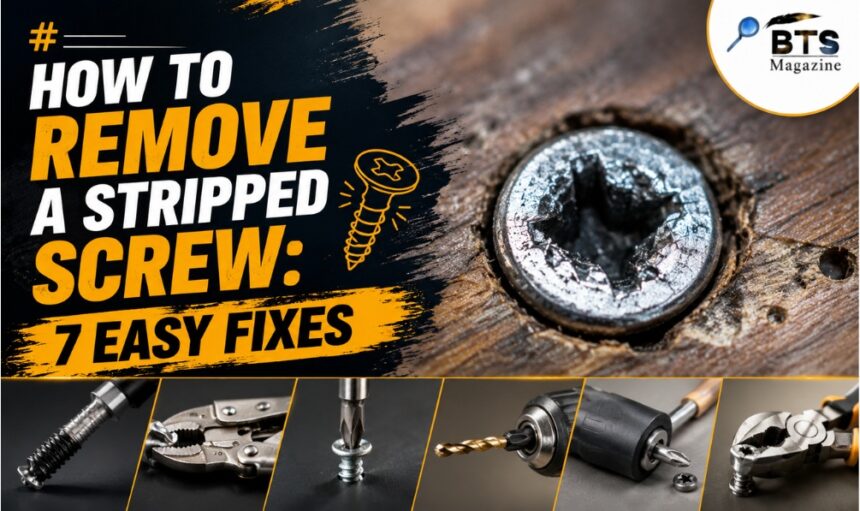
Removing a screw sounds simple until the screwdriver starts spinning without gripping the head. A stripped screw can turn a quick repair into a frustrating job, especially when the screw is stuck in wood, metal, furniture, or an electronic device.
- What Is a Stripped Screw?
- Why Is Removing a Stripped Screw Important?
- Key Benefits of Using the Right Removal Method
- How to Remove a Stripped Screw: 7 Easy Fixes
- 1. Use a Different-Sized Screwdriver
- 2. Try a Rubber Band for Extra Grip
- 3. Use Pliers if the Screw Head Is Exposed
- 4. Create a New Slot in the Screw
- 5. Try a Screw Extractor
- 6. Use a Drill Carefully
- 7. Apply Penetrating Oil to a Stuck Screw
- Common Mistakes to Avoid
- Using the Wrong Screwdriver
- Pushing at an Angle
- Applying Too Much Force
- Continuing After the Tool Starts Slipping
- Drilling Without Protecting the Surface
- Expert Tips for Removing Stripped Screws
- FAQs About Stripped Screw Removal
- What is the easiest way to remove a stripped screw?
- How do you remove a stripped screw without a drill?
- Can a rubber band really remove a stripped screw?
- What tool is best for a badly stripped screw?
- Why does a screwdriver keep slipping?
- Can I drill out a stripped screw?
- How can I prevent screws from stripping?
- Conclusion
The good news is that you usually do not need expensive equipment. With the right technique, you can often remove a stripped screw using common household tools.
In this guide, you will learn how to remove a stripped screw using seven practical methods, along with mistakes to avoid, expert tips, and answers to common questions.
What Is a Stripped Screw?
A stripped screw is a screw whose head has been damaged so that the screwdriver can no longer grip its grooves properly. This commonly happens when the wrong screwdriver is used, too much pressure is applied at an angle, or the screw is tightened too hard.
Once the grooves become worn, the screwdriver may slip and spin instead of turning the screw.
Understanding basic screw design and fasteners can also help you choose the right removal method. For general background, see the relevant Wikipedia page on screws.
Why Is Removing a Stripped Screw Important?
A damaged screw can prevent you from completing a repair or safely removing a part. Continuing to force the screwdriver can make the damage worse.
Learning how to remove a stripped screw is useful because it can:
- Save time and frustration
- Prevent additional damage to the surrounding material
- Help you finish DIY repairs
- Reduce the need to replace otherwise useful parts
- Let you reuse tools and hardware when possible
The best method depends on how badly the screw is stripped and where it is located.
Key Benefits of Using the Right Removal Method
Choosing the right technique can make a big difference. A simple method may work for a lightly damaged screw, while a heavily stripped screw might require pliers or an extractor.
The main benefits include:
- Less damage: You can protect the material around the screw.
- Better grip: Some methods create extra friction between the tool and screw.
- Faster repairs: The right technique prevents repeated failed attempts.
- Lower cost: Many methods use tools you may already own.
- Safer work: Controlled pressure reduces slipping and accidental injuries.
How to Remove a Stripped Screw: 7 Easy Fixes
Here are seven methods to try, starting with the simplest options.
1. Use a Different-Sized Screwdriver
Before trying anything complicated, check whether you are using the correct screwdriver.
Sometimes a screw is only slightly damaged, and a screwdriver with a better-fitting tip can still grip it.
Try a screwdriver that is slightly larger if the original tip is slipping. Press firmly straight down while slowly turning counterclockwise.
Avoid using excessive force. If the screwdriver continues to slip, move to another method rather than making the damage worse.
2. Try a Rubber Band for Extra Grip
A rubber band can help when the screw head is only mildly stripped.
Place a wide rubber band over the screw head. Push the screwdriver firmly into the rubber band and screw head at the same time.
The rubber material can fill some of the worn spaces and create additional friction.
Best for: Phillips-head screws with light to moderate stripping.
This method is inexpensive and takes only a few seconds to try.
3. Use Pliers if the Screw Head Is Exposed
If part of the screw head sticks above the surface, locking pliers or ordinary gripping pliers may give you enough control to remove it.
Grip the outside edge of the screw head tightly. Turn the pliers slowly counterclockwise.
Keep the pliers straight and maintain a firm grip. If the screw is very tight, avoid suddenly jerking the tool because this can damage the surrounding surface.
Best for: Screws with enough exposed head to grip from the sides.
4. Create a New Slot in the Screw
For a badly damaged screw head, creating a new groove can give a flat-head screwdriver something to grip.
A rotary tool or small metal-cutting tool can be used to carefully cut a straight slot across the screw head.
Then place a flat-head screwdriver into the new slot and turn slowly.
Important: Wear appropriate eye protection and work carefully when cutting metal. Sparks and small metal particles can be hazardous.
This method is particularly useful when the screw is accessible and the surrounding material can tolerate careful cutting.
5. Try a Screw Extractor
A screw extractor is one of the most useful tools for badly stripped screws.
Extractors are designed to bite into damaged screw heads or drilled holes and turn the fastener out.
A typical process is:
- Select the correct extractor size.
- Create a small pilot hole if required.
- Insert the extractor.
- Apply steady pressure.
- Turn it counterclockwise according to the tool’s instructions.
- Continue slowly until the screw comes out.
Do not rush this step. Extractors can break if too much force is applied, and a broken extractor can be difficult to remove.
6. Use a Drill Carefully
A drill can help when other methods fail.
One approach is to use a drill bit to create a small hole in the center of the damaged screw head. An extractor can then be inserted into that hole.
For some screws, drilling through the screw head can also separate the head from the shaft, allowing you to remove the attached component. The remaining screw shaft may then be removed with pliers.
Use a slow speed and keep the drill aligned with the screw. Protect the surrounding material from accidental drilling.
7. Apply Penetrating Oil to a Stuck Screw
Sometimes the screw head is not the only problem. Rust or corrosion may cause the screw itself to become stuck.
In this situation, a suitable penetrating lubricant may help loosen the connection.
Apply a small amount around the screw and allow it time to work according to the product instructions. Then try the screwdriver, pliers, or extractor again.
This method works best when corrosion or rust is contributing to the problem.
Common Mistakes to Avoid
Knowing what not to do is just as important as knowing how to remove a stripped screw.
Using the Wrong Screwdriver
A screwdriver that is too small or the wrong type can quickly damage the screw head.
Always choose the correct tip and size whenever possible.
Pushing at an Angle
Keep the screwdriver aligned with the screw. Angled pressure makes slipping more likely.
Applying Too Much Force
More pressure does not always mean more grip. Excessive force can further destroy the screw head.
Continuing After the Tool Starts Slipping
If the screwdriver repeatedly slips, stop and change your approach.
Every failed attempt can make the screw harder to remove.
Drilling Without Protecting the Surface
A drill can damage wood, plastic, painted surfaces, or nearby components. Use controlled speed and protect the area around the screw.
Expert Tips for Removing Stripped Screws
A few simple habits can make screw removal much easier.
- Start with the least aggressive method.
- Keep your screwdriver straight and centered.
- Use firm downward pressure before turning.
- Clean dirt and debris from the screw head.
- Try penetrating lubricant when rust is involved.
- Use an extractor when the head is severely damaged.
- Wear eye protection when drilling or cutting.
- Avoid rushing when working with power tools.
If the screw is located inside an electronic device, appliance, vehicle, or structural component, take extra care. Some repairs may require specialized tools or professional assistance.
FAQs About Stripped Screw Removal
What is the easiest way to remove a stripped screw?
The easiest method is usually to try a properly sized screwdriver with firm downward pressure. If that fails, place a rubber band over the screw head to improve grip. For exposed screw heads, pliers can also work well.
How do you remove a stripped screw without a drill?
You can try a larger screwdriver, rubber band, locking pliers, or a flat-head screwdriver after creating a new slot. Penetrating lubricant can also help if the screw is stuck because of rust.
Can a rubber band really remove a stripped screw?
Yes, a rubber band can sometimes help with a lightly stripped screw. It creates additional friction between the screwdriver and damaged screw head. However, it may not work when the head is severely stripped.
What tool is best for a badly stripped screw?
A screw extractor is often the best option for a severely damaged screw. Extractor kits are designed specifically for removing damaged fasteners and come in different sizes.
Why does a screwdriver keep slipping?
The screwdriver may be the wrong size or type, the screw head may be damaged, or you may not be applying enough downward pressure. Rust and dirt can also make removal more difficult.
Can I drill out a stripped screw?
Yes. Carefully drilling into the screw can help create a hole for an extractor. In some situations, drilling through the screw head can also allow the attached part to be removed before extracting the remaining shaft.
How can I prevent screws from stripping?
Use the correct screwdriver size, keep the tool aligned with the screw, apply steady pressure, and avoid excessive tightening. Replace damaged screws instead of repeatedly trying to drive them.
Conclusion
A stripped screw does not always mean your repair is over. In many cases, you can remove it with a simple screwdriver, rubber band, pliers, lubricant, or screw extractor.
Start with the least aggressive method and work your way up only when necessary. Avoid excessive force, keep your tools aligned, and use proper safety equipment when drilling or cutting.
Now that you know how to remove a stripped screw, you can approach the problem with a clear plan instead of repeatedly fighting with the damaged fastener.
Read also: Who Is the CEO of Solauto.tech? Revealed