

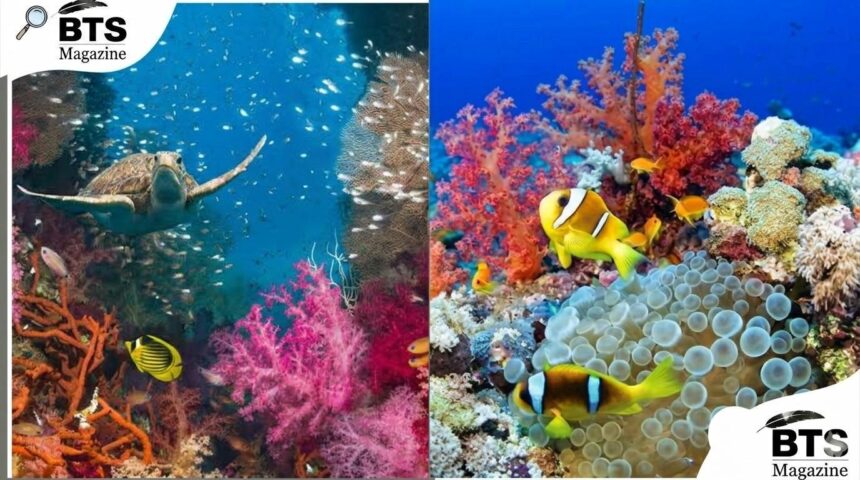
Coral reefs are some of the most beautiful and busy places in the entire ocean. They look like underwater gardens, full of color, movement, and life. But here’s the thing — they’re not plants or rocks. A coral reef is actually built by tiny living animals working together over thousands of years.
In this guide, I’ll walk you through what a coral reef really is, how it forms, why it matters, and what’s putting it at risk. Let’s keep it simple and clear.
What Is a Coral Reef?
A coral reef is an underwater ecosystem made mostly of reef-building corals. These reefs grow in warm, shallow ocean water and create solid structures you can actually see and touch.
To be honest, most people think coral is just decoration. It’s not. Each reef is alive and growing, slowly, year after year.
How a Coral Reef Forms
It starts with coral polyps. These are tiny animals, often no bigger than a pencil eraser. They live in large groups called colonies.
Each polyp pulls calcium from the seawater and builds a hard outer shell around itself. When millions of these shells stack up over time, you get the rocky base of a coral reef.
What’s interesting is how slow this process is. Some reefs took tens of thousands of years to grow into what we see today.
The Role of Coral Polyps
Coral polyps do most of the heavy lifting. They build, they feed, and they keep the whole structure going.
Inside many polyps live tiny algae called zooxanthellae. These algae make food using sunlight and share it with the coral. In return, the coral gives them a safe home. It’s teamwork at its finest.
Why Reefs Need Sunlight
Because those algae need light to make food, coral reefs usually grow in clear, shallow tropical waters. Deep, dark water doesn’t give them enough sunlight to thrive.
That’s why you’ll mostly find healthy reefs near the surface, close to coastlines and islands.
Where Coral Reefs Are Found
Coral reefs grow in warm tropical and subtropical waters around the world. Think of places near the equator with steady, warm temperatures.
You’ll find them in the Pacific Ocean, the Indian Ocean, the Caribbean, and the Red Sea. The water needs to be clean and warm for them to do well.
The Great Barrier Reef
The Great Barrier Reef off the coast of Australia is the biggest coral reef system on Earth. It stretches for over 2,300 kilometers and includes thousands of separate reefs.
It’s so large that you can actually see it from space. Pretty wild when you think about it.
Why Coral Reefs Matter
Coral reefs might cover only a small slice of the ocean floor, but they punch way above their weight. They support a huge amount of life.
Here’s the thing — these reefs are sometimes called the “rainforests of the sea.” That nickname isn’t an exaggeration.
Coral Reefs and Marine Biodiversity
Coral reefs are packed with marine biodiversity. Fish, crabs, sea turtles, sharks, sponges, and countless other creatures depend on them.
A single reef can be home to thousands of different species. They feed there, hide there, and raise their young there. Without reefs, much of that life would struggle to survive.
Reefs as an Ocean Ecosystem
A coral reef is more than just coral. It’s a full ocean ecosystem where everything is connected.
Small fish eat algae. Bigger fish eat smaller fish. Predators keep the balance. Remove one piece, and the whole system feels it.
How Coral Reefs Help People
Coral reefs don’t just help sea creatures. They help us too, often in ways people don’t notice.
Reefs act like natural walls. They break up strong waves before they hit the shore, protecting coastal towns from storms and erosion.
Food and Jobs
Millions of people rely on coral reefs for food. The fish that live around reefs feed entire communities.
Reefs also support tourism. Diving, snorkeling, and reef trips bring in money and create jobs in many coastal regions.
Medicine and Research
What’s interesting is that scientists study reef creatures to develop new medicines. Some treatments for pain, cancer, and other illnesses come from compounds found in reef life.
So a healthy coral reef can quietly benefit people who’ve never even seen one.
Threats Facing Coral Reefs
Now for the harder part. Coral reefs are in trouble, and the problems are mostly caused by humans.
These underwater ecosystems are sensitive. Small changes in their environment can cause big damage fast.
Coral Bleaching
Coral bleaching is one of the biggest threats. When ocean water gets too warm, coral polyps get stressed and push out the algae living inside them.
Without those algae, the coral loses its color and turns white. That’s the “bleaching” part. The coral isn’t dead yet, but it’s starving and weak.
If the warm water sticks around too long, bleached coral often dies. Sadly, large bleaching events have hit reefs around the world, including the Great Barrier Reef.
Pollution and Runoff
Pollution is another serious issue. Chemicals, plastic, and dirty water from land flow into the ocean and harm reefs.
Fertilizer runoff causes too much algae to grow, which can smother coral. Plastic waste injures reef animals and spreads disease.
Overfishing
Overfishing throws the whole reef out of balance. When too many fish are caught, the natural food chain breaks down.
Some fish keep algae under control. Without them, algae can take over and crowd out the coral.
Ocean Acidification
As the ocean absorbs more carbon dioxide, the water slowly becomes more acidic. This makes it harder for reef-building corals to build their hard shells.
Weaker shells mean slower growth and more fragile reefs. Over time, that’s a real problem.
Can We Save Coral Reefs?
Yes, but it takes effort. The good news is that people around the world are working hard to protect these special places.
Many countries have set up marine protected areas where fishing and tourism are limited. This gives reefs space to recover.
Coral Restoration Projects
Some scientists are growing coral in nurseries and planting it back onto damaged reefs. It’s slow work, but it’s already showing promise in some spots.
These projects can’t fix everything, but they give struggling reefs a fighting chance.
What You Can Do
You don’t have to be a scientist to help. Small choices add up.
Cut down on plastic, choose reef-safe sunscreen, and support clean ocean efforts. If you ever visit a reef, look but don’t touch. Coral is fragile, and even a small bump can hurt it.
Fun Facts About Coral Reefs
- Some coral reefs are over 50 million years old.
- A coral reef is made of both living coral and the skeletons of old coral.
- Coral can be many colors — green, red, purple, orange, and more.
- Reefs grow incredibly slowly, sometimes less than an inch a year.
These little facts really show how special and ancient these underwater ecosystems are.
Final Thoughts on Coral Reefs
A coral reef is far more than a pretty underwater view. It’s a living, breathing ocean ecosystem that supports marine biodiversity, protects coastlines, and helps people in countless ways.
But these reefs need our help. Warming water, pollution, and overfishing are pushing them to the edge. The choices we make today will shape whether future generations get to enjoy them.
If you want to learn even more about how reefs form, the species they shelter, and the threats they face, this detailed Wikipedia article on coral reefs is a great place to keep reading.
Continue reading: Nuevo León: Everything You Need to Know About This Incredible Mexican State