

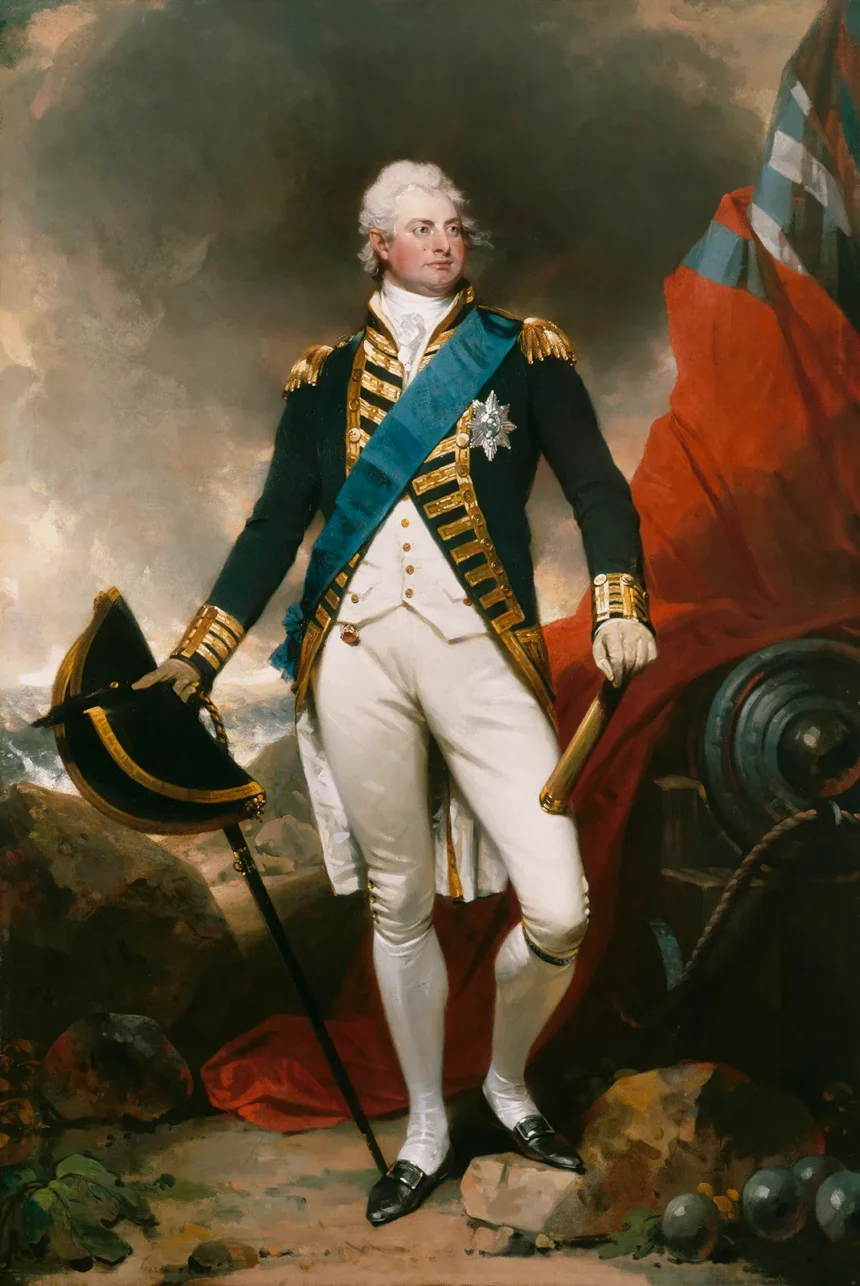
Here’s the thing about British royals — some of them loved gold, glitter, and giant ceremonies. And then there was William IV. To be honest, he was the odd one out. While people often joke that William IV rocks velvet slippers, what they really mean is that he was the relaxed, down-to-earth king who didn’t care much for royal showing off.
In this guide, we’ll cover who he was, his life at sea, his messy personal story, and the big reforms that happened during his reign. Stick around, because this one’s more interesting than most history lessons.
Who Was William IV? (Overview)
William IV was King of the United Kingdom and King of Hanover from 1830 until his death in 1837. He was the third son of George III, which means nobody really expected him to become king at all.
But life is funny. His two older brothers either died or left no legitimate heirs, so the crown landed on William when he was already 64. That made him the oldest person to take the British throne at the time.
What’s interesting is that he never tried to act fancy. People liked him because he felt approachable — more like a neighbor than a distant royal.
Quick Bio at a Glance
| Detail | Information |
|---|---|
| Full Name | William Henry |
| Born | 21 August 1765, Buckingham House, London |
| Died | 20 June 1837, Windsor Castle (aged 71) |
| Age at Death | 71 |
| Father | King George III |
| Mother | Charlotte of Mecklenburg-Strelitz |
| Spouse | Adelaide of Saxe-Meiningen (married 1818) |
| Children | 10 children with Dorothea Jordan (surname FitzClarence), including George FitzClarence, Earl of Munster |
| Reign | 26 June 1830 – 20 June 1837 |
| Nickname | The Sailor King |
| House | House of Hanover |
Early Life and Naval Career
William was born on 21 August 1765 at Buckingham House. As the third son, he wasn’t raised to be king. So at just thirteen, he joined the Royal Navy as a midshipman.
And he wasn’t a pampered prince at sea either. He did his share of the cooking. He even got arrested once after a drunken brawl in Gibraltar — though he was quickly released once people realized who he was.
He served in New York during the American War of Independence. Funny enough, George Washington once approved a plot to kidnap him, but it never happened.
He later became friends with the famous Horatio Nelson, who praised William’s skill and discipline. In 1789, he was made Duke of Clarence and St Andrews.
The Sailor King Nickname
So where did “Sailor King” come from? Simple. His years in the Royal Navy stuck with him for life.
He spent time in British North America and the Caribbean, and the sea shaped who he was. Even as king, he carried that plain, no-nonsense sailor attitude. That’s a big reason people felt he was more relatable than other 19th century British royals.
William IV Rocks Velvet Slippers — His Down-to-Earth Style
Now let’s talk about that famous phrase. When people say William IV rocks velvet slippers, they’re using it as a fun way to describe his casual, comfortable, unpretentious style.
To be clear, there isn’t solid documented proof that he literally wore velvet slippers around the palace. So I won’t pretend that’s a confirmed fact. But the image fits him perfectly.
Here’s why. William hated stiff royal ceremony. He often walked through London or Brighton alone, without guards. He felt like a man who’d rather slip into something comfy than parade around in heavy robes.
That relaxed reputation is exactly why the idea that William IV rocks velvet slippers feels so believable. The slippers are a symbol of his easygoing personality.
How His Style Differed from George IV
His older brother George IV loved luxury. He spent a fortune on clothes, art, and grand buildings. His 1821 coronation alone cost around £240,000.
William? He went the opposite way. He budgeted under £30,000 for his own coronation. When Tories threatened to boycott the cheaper event, he basically shrugged and said there’d be “greater convenience of room and less heat.”
That contrast is huge. George IV was glitter and gold. William IV rocks velvet slippers — meaning he chose comfort and simplicity over flash.
Royal Fashion in the 1830s
Royal fashion history in the 1830s was still heavy with formality. Velvet, silk, embroidery, and elaborate court dress were normal for royals.
But William didn’t enjoy any of that. He dismissed his brother’s French chefs and German band, swapping them for English ones. He even tried to give away Buckingham Palace — twice.
When you look at royal informal style through that lens, the idea that William IV rocks velvet slippers becomes a neat little summary of his whole vibe.
Personal Life — Relationships and Marriage
William’s personal life was, well, complicated. And honestly, that’s putting it mildly.
He didn’t marry young. Instead, he spent two decades living with a woman who wasn’t royal at all. That was pretty bold for a prince of his time.
His Long Relationship with Dorothea Jordan
From 1791, William lived with Dorothea Jordan, a popular Irish actress. They were together for about twenty years.
Together they had ten children, all given the surname FitzClarence. He seemed genuinely happy in this family life, once calling her “a very good creature, very domestic and careful of her children.”
Sadly, the relationship ended in 1811, mostly over money troubles. Dorothea Jordan later moved to France and died there in 1816.
Marriage to Adelaide of Saxe-Meiningen
After his niece Princess Charlotte died in 1817, the royal dukes scrambled to marry and produce an heir. William joined that race.
In 1818, he married Adelaide of Saxe-Meiningen. By all accounts, it was a happy marriage that lasted until his death.
Adelaide even welcomed his many children warmly. She also helped sort out his messy finances. Sadly, the couple’s own children didn’t survive into adulthood.
William IV’s Reign and Major Reforms
William became king in 1830, and his reign was short but packed with big changes. He wasn’t a flashy ruler, but he was a hard worker.
The Duke of Wellington once said he got more done with William in ten minutes than with George IV in days. That tells you a lot about his practical, get-it-done attitude.
His time on the throne lined up with some of the most important reforms in British monarchy history.
The Reform Act 1832
The Reform Act 1832 was the big one. It changed Britain’s outdated voting system, which still had “rotten boroughs” — tiny areas with barely any voters that still elected MPs.
It wasn’t smooth. The crisis got tense, and William’s popularity dipped during the fight. But the Act eventually passed, and it shifted power toward the House of Commons.
Other major laws followed too — the Slavery Abolition Act 1833 and the Factory Act 1833, which limited child labour. Big moves for the era.
William IV’s Legacy
So what did he leave behind? Quite a lot, actually.
William was the last king of the House of Hanover. Since he had no surviving legitimate children, the throne passed to his niece, who became Queen Victoria.
He’s also remembered as a king who understood his limits. After him, no British monarch tried to remove a government against Parliament’s wishes. He quietly helped reshape what it meant to be a constitutional monarch.
Through his children with Dorothea Jordan, he even has famous descendants today, including former Prime Minister David Cameron.
Final Years and Death
In his final years, William was determined to live long enough so that Victoria would be old enough to rule without a regent. And he made it.
He died on 20 June 1837 at Windsor Castle, aged 71. He passed just weeks after Victoria turned 18. Queen Adelaide stayed by his side devotedly, barely sleeping for over ten days.
Victoria later wrote kindly about him, saying he was “always personally kind to me.”
Why William IV Still Rocks
Let’s wrap this up. William IV wasn’t the flashiest king, and he didn’t try to be. He was the Sailor King — practical, plain-spoken, and refreshingly human.
Quick recap of what makes him stand out:
- He served in the Royal Navy and earned the “Sailor King” nickname
- He had 10 children with Dorothea Jordan before marrying Adelaide of Saxe-Meiningen
- His reign brought the Reform Act 1832 and the Slavery Abolition Act 1833
- He preferred simple living over royal luxury
- He was the last Hanoverian king, succeeded by Queen Victoria
The phrase “William IV rocks velvet slippers” sticks because it captures his comfy, casual spirit so well — even if it’s more symbol than confirmed fact. If you want to dig deeper into his full story, the detailed William IV Wikipedia page is a great place to keep reading.
Continue reading: Rotini: Everything You Need to Know About This Spiral Pasta