

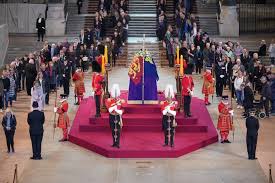
A royal funeral is never just a funeral.
- What Is a Royal Funeral?
- Why People Pay So Much Attention
- A Quick Historical Background
- How the Victorian Era Shaped the Modern Royal Funeral
- The Difference Between a State Funeral and a Ceremonial Funeral
- Who Plans a Royal Funeral?
- Key Traditions You Often See
- The Role of Religion
- Why Westminster Abbey and St George’s Chapel Matter
- Royal Funeral Processions and Public Emotion
- How Media Changed the Royal Funeral
- The Funeral of Queen Elizabeth II and Modern Expectations
- Bio/Info Table: Queen Elizabeth II
- How Royal Funerals Balance Tradition and Change
- The Symbolism Behind the Coffin and Regalia
- Why Mourning Dress Still Matters
- Public Grief vs Private Loss
- Why a Royal Funeral Still Matters Today
- What Royal Funerals Tell Us About the Monarchy
- Common Misunderstandings About a Royal Funeral
- Every royal gets the same kind of funeral
- All traditions are ancient and unchanged
- It is only about ceremony
- Final Thoughts
It is grief, history, religion, protocol, and public symbolism all wrapped into one. When people search for this topic, they usually want to understand what actually happens, why it happens that way, and why millions of people watch it so closely.
The thing is, a royal funeral can feel both deeply personal and very public at the same time. One family is mourning. But a nation is watching. Actually, that tension is a big part of what makes these ceremonies so powerful.
In this post, I’ll walk through the history, the key traditions, the modern changes, and the real reason a royal funeral still matters today.
What Is a Royal Funeral?
A royal funeral is the formal funeral ceremony held for a monarch or senior member of a royal family.
These events follow long-standing customs. Some are religious. Some are military. Some are tied to the crown, the state, and the history of the country itself.
Not every royal funeral is exactly the same, though.
The funeral of a reigning monarch is usually larger, more ceremonial, and more tightly planned than the funeral of other royal family members.
Why People Pay So Much Attention
I was thinking about this while looking at past coverage of major royal events.
Why do so many people watch?
Part of it is scale. These ceremonies are visually striking. There are uniforms, bells, processions, ancient buildings, and music that often sounds almost frozen in time.
But there is more to it than that.
A royal funeral also marks change. It closes one chapter and often signals the start of another. When a monarch dies, the line of succession moves instantly. So even in mourning, the monarchy continues.
A Quick Historical Background
Royal funerals have changed a lot over the centuries.
Early royal burials were often shaped by the customs of the time, local power, and church practice. Over time, they became more structured and symbolic. Britain, in particular, developed a strong set of ceremonial patterns around monarchy.
What’s interesting is that many traditions people think of as “ancient” were actually shaped or standardized in later periods.
The Victorian era played a huge role here.
How the Victorian Era Shaped the Modern Royal Funeral
Queen Victoria changed the tone of royal mourning in a big way.
After the death of Prince Albert in 1861, she entered a long period of mourning that deeply influenced public ideas about grief, dress, and ceremony. Black clothing, mourning customs, and long formal observances became closely linked with royal loss.
That influence stuck.
A lot of the solemn image many people associate with a royal funeral has roots in the 19th century, even if some details go back earlier.
The Difference Between a State Funeral and a Ceremonial Funeral
This is where people often get confused.
State funeral
A state funeral is usually reserved for a monarch.
It involves full state honors and often requires a very high level of national planning. In Britain, this includes major military participation, parliamentary involvement, and formal national mourning.
Ceremonial funeral
A ceremonial funeral is still grand and public, but it is not exactly the same as a state funeral.
Senior royals who are not the monarch may receive a ceremonial funeral rather than a full state funeral. The look can feel similar to the public, but the constitutional status is different.
Who Plans a Royal Funeral?
A royal funeral is not planned in a rush.
In most cases, detailed plans are prepared years in advance. That may sound strange, but it makes sense. These events involve security, transport, religion, media, military units, government coordination, and huge crowds.
Actually, precision matters here.
Even small details, like procession routes, music choices, seating, bell timing, and public access, are often mapped out early.
Key Traditions You Often See
Some traditions appear again and again in a royal funeral.
They are not random. Each one carries meaning.
The lying-in-state
This allows the public to pay respects.
The coffin is placed in a formal setting, often guarded, and members of the public can walk past in silence. This moment turns private mourning into shared national mourning.
The gun carriage
In some major royal funerals, the coffin is carried on a gun carriage.
This tradition has military roots and creates one of the most recognizable images of royal ceremonial life.
Military procession
The military often plays a visible role.
That reflects the monarch’s position as head of the armed forces, but it also adds discipline and order to the event. The slow marching pace, uniforms, and formations help create a sense of solemnity.
Bells and music
Church bells, hymns, bagpipes, and orchestral music often shape the emotional tone.
Music matters more than people sometimes realize. It helps carry the mood when words are not enough.
The Role of Religion
Most British royal funerals are Christian services linked to the Church of England.
That is because the monarch has a formal relationship with the church. So religion is not just a family choice here. It is also part of the constitutional role of the crown.
Still, modern services can reflect a wider public audience.
The language may remain traditional, but the presentation is often more accessible than in earlier times.
Why Westminster Abbey and St George’s Chapel Matter
Location says a lot.
Westminster Abbey
Westminster Abbey is tied to coronations, national services, and major royal events. Holding part of a funeral there places the ceremony in the middle of British national history.
St George’s Chapel
St George’s Chapel at Windsor has long been a key royal site for weddings, funerals, and burials.
It feels more intimate than Westminster Abbey, even though it is still grand. That balance matters. A royal event may be national in meaning, but it is still a family farewell.
Royal Funeral Processions and Public Emotion
There is something striking about a silent procession.
Crowds line the streets. Some people bow. Some cry. Many just stand still.
The thing is, processions create a shared pause. In daily life, people are busy. During a royal funeral, the pace changes. The public is invited to stop, watch, and reflect.
That is one reason these images stay in people’s minds for years.
How Media Changed the Royal Funeral
Media changed everything.
A century ago, people mostly read about royal funerals in newspapers or saw still images later. Then came radio. Then television. Now it is live-streams, clips, commentary, social media reactions, and nonstop global coverage.
That changes the feeling of the event.
A royal funeral is no longer experienced only by those present on the streets or in the chapel. It becomes a global moment, watched in real time by millions.
The Funeral of Queen Elizabeth II and Modern Expectations
It’s hard to talk about the modern royal funeral without mentioning Queen Elizabeth II.
Her funeral in 2022 showed how old traditions and modern media now work together. There were ancient rituals, military displays, religious ceremony, and strict protocol. At the same time, the entire event was shaped by modern broadcasting and instant worldwide access.
People saw both continuity and change.
Some watched for history. Some watched out of respect. Some were simply curious. But it reminded everyone that monarchy still carries a ceremonial power that few institutions can match.
Bio/Info Table: Queen Elizabeth II
Since modern interest in this topic often centers on her funeral, here’s a quick factual table.
| Detail | Information |
|---|---|
| Full Name | Elizabeth Alexandra Mary Windsor |
| Born | April 21, 1926 |
| Died | September 8, 2022 |
| Age at Death | 96 |
| Parents | King George VI and Queen Elizabeth The Queen Mother |
| Spouse | Prince Philip, Duke of Edinburgh |
| Marriage Date | November 20, 1947 |
| Children | Charles III, Anne, Andrew, Edward |
| Reign Began | February 6, 1952 |
| Reign Length | 70 years |
How Royal Funerals Balance Tradition and Change
This balance is tricky.
On one side, people expect continuity. They want the symbolism, the old language, the uniforms, and the rituals that connect the present to the past.
On the other side, the royal family lives in a modern media world. Public expectations are different now. People want dignity, yes, but also clarity, access, and sometimes a more human touch.
That is why each royal funeral tends to preserve the core traditions while adjusting smaller details.
The Symbolism Behind the Coffin and Regalia
The items placed on or around the coffin often carry huge meaning.
You may see the royal standard, the imperial state crown, an orb, or a scepter in some cases. These are not decorative extras. They represent sovereignty, duty, and the office held by the deceased monarch.
Actually, symbolism is doing a lot of work in these ceremonies.
Even viewers who do not know every detail can still sense that these objects stand for something larger than one life.
Why Mourning Dress Still Matters
Clothing tells a story too.
Black mourning dress remains important because it signals respect, restraint, and seriousness. In royal settings, dress codes also support visual unity. That may sound minor, but in a heavily ceremonial event, appearance helps hold the message together.
It says: this moment matters.
And everyone present knows it.
Public Grief vs Private Loss
This might be the hardest part of any royal funeral.
The family is grieving a parent, spouse, sibling, or grandparent. But they are doing it in front of cameras and crowds. That cannot be easy.
What’s interesting is how royal funerals often ask family members to perform duty while feeling loss. Walking behind a coffin is personal. Doing it as part of a global event is something else entirely.
That mix of emotion and restraint is part of why these moments feel so moving.
Why a Royal Funeral Still Matters Today
Some people ask whether these ceremonies still have meaning in modern society.
I think they do, even for people who are not deeply interested in monarchy.
A royal funeral offers a rare kind of public ritual. It creates a moment where history, identity, grief, and national memory all meet. In a fragmented media age, that is unusual.
It also reminds people that institutions survive individuals.
That can feel comforting to some people and complicated to others. But either way, it matters.
What Royal Funerals Tell Us About the Monarchy
If you want to understand the monarchy, look at how it handles death.
You see the hierarchy. The symbolism. The church links. The military links. The effort to appear steady during a moment of loss.
You also see adaptation.
Modern royal funerals are still formal, but they are designed for a public that expects openness and real emotion. That tension between old and new may be the defining feature of the monarchy itself.
Common Misunderstandings About a Royal Funeral
Every royal gets the same kind of funeral
Not true.
The scale and type depend on status, role, and family decisions.
All traditions are ancient and unchanged
Also not true.
Many traditions have evolved over time, even if they look timeless.
It is only about ceremony
No. Ceremony is a big part of it, but grief, faith, politics, and national identity all matter too.
Final Thoughts
A royal funeral is about more than pageantry.
It is a carefully shaped public goodbye. It honors a person, protects tradition, and sends a message about continuity at the exact moment things are changing.
The thing is, that mix still speaks to people.
Even now. Even in a fast-moving world. Maybe especially now.
Continue reading: Monarch Butterfly: Facts, Migration, Life Cycle, and Habitat