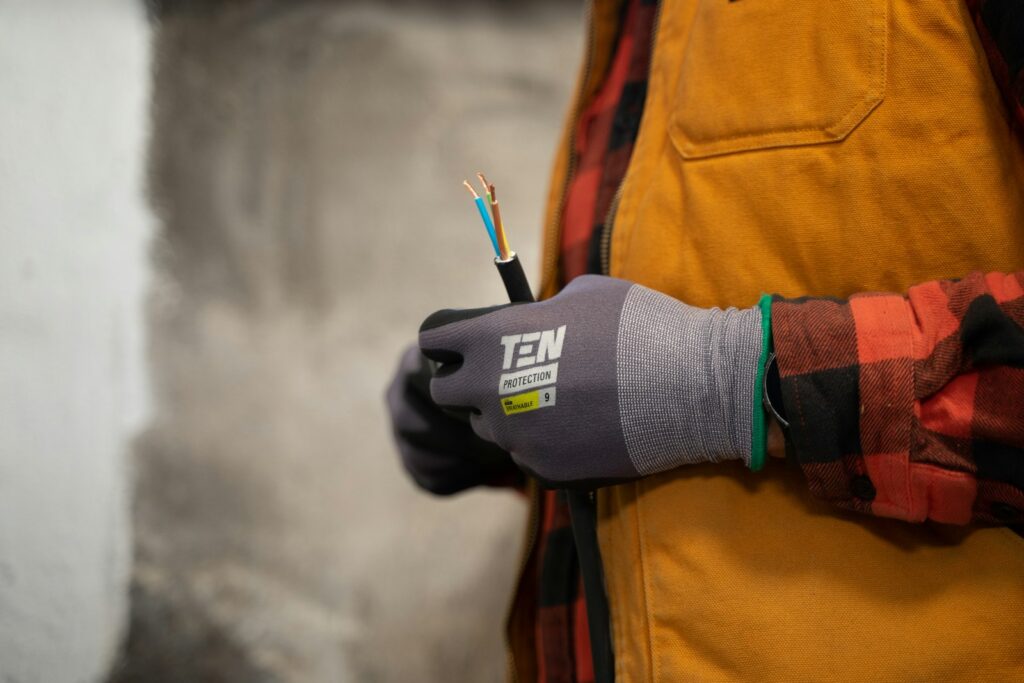
A practical guide to becoming an electrician: requirements, training routes, apprenticeships, licensing, pay, job outlook, specialisations and tips to get started.
Quick answer: To become an electrician in the US, finish high school or get a GED, consider a pre-apprenticeship or trade school course, and join a 4 to 5 year apprenticeship that combines paid on-the-job training (about 2,000 hours a year) with classroom instruction. Most states then require you to pass a licensing exam based on the National Electrical Code. Electricians earned a median of $63,190 in May 2025, and jobs are projected to grow 9% from 2025 to 2035.
Electricians keep homes, businesses and factories running safely. With growth in electric vehicles, solar power, data centres and building upgrades, skilled electricians are needed more than ever.
One big advantage of this trade is that you can earn while you learn through a paid apprenticeship, without large student debt. This guide explains the step-by-step path, licensing, pay, specialisations and how to land your first apprenticeship.
Licensing rules vary by state and country, so check with your local licensing board before you start.
Whether you are leaving school or changing careers later in life, the steps below show exactly how to get started.
In this article
- What does an electrician do?
- What are the basic requirements?
- How to become an electrician step by step
- Apprenticeship routes compared
- How much do electricians earn?
- Electrician licence levels explained
- What types of electricians are there?
- What skills do electricians need?
- How do you become an electrician in the UK?
- What tools and costs should you expect?
- Is electrician a good career in 2026?
- Frequently Asked Questions
- Final Thoughts
What does an electrician do?
- Install wiring and systems: in new homes, offices and factories
- Read blueprints: plan circuits and layouts
- Troubleshoot and repair: find faults and fix them safely
- Inspect and test: make sure systems meet electrical codes
- Upgrade systems: panels, lighting, EV chargers and solar connections
- Maintain equipment: motors, controls and industrial machinery
What are the basic requirements?
| Requirement | Typical standard |
|---|---|
| Age | Usually 18 or older for apprenticeships |
| Education | High school diploma or GED, with at least one year of algebra |
| Aptitude test | Many programmes test maths and reading |
| Physical ability | Able to lift, climb and work in tight spaces |
| Driver’s licence | Often required to travel between job sites |
| Drug screening | Common for apprentices and contractors |
How to become an electrician step by step
1. Finish high school or get a GED
Maths, physics and shop classes are helpful.
2. Consider a pre-apprenticeship or trade school
Short courses teach basic electrical theory, safety and tools and can help you get accepted into an apprenticeship.
3. Apply for an apprenticeship
Apprenticeships are offered by unions, contractor associations and individual employers. They usually last 4 to 5 years, with about 2,000 hours of paid on-the-job training each year plus technical classes.
4. Register as an apprentice
Many states require apprentice registration before you can work under a licensed electrician.
5. Complete training and hours
Learn wiring, codes, safety, blueprints and specialised systems.
6. Pass the licensing exam
Most states require a test covering the National Electrical Code and local codes to become a journeyman electrician.
7. Advance to master electrician
With more experience and another exam, you can become a master electrician and run your own business.
Apprenticeship routes compared
| Route | Run by | Key points |
|---|---|---|
| Union apprenticeship | IBEW and NECA training centres | Structured training, strong benefits, competitive entry |
| Merit shop / non-union | IEC and ABC chapters | Flexible schedules, employer-sponsored |
| Direct employer apprenticeship | Individual contractors | Varies by company |
| Military training | Armed forces | Experience may shorten civilian apprenticeship |
The Electrical Training Alliance lists union apprenticeship programmes across the US.
How much do electricians earn?
According to the US Bureau of Labor Statistics, electricians earned a median of $63,190 per year ($30.38 per hour) in May 2025. There were about 821,000 jobs, and employment is projected to grow 9% from 2025 to 2035, much faster than average, with about 72,700 openings each year.
- Apprentices: earn a percentage of journeyman pay that rises each year
- Journeymen: full pay once licensed
- Master electricians and contractors: can earn more, especially running their own business
- Overtime and specialisms: industrial, solar and data centre work often pay more
Electrician licence levels explained
Apprentice
Learning under supervision, registered with the state where required.
Journeyman electrician
Licensed to work independently on most jobs after completing training hours and passing an exam.
Master electrician
Usually requires several more years of experience and another exam. Masters can pull permits, supervise others and often run their own contracting business.
Electrical contractor
A business licence that may require a master electrician on staff, insurance and bonding.
What types of electricians are there?
| Type | Main work |
|---|---|
| Residential | Homes, rewiring, panels, lighting |
| Commercial | Offices, shops, schools |
| Industrial | Factories, motors, controls, high voltage |
| Maintenance | Keeping systems running in large facilities |
| Solar and renewable | Solar panels, batteries, EV chargers |
| Lineworker | Power lines and utility networks (a related trade) |
Ali finishes high school and joins a union apprenticeship. He earns from day one, completes five years of training, passes his journeyman exam at 23 and now specialises in commercial lighting and controls with no student debt.
What skills do electricians need?
- Safety awareness: electricity is dangerous; safety comes first
- Maths: measurements, load calculations and conduit bending
- Problem-solving: tracing faults logically
- Colour vision: identifying wire colours
- Physical fitness: climbing, kneeling and lifting
- Communication: working with customers, builders and inspectors
- Code knowledge: the National Electrical Code (NFPA 70) and local rules
How do you become an electrician in the UK?
In the UK, most electricians complete a Level 3 electrical apprenticeship or a Level 3 NVQ diploma, pass the AM2 assessment and apply for an ECS card to work on site. Domestic installers can also join competent person schemes to self-certify their work. Check the GOV.UK apprenticeship pages for current programmes.
Sophie, a 30-year-old warehouse supervisor, completes a 10-week pre-apprenticeship course, then joins a contractor’s apprenticeship. Her maturity and reliability help her progress quickly, and she plans to specialise in EV charger installation.
What tools and costs should you expect?
Apprentices usually buy basic hand tools such as screwdrivers, pliers, wire strippers, a tape measure and a multimeter, while employers provide larger power tools and equipment. Add the cost of work boots, safety glasses and textbooks for classes. Many unions and employers cover tuition, which keeps the overall cost of training low compared with a college degree.
Is electrician a good career in 2026?
- Strong demand: growth in EVs, solar, batteries and data centres
- Earn while you learn: paid apprenticeships instead of debt
- Business opportunities: master electricians can start their own firms
- Hard to automate: skilled hands-on work stays in demand
Connected buildings and smart devices also create new work; see our guide to internet of things examples and our explainer on what data centers are.
Practise basic maths and learn common electrical terms before applying. Many apprenticeship entrance tests include algebra and reading comprehension.
Search for apprenticeship programmes within 50 miles of you, note their application dates and entry tests, and sign up for the next information session.
Frequently Asked Questions
How long does it take to become an electrician?
Usually 4 to 5 years through an apprenticeship, followed by a licensing exam in most states.
Do you need a degree to become an electrician?
No. A high school diploma or GED plus an apprenticeship is the standard route.
How much do electricians make?
The BLS reports a median of $63,190 per year in May 2025.
Do electricians need a licence?
Most US states require electricians to pass an exam and hold a licence.
Can you get paid while training to be an electrician?
Yes. Apprentices earn wages that increase as they gain skills.
Is being an electrician dangerous?
It carries risks such as shocks and falls, but strict safety training and practices reduce them.
Final Thoughts
- Most electricians train through a paid 4 to 5 year apprenticeship.
- A licensing exam based on electrical codes is usually required.
- The median pay was $63,190 in 2025, with 9% projected job growth.
- Specialising in solar, EV charging or industrial systems can boost earnings.