

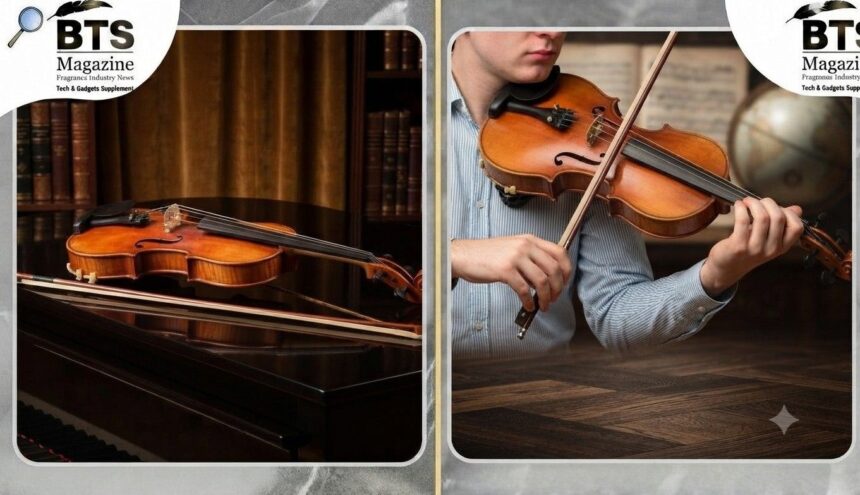
housle is the Czech word for violin, one of the world’s best-known string instruments. If you have come across this word while reading about Czech music, learning the Czech language, or exploring European culture, you may have wondered exactly what it means. In simple terms, housle refers to the violin, a four-stringed bowed instrument that has played an important role in classical music, folk traditions, orchestras, and modern music.
- What Does housle Mean?
- How Is housle Pronounced?
- The Violin Behind the Word
- A Short History of the Violin
- What Makes a Violin Special?
- Main Parts of a Violin
- How Do You Play the Violin?
- Why Is the Violin Difficult to Learn?
- The Role of Violin in Classical Music
- Housle and Czech Musical Culture
- Famous Violin Makers
- Violin in Folk and Traditional Music
- Violin in Modern Music
- How Much Does a Violin Cost?
- How to Care for a Violin
- Is housle the Same as Violin?
- Why People Search for housle
- Common Mistakes About the Word
- Why the Violin Still Matters Today
- Frequently Asked Questions About housle
- 1. What does housle mean in English?
- 2. Is housle a type of musical instrument?
- 3. How many strings does a violin have?
- 4. Is housle used in Czech music?
- 5. Is the violin difficult to learn?
- Final Thoughts on housle
The word may look unfamiliar to English speakers, but the instrument itself is anything but unfamiliar. The violin has a long history and is recognized for its expressive sound, wide musical range, and distinctive wooden body. It can sound soft and emotional in one moment and bright, energetic, or powerful in another.
Here’s the thing: understanding the word housle is also a small introduction to Czech language and musical culture. The term is used for the violin, while related Czech words describe violin playing and violin makers. This makes it an interesting word for anyone curious about language, music, or Central European traditions.
What Does housle Mean?
In Czech, housle means violin. The word is a plural-only noun in Czech grammar, which is one reason it may look different from the English word “violin.”
The Czech word refers to the familiar four-stringed bowed instrument used in many types of music. A violinist holds the instrument under the chin and uses a bow to make the strings vibrate.
To be honest, the meaning is quite simple once you know the language connection. If someone says housle in a Czech musical context, they are talking about a violin.
The word is also connected with other Czech terms associated with violin playing and violin making. This reflects how deeply the instrument is connected to Czech musical vocabulary and culture.
How Is housle Pronounced?
For English speakers, the pronunciation of housle may not be immediately obvious.
The Czech pronunciation is commonly represented approximately as “HOUS-leh,” although the exact sound is best learned from a native Czech speaker or a reliable pronunciation guide.
The first part sounds somewhat like “house,” but Czech pronunciation has its own rules and should not be treated as an exact English pronunciation.
If you are learning Czech, listening to native speakers is the best way to become comfortable with the word.
The Violin Behind the Word
The instrument called housle is a member of the violin family. It is the smallest standard member of that family and is known for its high, clear sound.
A typical violin has four strings. They are tuned in perfect fifths, from the lowest G string through D and A to the highest E string.
The player creates sound by drawing a bow across the strings. The fingers of the other hand press the strings against the fingerboard to change the pitch.
Unlike a piano, the violin does not have marked keys or frets that automatically show where each note should be played. This means players have to develop a strong sense of pitch and finger placement.
That is one reason learning the violin can take considerable practice.
A Short History of the Violin
The modern violin developed in Europe during the 16th century. Early forms appeared in northern Italy, and the instrument gradually became more standardized over time.
Italian makers such as Andrea Amati, Antonio Stradivari, and Giuseppe Guarneri became famous for their craftsmanship. Their instruments are still highly respected today.
The violin eventually became an important part of European classical music. Composers wrote concertos, sonatas, chamber music, and orchestral works that featured the instrument.
Over the centuries, the violin also moved beyond the concert hall. It became important in folk music, traditional dance music, jazz, country music, bluegrass, and many modern styles.
So, when you see the word housle, you are looking at the Czech name for an instrument with a history that stretches across centuries and cultures.
What Makes a Violin Special?
The violin is special because it can produce an enormous variety of sounds.
A skilled player can create a warm and gentle tone, a sharp and dramatic sound, or a fast and energetic musical line. Much depends on the player’s technique, the bow, the strings, and the instrument itself.
The violin is also highly expressive. A player can change the character of a note through bow pressure, speed, vibrato, and articulation.
What’s interesting is that two violins can look quite similar but sound noticeably different. The type and quality of wood, construction, age, setup, strings, and craftsmanship can all affect the instrument’s sound.
Main Parts of a Violin
Understanding the basic parts of the instrument can make the meaning of housle even easier to understand.
The Body
The wooden body is the main resonating chamber. It helps amplify the vibrations produced by the strings.
The Neck
The neck connects the body to the scroll and supports the fingerboard.
The Fingerboard
The player places the fingers on the fingerboard to change the length of the vibrating string and produce different notes.
The Strings
A standard violin has four strings. Each string has a different pitch, allowing the player to cover a wide musical range.
The Bridge
The bridge supports the strings and transfers their vibrations to the body of the instrument.
The Bow
The bow is traditionally made with a wooden stick and horsehair. The player draws it across the strings to produce sound.
The Scroll and Pegs
The scroll is the decorative part near the top of the violin. The tuning pegs are used to adjust the tension of the strings and tune the instrument.
How Do You Play the Violin?
Playing the violin requires coordination between both hands and the rest of the body.
The instrument is normally supported between the shoulder and chin. One hand moves along the neck and fingerboard, while the other controls the bow.
The player needs to learn how to hold the instrument correctly, maintain good posture, control the bow, and place the fingers accurately.
Beginners often start with simple exercises and short melodies. Over time, they learn scales, rhythm, musical notation, and more advanced techniques.
The first sounds may not be perfect. That’s completely normal. Violin playing requires patience because even producing a clean note takes practice.
Why Is the Violin Difficult to Learn?
One reason the violin can be challenging is that there are no frets marking exact notes on the fingerboard.
A beginner has to learn where to place the fingers through practice and listening. Bow control is another major skill.
The player must learn how much pressure to use, how quickly to move the bow, and where to place it on the strings.
This can feel difficult at first, but regular practice makes a noticeable difference.
A good teacher can also help beginners develop healthy technique and avoid bad habits.
The Role of Violin in Classical Music
The violin has an important place in classical music.
It is commonly found in symphony orchestras and chamber ensembles. In an orchestra, violins are often divided into first and second violin sections.
The instrument is also a popular choice for solo performances. Many famous composers wrote violin concertos and other works specifically for the instrument.
The violin’s ability to play both melody and fast passages makes it extremely useful in orchestral writing.
Its sound can rise above other instruments when necessary, but it can also blend beautifully with an ensemble.
Housle and Czech Musical Culture
The connection between housle and Czech culture is worth exploring.
The Czech Republic has a rich musical tradition that includes classical composers, folk music, orchestral performance, and skilled instrument makers.
Czech music has produced internationally respected composers and performers. The violin has naturally been part of this musical landscape.
The country’s musical traditions include both formal concert music and regional folk styles. In many European cultures, string instruments have historically been important in celebrations, dances, and community gatherings.
For someone learning Czech, discovering the word housle can therefore open the door to a broader understanding of the country’s language and musical heritage.
Famous Violin Makers
Violin making is a highly specialized craft.
Some of the most famous historical violin makers came from Italy. Antonio Stradivari is perhaps the best-known name, and instruments associated with him are considered valuable and historically significant.
The quality of a violin depends on many factors. These can include the materials used, the design, craftsmanship, condition, and history of the instrument.
Not every old violin is automatically valuable, though. This is an important point for anyone interested in buying or collecting instruments.
Professional evaluation is normally needed to determine the authenticity and value of an important violin.
Violin in Folk and Traditional Music
The violin is not limited to classical concerts.
Across Europe and other parts of the world, violins have been used in traditional music for generations. Different regions developed their own playing styles, rhythms, ornaments, and performance traditions.
In folk music, the violin may be used for dancing, storytelling, celebrations, or social gatherings.
This versatility is one of the reasons the instrument remains popular. It can fit into a formal concert hall just as easily as a traditional music session.
Violin in Modern Music
The violin continues to appear in modern music.
It can be heard in film soundtracks, pop songs, rock arrangements, folk music, jazz, country, and experimental compositions.
Electric violins have also expanded the instrument’s possibilities. These instruments can be connected to amplification and effects equipment, allowing musicians to create sounds that are very different from those of a traditional acoustic violin.
This shows that the instrument represented by housle is not simply an old-fashioned classical instrument. It continues to adapt to new musical styles.
How Much Does a Violin Cost?
The price of a violin can vary dramatically.
Beginner instruments are generally much more affordable than professional or historically important instruments. The cost can depend on the materials, craftsmanship, brand, condition, age, and reputation of the maker.
A student does not necessarily need an extremely expensive instrument to begin learning.
For beginners, the quality of setup can be especially important. A properly adjusted instrument can be easier and more comfortable to play than a poorly set-up instrument at a similar price.
How to Care for a Violin
A violin needs regular care.
Players should keep the instrument in a suitable case when it is not being used. The instrument should also be protected from extreme temperatures and sudden changes in humidity when possible.
After playing, it is a good idea to remove rosin dust from the instrument with an appropriate soft cloth.
Strings also need to be replaced from time to time. The frequency depends on how often the instrument is played and the type of strings being used.
Regular maintenance by a qualified professional can help keep the instrument in good playing condition.
Is housle the Same as Violin?
Yes. In Czech, housle refers to the violin.
The difference is simply the language. English speakers use the word “violin,” while Czech speakers use housle.
This is a useful example of how the same musical instrument can have completely different names across languages.
Similar differences appear with many everyday objects. Learning these words can make it easier to understand foreign-language music articles, conversations, and cultural content.
Why People Search for housle
People may search for housle for several reasons.
Some may be learning Czech and want to know the English meaning. Others may have encountered the word in a Czech song, article, music lesson, or cultural discussion.
Some users may also be interested in Czech violin traditions or the history of musical instruments.
The important thing is to understand the context. In the most common Czech-language meaning, housle refers to the violin.
Common Mistakes About the Word
One common mistake is assuming that housle is the name of a specific person, brand, or musical group.
Based on the established Czech meaning, the word primarily refers to the violin.
Another mistake is trying to pronounce it exactly like an English word. Czech pronunciation has its own sounds and patterns, so listening to native speakers is helpful.
It is also worth remembering that housle is grammatically different from the English word violin. Czech grammar treats it as a plural-only noun.
Why the Violin Still Matters Today
The violin has survived centuries of musical change because it is remarkably flexible.
It works in orchestras, chamber groups, folk bands, schools, churches, studios, and live performances. A single instrument can be used by a complete beginner or a world-class professional.
Its expressive range is another reason for its lasting popularity.
For many listeners, the sound of a violin can immediately create a strong emotional response. It can communicate sadness, excitement, joy, tension, or calm without needing words.
That emotional quality has helped the violin remain one of the most recognizable instruments in the world.
Frequently Asked Questions About housle
1. What does housle mean in English?
Housle is a Czech word that means violin in English. It refers to the familiar four-stringed bowed instrument.
2. Is housle a type of musical instrument?
The word itself is not a separate type of instrument. It is the Czech name for the violin.
3. How many strings does a violin have?
A standard violin has four strings. They are tuned in perfect fifths, traditionally to G, D, A, and E.
4. Is housle used in Czech music?
Yes. Since housle means violin, the instrument is naturally part of Czech classical, folk, and other musical traditions.
5. Is the violin difficult to learn?
Learning the violin can be challenging, especially at the beginning. Beginners need to develop bow control, accurate finger placement, rhythm, and good posture. With regular practice and proper instruction, these skills can improve over time.
Final Thoughts on housle
housle is a simple Czech word with a connection to one of the world’s most important musical instruments. In English, it means violin, a four-stringed instrument known for its expressive sound and long history. From classical orchestras to folk traditions and modern music, the violin continues to play an important role in musical life around the world.
If you are interested in learning more about the instrument behind the Czech word, you can explore the Wikipedia article about the violin, which provides additional background on its history, construction, development, and role in music.
Continue reading: Man Enters Plane Engine: The Shocking Incidents That Stunned the Aviation World