

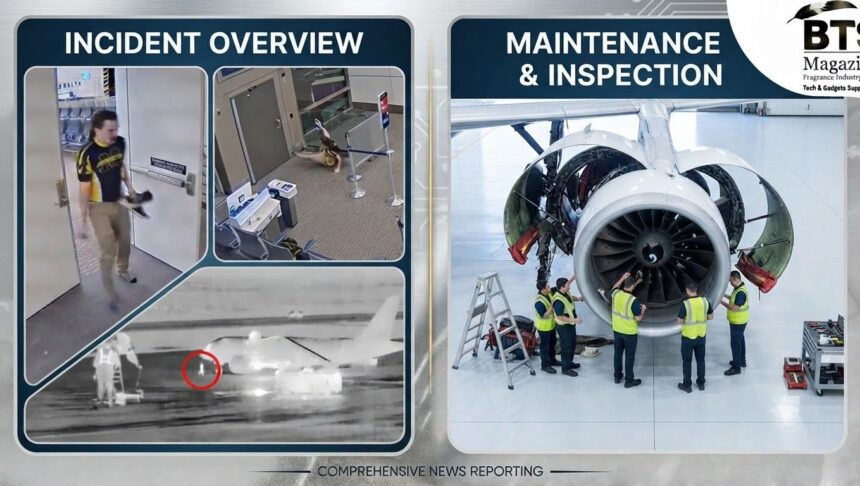
When you hear the phrase “man enters plane engine,” it sounds almost impossible. Yet it has happened, and the results are always tragic. A jet engine is a powerful machine, and getting close to one while it’s running is deadly. In this post, we’ll look at what really happens, why it happens, and one real case that made headlines back in 1990.
- What Does “Man Enters Plane Engine” Actually Mean?
- How a Jet Engine Creates Such Deadly Suction
- Why Would a Man Enter a Plane Engine?
- The Real Case: Daniel John O’Brien in 1990
- Why These Incidents Are Almost Always Fatal
- Ground Crew Safety and Engine Awareness
- Related Context: Jet Engine Ingestion Explained
- What Happens After Such an Incident
- Key Takeaways to Remember
- Frequently Asked Questions
- 1. Can a person really get pulled into a jet engine?
- 2. Is there any chance of survival?
- 3. Who was Daniel John O’Brien?
- 4. How do airports prevent these incidents?
- 5. How far away is safe from a running engine?
- Final Thoughts
Here’s the thing. Most people never think about how dangerous a running engine can be. But once you understand the raw power involved, the danger becomes crystal clear.
What Does “Man Enters Plane Engine” Actually Mean?
The phrase usually points to incidents where a person gets pulled into or walks into a running jet engine. In aviation terms, this is often linked to something called “jet engine ingestion.”
An engine sucks in huge amounts of air to create thrust. If a person stands too close to the front, that suction force can pull them right in. To be honest, there’s almost no chance of survival once that happens.
How a Jet Engine Creates Such Deadly Suction
A modern jet engine draws in thousands of pounds of air every second. The spinning fan blades at the front rotate at incredible speeds.
That airflow creates a strong vacuum zone in front of the engine. Anyone or anything caught in that zone gets pulled forward fast. It’s not a slow drift — it’s sudden and violent.
The Danger Zone Around the Intake
Aviation safety guidelines mark a hazard area in front of every engine. This is often called the “intake danger zone.” Ground crews are trained to stay well clear of it.
When a man enters a plane engine’s danger zone while the engine runs, the outcome is almost always fatal. That’s why airports enforce strict safety rules.
Why Would a Man Enter a Plane Engine?
There are a few reasons these incidents happen, though each case is different.
- Accidents on the ground — A worker gets too close during maintenance or towing.
- Confusion or misjudgment — Someone doesn’t realize the engine is running.
- Intentional acts — In rare cases, a person chooses to enter the engine on purpose.
What’s interesting is that ground crew accidents are the most documented type. Airports invest heavily in training to prevent them.
The Real Case: Daniel John O’Brien in 1990
One of the most well-known cases happened on January 14, 1990. A man named Daniel John O’Brien, from Illinois, died after he entered a running jet engine.
According to public records, he threw himself into the number 2 engine of a jet. He died instantly. This case is often referenced when people discuss jet engine ingestion involving a person.
What We Know About This Incident
Here are the verified details of the O’Brien case:
| Detail | Information |
|---|---|
| Name | Daniel John O’Brien |
| Date of incident | January 14, 1990 |
| Location | United States (linked to Illinois) |
| Engine involved | No. 2 engine |
| Outcome | Died instantly |
Beyond these facts, many personal details about O’Brien — like his exact age, family members, or background — are not clearly documented in public sources. So it’s best not to guess. What we can confirm is the date, place, and the tragic outcome.
Why These Incidents Are Almost Always Fatal
The force inside a jet engine is beyond anything the human body can handle. Once the man enters the plane engine’s intake, survival is nearly impossible.
The spinning blades and extreme air pressure act instantly. There’s no time to react or pull back. This is why aviation experts treat engine safety so seriously.
The Physics Behind It
A large engine can move enough air to lift a person off their feet from several feet away. The closer you get, the stronger the pull becomes.
Think of it like standing near a giant vacuum, only thousands of times more powerful. That’s the reality ground workers face every day.
Ground Crew Safety and Engine Awareness
Airports and airlines take huge steps to protect workers. Safety training covers exactly how far to stay from a running engine.
Bright markings, warning signs, and strict protocols all help reduce risk. When these rules are followed, incidents where a man enters a plane engine become extremely rare.
Common Safety Measures
- Clear danger-zone markings on the tarmac
- Radio communication before engines start
- Visual checks by trained supervisors
- Protective gear and headsets for crew
These steps sound simple, but they save lives. Most engine accidents trace back to a moment when safety steps were skipped.
Related Context: Jet Engine Ingestion Explained
“Jet engine ingestion” is the technical term you’ll often see. It usually refers to objects — like birds, debris, or ice — being sucked into an engine.
But in rare and tragic cases, it also refers to a person. That’s the direct link to searches about a man entering a plane engine.
Bird Strikes vs. Human Incidents
Bird strikes happen fairly often and can damage engines. Human ingestion cases are far rarer but far more serious in human terms.
Here’s the thing though — both remind us how sensitive and powerful these engines really are.
What Happens After Such an Incident
When a man enters a plane engine, investigators step in quickly. Aviation authorities review what went wrong and how to prevent it.
The aircraft engine is inspected for damage. Safety reports are filed, and procedures may be updated. The goal is always to stop it from happening again.
Key Takeaways to Remember
Let’s keep it simple. A running jet engine is one of the most dangerous machines you can stand near.
- The suction can pull a person in from close range.
- Survival is almost impossible once ingestion happens.
- Strict safety rules exist to prevent these tragedies.
- The 1990 O’Brien case remains a documented example.
To be honest, the biggest lesson is respect for these machines. Distance and awareness matter.
Frequently Asked Questions
1. Can a person really get pulled into a jet engine?
Yes. A running engine creates strong suction. If a man enters a plane engine’s danger zone, the force can pull him in almost instantly.
2. Is there any chance of survival?
Sadly, no. The power inside the engine is far beyond what the human body can handle. Most cases end in instant death.
3. Who was Daniel John O’Brien?
He was a man from Illinois who, on January 14, 1990, entered the number 2 engine of a jet and died instantly. Other personal details about him are not clearly documented.
4. How do airports prevent these incidents?
They use marked danger zones, strict training, radio checks, and constant supervision. These steps keep crew members far from running engines.
5. How far away is safe from a running engine?
It depends on the engine size, but the danger zone can extend many feet in front of the intake. Ground crews follow specific distance rules for each aircraft type.
Final Thoughts
The idea of a man entering a plane engine is disturbing, but it teaches an important lesson about safety. These machines demand respect, and one wrong step near them can be fatal.
Understanding how jet engines work helps us appreciate why the rules exist. If you want to read more about the technical side and documented cases, you can check out this detailed page on jet engine ingestion, which covers both the science and the real events behind it.
Continue reading: Blondie Comic: The Classic Newspaper Strip That’s Been Making People Laugh Since 1930