
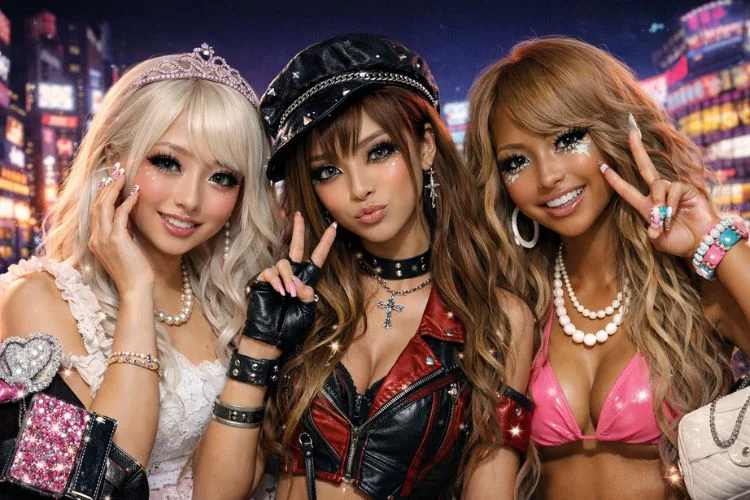
gyaru fashion is one of the most recognizable and talked-about street styles to come out of Japan. It is bold, playful, rebellious, and hard to confuse with anything else. If you have ever seen dramatic lashes, big hair, decorated nails, platform shoes, and confident outfits that break from quiet beauty standards, there’s a good chance you were looking at gyaru.
- What Is Gyaru Fashion?
- The Meaning Behind the Style
- Where Gyaru Fashion Came From
- Why Shibuya Mattered So Much
- The Role of Magazines in Gyaru Culture
- Core Features of Gyaru Fashion
- Bold Hair and Styling
- Dramatic Eye Makeup
- Statement Outfits and Accessories
- Nails as Part of the Full Look
- Main Types of Gyaru Fashion
- Kogyaru
- Ganguro
- Yamanba and Manba
- Hime Gyaru
- Onee Gyaru
- Agejo
- How Gyaru Fashion Changed Over Time
- Why Gyaru Was Seen as Rebellious
- The Cultural Impact of Gyaru Fashion
- Is Gyaru Fashion Still Popular Today?
- Common Misunderstandings About Gyaru
- How to Try Gyaru Fashion Today
- Why People Still Love Gyaru
- Final Thoughts on Gyaru Fashion
- FAQs About Gyaru Fashion
This post explains what gyaru fashion is, where it came from, how it changed over time, and why people still care about it. Here’s the thing: this style is not just about clothes or makeup. It is also tied to youth culture, self-expression, and pushing back against social pressure.
If you are curious about the main gyaru styles, the culture around them, and the reason the look became so influential, this guide will give you a clear starting point.
What Is Gyaru Fashion?
Gyaru fashion is a Japanese fashion subculture that became widely visible in the 1990s and 2000s. The word “gyaru” comes from the English word “gal.” In Japan, it grew into a distinct youth identity with its own beauty rules, shopping culture, magazines, and social spaces.
At its core, gyaru fashion is about standing out. It often includes flashy clothing, styled hair, strong makeup, long nails, and a confident attitude. The exact look depends on the substyle, but the overall spirit stays the same: be seen, have fun, and do not shrink yourself to fit traditional expectations.
The Meaning Behind the Style
What’s interesting is that gyaru was never only about looking trendy. For many girls and young women, it was a way to reject more conservative ideas of how they were “supposed” to look or behave.
In mainstream Japanese beauty culture, softer and more natural looks were often treated as ideal. Gyaru went in another direction. It celebrated tanned skin in some eras, bleached or dyed hair, heavy eye makeup, and dramatic fashion choices.
That contrast is a big reason the style made such a strong impression.
Where Gyaru Fashion Came From
The roots of gyaru fashion are usually linked to Japanese youth culture in the late 1980s and early 1990s. During this time, trend-conscious teenagers and young adults were heavily influenced by pop culture, consumer brands, magazines, and nightlife.
The rise of the style also connects to the growth of places like Shibuya in Tokyo. Shibuya became a major center for youth fashion, especially for girls looking for styles that felt fresh, daring, and social. Shopping centers like Shibuya 109 helped shape what people saw as trendy and desirable.
Gyaru did not appear all at once. It developed over time through changing trends, magazine coverage, and street style.
Why Shibuya Mattered So Much
Shibuya was more than a shopping district. It became a cultural stage.
Young people gathered there, dressed up there, and shaped trends there. Fashion magazines often looked to Shibuya for inspiration. Shop staff also became style icons in their own right.
If you want to understand gyaru fashion, it helps to understand Shibuya. The area helped turn a local youth look into a broader fashion movement.
The Role of Magazines in Gyaru Culture
Before social media took over, magazines were a huge part of gyaru culture. Publications such as egg, Popteen, and others helped define looks, beauty routines, and shopping habits.
Readers did not just copy the pages. They used them as guides, then added their own twist. That created a cycle where magazines shaped trends, and street fashion reshaped the magazines right back.
To be honest, this print culture was one of the reasons gyaru fashion felt so alive. It was not random. It had a whole media world supporting it.
Core Features of Gyaru Fashion
Not every gyaru look includes the same details, but some features show up again and again.
Bold Hair and Styling
Hair has always been a major part of the look. Depending on the era or subtype, this could mean teased volume, curls, dyed shades like blonde or brown, extensions, or detailed styling that took real time and effort.
The hair was not meant to look effortless. That was part of the point.
Dramatic Eye Makeup
Heavy eye makeup is one of the clearest signs of gyaru fashion. Common features include eyeliner, false lashes, circle lenses in some cases, and eye-enlarging techniques.
The goal was often to create a doll-like or high-impact eye shape. This beauty approach became a signature of the style.
Statement Outfits and Accessories
Clothing could range from sexy and glamorous to sweet and princess-like, depending on the subtype. Mini skirts, fitted tops, boots, heels, oversized sweaters, animal prints, and luxury-inspired details all appeared in different versions of the style.
Accessories mattered too. Bags, jewelry, belts, and decorated phones often completed the look.
Nails as Part of the Full Look
Gyaru nails became famous in their own right. Long nails, charms, rhinestones, 3D art, and bright colors were common.
This detail shows how complete the style really was. It was not only about clothing. It was a full beauty and fashion identity.
Main Types of Gyaru Fashion
One reason gyaru fashion can be confusing to newcomers is that there is no single version of it. Several substyles developed over time.
Kogyaru
Kogyaru is one of the best-known early forms. It is often associated with high school-aged girls and modified school uniforms.
This could include shorter skirts, loose socks, styled hair, and visible makeup. The look became widely recognized in media coverage of Japanese youth fashion during the 1990s.
Ganguro
Ganguro is one of the most extreme and visually striking gyaru substyles. It is known for deep tans, bleached hair, dramatic white or light makeup accents, and very bold styling choices.
This style stood far outside conventional beauty norms in Japan. Because of that, it became both famous and controversial.
Yamanba and Manba
Yamanba and manba pushed the ganguro look even further. These styles often included darker tans, white makeup around the eyes and lips, neon colors, platform shoes, and highly decorated outfits.
They are among the most theatrical forms of gyaru. While not the most common today, they remain iconic in discussions of Japanese street fashion history.
Hime Gyaru
Hime gyaru means “princess gyaru.” This style blends gyaru beauty with a more elegant, decorative, and ultra-feminine fashion direction.
Think big curled hair, bows, lace, pink tones, fitted dresses, faux fur, and sparkling accessories. It feels glamorous and cute at the same time.
Onee Gyaru
Onee gyaru is a more mature and polished version of the style. “Onee” suggests an older-sister image. Compared with louder forms of gyaru, this one often looks more refined.
You might see cleaner silhouettes, fashionable heels, fitted dresses, and softer color palettes while still keeping the glam makeup and confident attitude.
Agejo
Agejo style is linked to nightlife and hostess-inspired fashion. It often includes body-conscious dresses, styled hair, dramatic makeup, and a luxurious feel.
This substyle became especially visible through magazines and brand culture in the 2000s.
How Gyaru Fashion Changed Over Time
Like most youth styles, gyaru fashion was never frozen in one era. It shifted with trends, media, and the economy.
In the 1990s, school-related looks and rebellious styling helped define the culture. In the 2000s, the style expanded and split into more subtypes. Some became softer, more glamorous, or more wearable for everyday life.
Later, as social media changed how trends spread, traditional gyaru magazines and spaces lost some of their power. Even so, the influence of gyaru did not disappear.
Why Gyaru Was Seen as Rebellious
Part of the power of gyaru came from how openly it broke rules.
It challenged ideas about “good girl” behavior. It often rejected natural black hair, minimal makeup, and modest presentation. In some cases, it also clashed with school rules or workplace expectations.
Here’s the thing: when a fashion style draws that kind of reaction, it usually means it is doing more than following trends. It is making a social statement, even if the people wearing it are also just trying to have fun.
The Cultural Impact of Gyaru Fashion
The influence of gyaru fashion went beyond its own community. It shaped beauty trends, fashion retail, magazine culture, and public conversations about femininity and youth identity in Japan.
It also affected global interest in Japanese street style. International fans of J-fashion often discovered gyaru through magazines, photos, online communities, and later through video platforms and social media.
Some makeup trends that became common online, such as enlarged-eye effects and highly styled lashes, can be better understood when you look back at gyaru beauty culture.
Is Gyaru Fashion Still Popular Today?
It is not as dominant as it was in its peak years, but gyaru fashion is still alive. Some people continue to wear it as a full lifestyle, while others borrow parts of the look.
There has also been renewed interest through nostalgia, online fashion communities, and younger people revisiting older Japanese subcultures. Vintage magazines, archival photos, and style tutorials have helped bring attention back to the scene.
So yes, gyaru still matters. It may be smaller now, but it has not vanished.
Common Misunderstandings About Gyaru
One common mistake is thinking gyaru is just “tanned makeup” or just one extreme look. That is too narrow.
Another misunderstanding is treating it like a costume without understanding the culture behind it. Gyaru includes beauty, clothing, attitude, media, and social identity. It is wider than one outfit trend.
What’s interesting is that people who only know the loudest versions often miss the softer substyles that were also important.
How to Try Gyaru Fashion Today
If you want to explore gyaru fashion, start with photos from trusted fashion archives, old magazines, and current community creators. Look at specific substyles instead of trying to copy everything at once.
You can begin with makeup, hair, nails, or clothing. Pick one lane and build from there. A full look usually feels better when the details connect rather than clash.
It also helps to respect the subculture. Learn the names of the styles, understand their history, and avoid treating them like random internet aesthetics.
Why People Still Love Gyaru
People still connect with gyaru because it feels expressive, social, and bold. It gives space to experiment with identity and beauty in a very visible way.
To be honest, that is part of why it keeps coming back. Trends change, but the desire to stand out and feel powerful does not go away.
Gyaru speaks to that feeling directly.
Final Thoughts on Gyaru Fashion
gyaru fashion has changed a lot over the years, but its core energy is easy to recognize. It is confident, styled, rebellious, and deeply tied to Japanese youth culture. From Shibuya street style to magazine covers to online revival spaces, it has left a real mark on fashion history.
If you are learning about it for the first time, start with the basics: its roots, its major substyles, and its connection to self-expression. From there, the whole world of gyaru becomes much easier to understand.
FAQs About Gyaru Fashion
1. What does gyaru mean in fashion?
In fashion, “gyaru” comes from the English word “gal.” In Japan, it became the name of a youth fashion subculture known for bold beauty, styled hair, strong makeup, and expressive outfits.
2. Is gyaru fashion the same as ganguro?
No. Ganguro is one subtype within gyaru fashion. Gyaru is the wider category, and it includes many different styles such as hime gyaru, onee gyaru, and agejo.
3. When was gyaru fashion most popular?
Gyaru was especially visible in the 1990s and 2000s. Different forms of the style rose and changed during those years, especially in areas like Shibuya.
4. Is gyaru fashion still around today?
Yes, though it is less mainstream than before. Some people still wear it actively, and others are rediscovering it through online communities, vintage media, and fashion revival trends.
5. Why is gyaru fashion important?
It matters because it was more than a trend. It challenged beauty standards, shaped youth culture, influenced fashion media, and became one of the best-known Japanese street style movements.
Continue reading: The Truth About Who Makes Genesis Cars: A Luxury Brand Masterclass