

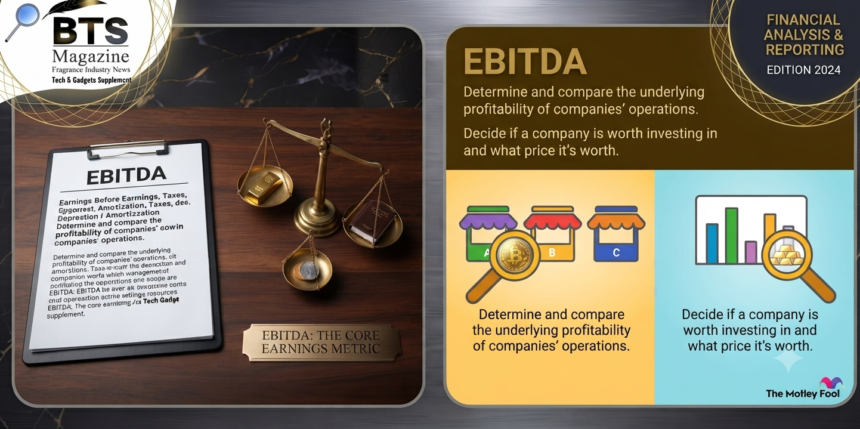
Earnings before interest taxes depreciation and amortization sounds like a mouthful, but it’s actually one of the most useful ways to see how a business is really doing. Most people just call it EBITDA. It strips away a few things that can cloud the picture and shows you how much money a company makes from its core operations.
- What Does EBITDA Actually Mean?
- How Is EBITDA Calculated?
- Why Do Businesses Use EBITDA?
- It Shows Core Performance
- It Makes Companies Easier to Compare
- It Helps With Valuations
- It’s Handy for Lenders
- EBITDA vs Net Income: What’s the Difference?
- EBITDA vs EBIT: A Small But Important Gap
- The Pros of Using EBITDA
- The Cons and Criticisms
- Real-World Context: Where You’ll See It
- Common Mistakes People Make With EBITDA
- How to Use EBITDA the Smart Way
- Final Thoughts
Here’s the thing: profit numbers can be confusing. Two companies might earn the same amount on paper but look completely different once you dig in. That’s where this metric comes in handy.
In this post, I’ll break down what it means, how to calculate it, why businesses love it, and where it falls short.
What Does EBITDA Actually Mean?
Let’s start simple. Earnings before interest taxes depreciation and amortization measures a company’s operating profitability before certain expenses are taken out.
The name literally tells you what’s left in. You take earnings, then add back interest, taxes, depreciation, and amortization. The idea is to focus on how well the actual business runs.
To be honest, the goal is to remove noise. Financing choices, tax situations, and accounting rules can all mess with the numbers. EBITDA tries to cut through that.
Breaking Down the Four Letters
Each part of the acronym matters, so let’s quickly go through them.
- Interest – the cost of borrowing money.
- Taxes – what the company owes the government.
- Depreciation – the gradual loss of value in physical assets like machines.
- Amortization – the same idea, but for intangible things like patents.
When you add all four back to net income, you get earnings before interest taxes depreciation and amortization.
How Is EBITDA Calculated?
There are two common ways to figure it out. Both should land you in the same place.
Method One: Start From Net Income
This is the most popular approach.
EBITDA = Net Income + Interest + Taxes + Depreciation + Amortization
You just take the bottom-line profit and add back the four items. Easy enough.
Method Two: Start From Operating Income
Some people prefer this route.
EBITDA = Operating Income + Depreciation + Amortization
Operating income already leaves out interest and taxes, so you only add back depreciation and amortization here.
A Quick Example
Say a company reports net income of $200,000. It paid $50,000 in interest, $30,000 in taxes, $40,000 in depreciation, and $10,000 in amortization.
Add those up: 200,000 + 50,000 + 30,000 + 40,000 + 10,000 = $330,000.
So the earnings before interest taxes depreciation and amortization comes to $330,000. Not bad.
Why Do Businesses Use EBITDA?
What’s interesting is how widely this number gets used. Investors, lenders, and business owners all rely on it for different reasons.
It Shows Core Performance
Because it ignores financing and tax decisions, EBITDA gives a cleaner view of how the actual operations perform. That’s useful when you want to judge the business itself, not the paperwork around it.
It Makes Companies Easier to Compare
Two businesses in the same industry might have very different debt levels or tax setups. Comparing net income alone can be misleading. EBITDA levels the playing field a bit.
It Helps With Valuations
When people buy or sell companies, they often use an EBITDA multiple to estimate value. It’s a shortcut that gives everyone a common starting point.
It’s Handy for Lenders
Banks look at EBITDA to judge whether a company can handle more debt. A strong number suggests the business generates enough cash to cover payments.
EBITDA vs Net Income: What’s the Difference?
People mix these up all the time, so let’s clear it up.
Net income is the final profit after everything is deducted. That includes interest, taxes, depreciation, and amortization. It’s the true bottom line.
EBITDA, on the other hand, adds those items back. So it’s always a bigger number than net income.
Here’s the thing: net income tells you what you actually keep. EBITDA tells you how strong the operations are before other factors kick in. Both matter, just for different questions.
EBITDA vs EBIT: A Small But Important Gap
EBIT stands for earnings before interest and taxes. It’s a close cousin.
The difference is simple. EBIT still subtracts depreciation and amortization, while EBITDA adds them back. So EBITDA is usually higher than EBIT.
If a company owns lots of equipment, depreciation can be huge. In that case, the gap between the two numbers gets wide. That’s worth noticing.
The Pros of Using EBITDA
There’s a reason this metric shows up everywhere. Let’s look at the upsides.
Clearer Operating View
It focuses on the business engine, not the financing or tax layers. That clarity is genuinely helpful.
Great for Comparisons
Comparing companies across regions or industries becomes easier when tax and debt differences fade into the background.
Popular in Deals
Buyers, sellers, and analysts speak the language of EBITDA. Using it keeps everyone on the same page.
The Cons and Criticisms
Now for the honest part. Earnings before interest taxes depreciation and amortization isn’t perfect, and plenty of smart people warn against leaning on it too hard.
It Ignores Real Costs
Depreciation reflects real wear and tear. Machines break down and need replacing. By adding it back, EBITDA can make a company look healthier than it really is.
It Skips Debt
Interest is a real expense. A company drowning in debt might still show a lovely EBITDA number, which can hide serious risk.
It’s Not an Official Metric
EBITDA isn’t part of standard accounting rules like GAAP. That means companies can calculate it in slightly different ways. So always check how the number was built.
It Can Be Misused
Some businesses lean on EBITDA to distract from weak profits. Warren Buffett famously questioned it for exactly this reason. Treat it as one tool, not the whole toolbox.
Real-World Context: Where You’ll See It
You’ll spot EBITDA in earnings reports, investor presentations, and loan agreements all the time.
Private equity firms love it when buying companies. Startups sometimes highlight it to show operational strength even while posting net losses. Lenders use it to size up borrowing capacity.
What’s interesting is how often you’ll hear about “adjusted EBITDA” too. That version removes one-time costs like legal fees or restructuring. Just be careful, because “adjusted” can sometimes hide inconvenient expenses.
Common Mistakes People Make With EBITDA
A few traps trip people up. Watch out for these.
- Treating EBITDA as if it equals cash flow. It doesn’t.
- Ignoring debt because the operating number looks strong.
- Comparing EBITDA figures without checking how each was calculated.
- Forgetting that capital-heavy businesses have big depreciation for a reason.
Avoiding these keeps your analysis honest.
How to Use EBITDA the Smart Way
So how should you actually treat this number? Use it alongside other metrics, not on its own.
Pair it with net income, free cash flow, and debt levels. Together they paint a fuller picture. One number rarely tells the whole story, and this one is no exception.
Think of earnings before interest taxes depreciation and amortization as a starting point for questions, not the final answer.
Final Thoughts
EBITDA is a genuinely useful way to measure operating performance and compare businesses fairly. It cuts through financing and accounting noise, which makes it popular with investors and lenders alike.
But it has blind spots. It skips real costs like debt and equipment wear, so don’t lean on it alone. Use it as one lens among several, and you’ll make far better decisions. If you want to go deeper into the formulas and history, this detailed Wikipedia page on earnings before interest, taxes, depreciation and amortization is a solid place to keep learning.
Continue reading: ufabetwin77.online Win – Everything You Need to Know About This Online Betting Platform