
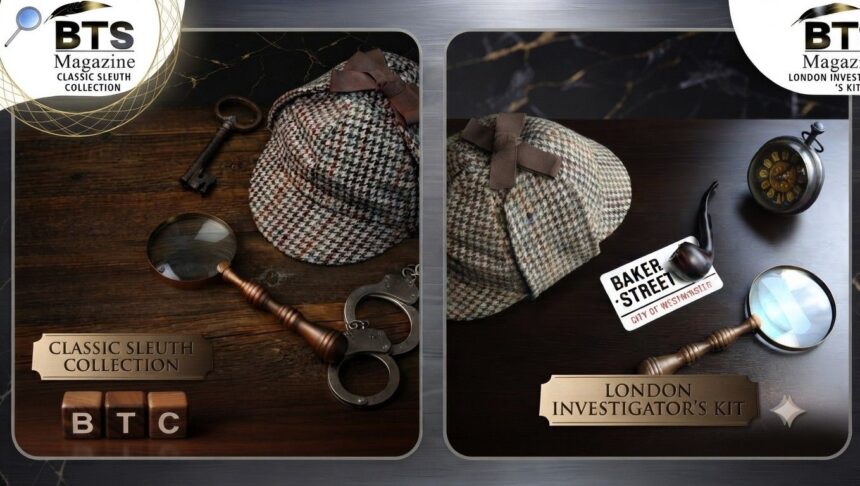
The deerstalker pipe magnifying glass combo is probably the most recognized detective look in the world. You see that hat, that curved pipe, and that little handheld lens, and your brain instantly whispers “Sherlock Holmes.” Funny thing is, most people have never read a single Holmes story, yet they still know the image by heart.
- What Is the Deerstalker Pipe Magnifying Glass Look?
- A Quick Overview of the Three Symbols
- The Deerstalker Hat
- The Pipe
- The Magnifying Glass
- The Man Behind the Legend: Arthur Conan Doyle
- The Illustrator Who Shaped the Image: Sidney Paget
- Why These Detective Accessories Stuck Together
- The Baker Street Connection
- Pop Culture Impact of the Deerstalker Pipe Magnifying Glass
- Key Facts Worth Remembering
- Common Questions People Ask
- Did Sherlock Holmes really wear a deerstalker in the books?
- Was the pipe always a calabash?
- Is the magnifying glass historically accurate for a Victorian detective?
- Final Thoughts
So where did this famous trio come from? And why do these three objects stick together so tightly in our minds? Let’s break it down.
What Is the Deerstalker Pipe Magnifying Glass Look?
At its core, it’s a costume shorthand. The deerstalker pipe magnifying glass image is a visual code that tells us “clever detective at work.” Each piece plays a role. The hat says thoughtful and old-fashioned. The pipe says calm and focused. The magnifying glass says careful investigation.
Put them together and you’ve got the ultimate Victorian detective vibe.
A Quick Overview of the Three Symbols
Here’s the thing. These items didn’t start out as detective gear at all. They were everyday objects in Victorian Britain. Over time, thanks to books and illustrations, they turned into something bigger.
Let’s look at each one on its own.
The Deerstalker Hat
What a Deerstalker Actually Is
A deerstalker is a cloth cap with two bills, one in front and one in the back. It also has ear flaps that you can tie up on top or fold down. It was made for hunting in the British countryside, mostly for keeping your head warm and shaded during long walks.
To be honest, it was never meant to be a city hat. It was a rural, sporty piece of clothing.
How It Became Linked to Sherlock Holmes
What’s interesting is that Arthur Conan Doyle never clearly named the deerstalker in his stories. The connection came from the illustrations. When artist Sidney Paget drew Holmes for The Strand Magazine, he put him in a deerstalker during country scenes.
Readers loved it. The hat stuck. And that’s how a hunting cap became the badge of a detective.
The Pipe
The Everyday Smoking Habit of the Era
Pipe smoking was extremely common in Victorian times. So it made sense that Holmes, a thoughtful man, would smoke while working through a tricky case. In the original stories, Holmes actually uses different pipes, not just one type.
The Calabash Pipe Myth
Now here’s a fun fact. That big curved calabash pipe people picture? Holmes probably never used it in the books. The calabash pipe became popular thanks to stage actors, especially William Gillette, who found the curved shape easier to hold while speaking on stage.
So the deerstalker pipe magnifying glass image blends the books with theater history. The hat came from Paget, but the famous pipe shape came from performers.
The Magnifying Glass
A Tool for Close Investigation
The magnifying glass is maybe the most fitting of the three. Holmes was all about tiny clues. Dust, mud, threads, handwriting, ash. Small things solved big cases.
Conan Doyle wrote about Holmes using a magnifying glass to study evidence at crime scenes. It made total sense for a detective who trusted careful observation over guesswork.
Why It Feels So “Detective”
There’s something powerful about the image of someone leaning in with a lens. It shows attention. It shows patience. The deerstalker pipe magnifying glass trio works so well because each item hints at a different skill Holmes had.
The Man Behind the Legend: Arthur Conan Doyle
Arthur Conan Doyle created Sherlock Holmes in 1887. He was a Scottish writer and also a trained doctor. Some say he based Holmes partly on one of his old medical teachers, Dr. Joseph Bell, who was known for reading people’s lives just by looking at small details.
Conan Doyle wrote four novels and many short stories about Holmes. The character became so popular that fans reacted strongly when the author tried to kill him off.
The Illustrator Who Shaped the Image: Sidney Paget
Sidney Paget deserves a lot of credit here. His drawings in The Strand Magazine gave Holmes a face and a style for millions of readers. The deerstalker, the cape-like coat, the sharp profile, much of it came from Paget’s pen.
Without those illustrations, the deerstalker pipe magnifying glass look might never have formed at all.
Why These Detective Accessories Stuck Together
The Power of Repeated Imagery
Once readers saw Holmes in a certain outfit again and again, the picture locked in. Then came plays, then films, then cartoons. Each version copied the last. The deerstalker pipe magnifying glass set became a package deal.
Easy to Recognize, Easy to Copy
Simple images spread fast. A hat, a pipe, and a lens are easy to draw and easy to spot. That’s part of why the look survived for well over a century.
The Baker Street Connection
You can’t talk about Holmes without mentioning Baker Street. In the stories, Holmes lives at 221B Baker Street in London with his friend Dr. Watson. That address is now tied forever to the detective.
Today there’s even a museum on Baker Street built around the Holmes theme. Fans from all over the world visit, and yes, plenty of them try on the famous hat.
Pop Culture Impact of the Deerstalker Pipe Magnifying Glass
Film and Television
Countless actors have played Holmes on screen. Some lean into the classic look, while modern versions like the BBC show gave it a fresh spin. Either way, the deerstalker pipe magnifying glass idea usually shows up somewhere, even as a small nod.
Everyday References
Think about how often you’ve seen this image used as a joke or a symbol. Anytime a character wants to “investigate” something, out comes the hat and the lens. It’s become a universal sign for detective work.
Key Facts Worth Remembering
Let me sum up the main points quickly.
- The deerstalker was originally a hunting cap, not detective gear.
- Conan Doyle never strongly described the deerstalker; Sidney Paget’s art made it iconic.
- The curved calabash pipe came from stage actors, not the books.
- The magnifying glass fits Holmes because his method relied on tiny clues.
- Baker Street remains the heart of the Sherlock Holmes world.
Common Questions People Ask
Did Sherlock Holmes really wear a deerstalker in the books?
Not clearly. The strong link came from illustrations, not from a direct, repeated description in the text.
Was the pipe always a calabash?
No. That’s one of the biggest myths. The calabash became popular through theater performances.
Is the magnifying glass historically accurate for a Victorian detective?
Yes, using a lens to study evidence made sense for the time and matched Holmes’s careful style.
Final Thoughts
The deerstalker pipe magnifying glass look is a perfect example of how stories, art, and stage acting can build a symbol together. No single person planned it. It grew piece by piece, from Conan Doyle’s writing to Paget’s drawings to actors on stage. If you want to dig into the history of the hat itself, the Deerstalker Wikipedia page is a solid place to start, and it shows just how a simple hunting cap became the face of the world’s most famous detective.
Continue reading: Sun Poisoning: What It Really Is and Why You Shouldn’t Ignore It