
Introduction
Blue is one of the most popular colors in fashion, art, interiors, branding, and everyday design. But not every blue creates the same feeling. Cobalt blue and royal blue are two rich, eye-catching shades that are often confused with each other.
At first glance, they can look almost identical. Both are strong, vivid blues with a cool and energetic appearance. However, they differ in tone, history, color values, and the way they are commonly used.
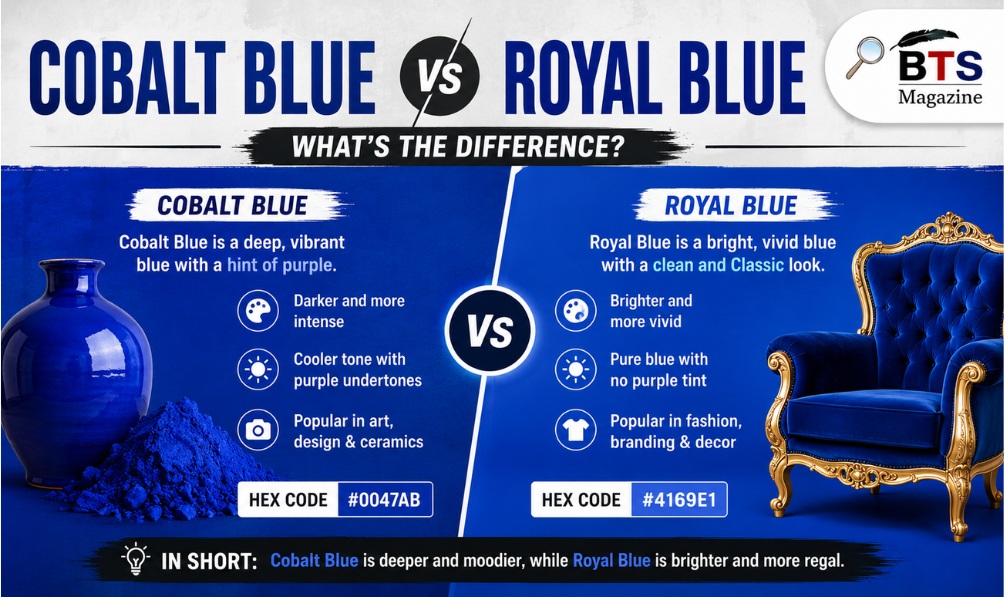
So, what is the difference between cobalt blue and royal blue? Cobalt blue is generally a slightly more balanced, pigment-based blue with a characteristic clean and intense appearance. Royal blue is usually deeper and more saturated, with a stronger purple or violet undertone depending on the specific color standard.
This guide explains the difference in simple terms and shows when to use each shade.
If you enjoy discovering more interesting color, design, and lifestyle topics, you can also explore BTS Magazine for related articles and guides.
What Is Cobalt Blue vs Royal Blue?
Cobalt blue is a vivid blue associated with the cobalt-based pigment used by artists. It has a strong but relatively balanced blue appearance and is widely used in painting, ceramics, fashion, and design.
Royal blue is a rich, deep blue traditionally associated with royalty and formal clothing. Modern versions can vary, but the color is typically darker and more intense than many common versions of cobalt blue.
The important point is that neither color has one universal digital appearance. Screen displays, printing systems, paint brands, fabrics, and color standards can produce slightly different versions.
Cobalt Blue at a Glance
- Bright, vivid blue
- Often appears balanced between lighter and deeper blues
- Historically important in art
- Common in ceramics and painting
- Works well with white, gray, black, and warm neutrals
- Often gives a creative and energetic impression
Royal Blue at a Glance
- Rich, bold blue
- Usually deeper and darker than cobalt blue
- Associated with formal and luxurious designs
- Popular in clothing, sports uniforms, and branding
- Pairs well with white, gold, silver, and black
- Creates a confident and polished appearance
Why Is the Difference Important?
Knowing the difference between cobalt blue and royal blue matters when you are choosing colors for a specific purpose.
Imagine you are decorating a room with white walls. You want blue curtains, but you want them to feel bright and artistic rather than heavy. Cobalt blue may be the better choice.
Now imagine you are designing a formal invitation or a sports uniform. You want something bold and authoritative. Royal blue may create the stronger effect.
Choosing the right blue can influence:
- Mood
- Visual contrast
- Brand identity
- Fashion style
- Interior atmosphere
- Artwork and painting results
Even a small change in blue can make a design feel more modern, formal, playful, or dramatic.
Cobalt Blue vs Royal Blue: Key Differences
The easiest way to understand the two colors is to compare their common characteristics.
| Feature | Cobalt Blue | Royal Blue |
|---|---|---|
| Overall appearance | Vivid and balanced | Deep and rich |
| Typical impression | Artistic and energetic | Bold and formal |
| Historical connection | Cobalt pigment and art | Royal clothing and tradition |
| Common uses | Painting, ceramics, fashion | Fashion, branding, uniforms |
| Visual depth | Medium to strong | Strong |
| Best-known associations | Art and craftsmanship | Luxury and authority |
These descriptions are general because color names can vary between manufacturers and digital color systems.
Cobalt Blue Color Characteristics
Cobalt blue has a long history in the visual arts. The name is connected with cobalt compounds used to create blue pigments.
Artists have valued cobalt blue because it can produce a clear, strong blue that works well in many painting techniques.
Today, cobalt blue can be found in:
- Oil paints
- Acrylic paints
- Watercolors
- Ceramics
- Clothing
- Home accessories
- Graphic design
- Jewelry and decorative objects
What Does Cobalt Blue Look Like?
Cobalt blue usually looks like a strong, clean medium-to-deep blue. It can appear brighter than royal blue, particularly when placed next to darker colors.
It has enough intensity to stand out without always feeling as formal or heavy as a very deep royal blue.
Royal Blue Color Characteristics
Royal blue has a different visual personality. It is generally a strong, saturated blue that feels rich and confident.
The name has a long association with royal clothing and formal presentation. Over time, royal blue became widely used in fashion, sports, advertising, and corporate design.
You may see royal blue in:
- Formal clothing
- School and sports uniforms
- Flags and emblems
- Corporate logos
- Packaging
- Event decorations
- Digital graphics
Royal blue often works particularly well when a design needs a strong visual statement.
Cobalt Blue vs Royal Blue in Fashion
Both colors can look excellent in clothing, but they create slightly different impressions.
When to Choose Cobalt Blue
Choose cobalt blue when you want an outfit to feel:
- Fresh
- Artistic
- Energetic
- Modern
- Eye-catching
A cobalt blue shirt can work well with white trousers, neutral jeans, black pants, or soft gray accessories.
When to Choose Royal Blue
Royal blue is useful when you want a more:
- Formal appearance
- Powerful look
- Polished style
- Traditional feel
- Dramatic contrast
Royal blue suits, dresses, shirts, and accessories can pair especially well with white, black, silver, or metallic accents.
Cobalt Blue vs Royal Blue in Home Decor
The same distinction applies to interiors.
Cobalt blue can add energy to a room. Consider using it for:
- Accent chairs
- Throw pillows
- Ceramic pieces
- Artwork
- Vases
- Small decorative objects
Royal blue can create a stronger, more dramatic effect. It can work well for:
- Feature walls
- Curtains
- Sofas
- Rugs
- Statement furniture
- Formal dining spaces
If you are worried about making a room feel too dark, use a deep royal blue in smaller amounts and balance it with lighter colors.
Which Color Is Darker?
In many common color references, royal blue appears darker and deeper than cobalt blue.
However, this is not an absolute rule. Color names are not always standardized across paint companies, fabrics, websites, and design software.
Lighting also changes how a blue looks. A fabric that appears royal blue in a store may look noticeably different under warm indoor lighting or natural daylight.
Which Color Is More Vibrant?
Both shades can be highly vibrant, but cobalt blue often has a brighter and more open appearance, while royal blue tends to feel richer and deeper.
If you want a blue that immediately catches attention in artwork or accessories, cobalt blue can be a strong option.
If you want a powerful blue that feels formal and dramatic, royal blue may be more suitable.
How to Choose Between Cobalt Blue and Royal Blue
Choosing between the two does not have to be difficult.
Step 1: Think About the Mood
Ask yourself what you want the color to communicate.
- Creative and energetic → Cobalt blue
- Formal and powerful → Royal blue
Step 2: Consider the Surrounding Colors
Look at the colors already present in your design.
Cobalt blue can work beautifully with:
- White
- Cream
- Light gray
- Beige
- Black
- Warm wood tones
Royal blue can work especially well with:
- White
- Black
- Gold
- Silver
- Gray
- Deep neutrals
Step 3: Test the Actual Color
Do not rely only on a name such as “cobalt” or “royal.”
If you are buying paint, fabric, or furniture, look at a physical sample whenever possible. Digital displays can change the appearance of colors.
Step 4: Check the Lighting
Test the color in the environment where it will actually be used.
Natural daylight, warm bulbs, and cool LED lighting can all change how blue appears.
Common Mistakes to Avoid
1. Assuming Every Cobalt Blue Is Identical
Different brands and materials can use slightly different versions of cobalt blue.
2. Treating Royal Blue as One Universal Shade
Royal blue also varies between color systems and products.
3. Choosing From a Screen Alone
Your monitor or phone may not display the exact color accurately.
4. Ignoring Surrounding Colors
A blue can look completely different when placed next to white, black, yellow, gray, or another blue.
5. Using Too Much Dark Blue
Royal blue can become visually heavy when used across a large area without enough lighter colors for balance.
Expert Tips for Using Cobalt Blue and Royal Blue
Use contrast wisely. A bright blue becomes more noticeable when surrounded by neutral colors.
Start small. If you are unsure about a shade, introduce it through accessories before committing to a large wall, sofa, or wardrobe piece.
Compare samples side by side. This is one of the easiest ways to notice differences between similar blues.
Think about the material. Glossy ceramic, matte paint, cotton, silk, and digital screens can all make the same named color appear different.
Consider the purpose. Cobalt blue often feels artistic and lively, while royal blue can communicate confidence and formality.
Cobalt Blue vs Royal Blue: Which One Should You Choose?
There is no universal winner.
Choose cobalt blue if you want a vivid blue with an artistic, energetic character. It is particularly useful for artwork, decorative pieces, fashion, and accents.
Choose royal blue if you want a richer, deeper blue with a formal and confident appearance. It can be effective in clothing, branding, sports designs, and statement interiors.
The best choice depends on the mood, material, lighting, and surrounding colors.
FAQs
Is cobalt blue the same as royal blue?
No. Cobalt blue and royal blue are different color names, although they can look similar. Cobalt blue is generally more balanced and vivid, while royal blue is commonly deeper and richer.
Which is darker, cobalt blue or royal blue?
In many common color references, royal blue is darker than cobalt blue. However, exact shades vary between manufacturers and color systems.
Is cobalt blue a warm or cool color?
Cobalt blue is generally considered a cool blue, although its appearance can change depending on the colors placed beside it.
Is royal blue darker than cobalt blue?
Usually, yes. Royal blue commonly has a deeper appearance, while cobalt blue often looks somewhat brighter and more open.
What colors go well with cobalt blue?
Cobalt blue pairs well with white, cream, gray, black, beige, and warm natural tones. For a stronger contrast, it can also work with selected complementary or warm accent colors.
What colors go well with royal blue?
Royal blue works especially well with white, black, gray, gold, and silver. These combinations can create anything from a clean modern look to a more formal appearance.
Which is better for clothing: cobalt blue or royal blue?
Both are excellent choices. Cobalt blue can create a bright, modern appearance, while royal blue often feels more formal and dramatic. Your skin tone, outfit design, lighting, and accessories should also influence the choice.
Conclusion
So, what’s the difference between cobalt blue and royal blue? The main difference is their typical depth, visual character, and traditional use.
Cobalt blue is usually vivid, balanced, and strongly associated with art and creative design. Royal blue is generally deeper, richer, and associated with formal, bold, and polished styles.
Neither shade is automatically better. The right choice depends on what you are designing and the mood you want to create.
If you are deciding between the two, compare real samples under the lighting where they will be used. That simple step can make choosing the perfect blue much easier.
For readers who want more background on the cobalt blue pigment itself, Wikipedia’s Cobalt Blue page is a useful reference.