

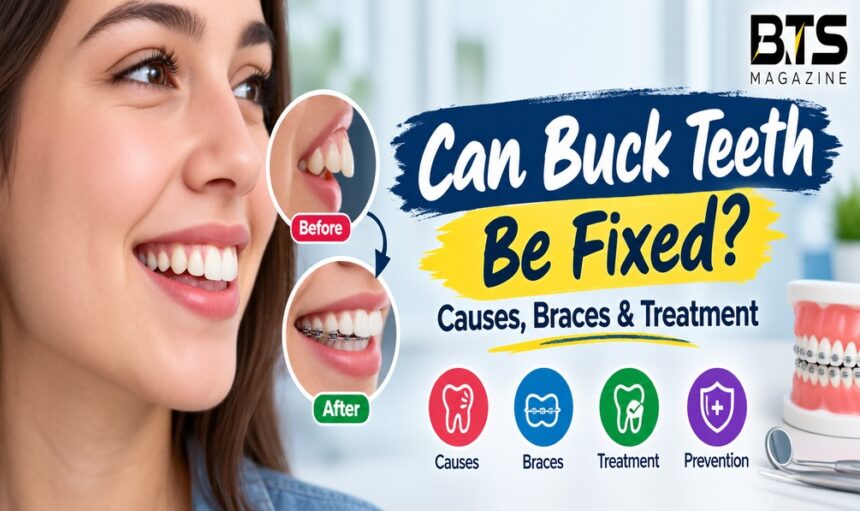
Seeing prominent front teeth in the mirror can make you wonder, “Can buck teeth be fixed?” The good news is that buck teeth can often be corrected with orthodontic treatment. The right approach depends on age, the position of the teeth, jaw development, and how severe the bite problem is.
- What Are Buck Teeth?
- Why Are Buck Teeth Important?
- What Causes Buck Teeth?
- Can Buck Teeth Be Fixed?
- How Are Buck Teeth Treated?
- Buck Teeth Treatment by Age
- Step-by-Step: How to Fix Buck Teeth
- Step 1: Get a Dental Checkup
- Step 2: Have the Bite Assessed
- Step 3: Identify the Cause
- Step 4: Discuss Treatment Options
- Step 5: Follow the Treatment Plan
- Step 6: Wear a Retainer
- Can You Fix Buck Teeth Naturally?
- What Are the Benefits of Treating Buck Teeth?
- Frequently Asked Questions About Buck Teeth
- 1. Are buck teeth normal?
- 2. Can braces fix buck teeth?
- 3. Can adults fix buck teeth?
- 4. Are clear aligners good for buck teeth?
- 5. How long does it take to fix buck teeth?
- 6. Can buck teeth come back after braces?
- 7. Should children with buck teeth see an orthodontist?
- Conclusion
Buck teeth are common in both children and adults. Treatment may involve braces, clear aligners, or other orthodontic methods. In some severe cases, jaw surgery may also be considered.
This guide explains what buck teeth are, what causes them, how braces and aligners work, and when treatment may be needed.
What Are Buck Teeth?
Buck teeth is a common term for upper front teeth that stick farther forward than usual. Dentists may describe this as increased overjet, especially when the upper front teeth sit significantly ahead of the lower teeth.
A small amount of horizontal overlap between the upper and lower front teeth is normal. Problems can occur when the overlap is excessive.
Buck teeth may be linked to:
- Upper front teeth positioned too far forward
- Lower teeth positioned too far backward
- A difference in upper and lower jaw growth
- Crowding or other alignment problems
- Certain childhood habits
The condition is related to malocclusion, which means the upper and lower teeth do not meet in an ideal way. You can learn more about malocclusion through Wikipedia’s overview of malocclusion.
Why Are Buck Teeth Important?
Buck teeth are not always a medical problem. Some people have prominent front teeth without pain or difficulty using their teeth.
However, a significant overjet can sometimes affect everyday life. Depending on the individual, it may contribute to:
- Difficulty biting certain foods
- Increased risk of injury to prominent front teeth
- Problems with the way the teeth meet
- Tooth wear caused by an uneven bite
- Difficulty keeping crowded teeth clean
- Concerns about appearance or confidence
Important: The need for treatment is based on more than appearance. A dentist or orthodontist can assess the bite, tooth position, jaw relationship, and overall oral health.
What Causes Buck Teeth?
There is usually no single cause. Buck teeth can develop from a combination of genetics, jaw growth, tooth position, and childhood habits.
1. Genetics
Jaw size and tooth position are strongly influenced by genetics. If close family members have prominent upper teeth or certain bite patterns, a child may be more likely to develop them.
2. Jaw Growth
Sometimes the upper jaw grows farther forward, while the lower jaw develops differently. This can make the upper teeth appear more prominent.
3. Tooth Position
The jaws may be positioned normally while the front teeth themselves angle forward. Orthodontic treatment can often address this type of problem.
4. Childhood Habits
Long-term thumb sucking or pacifier use may affect tooth position and jaw development in some children, particularly when the habit continues as the child gets older.
5. Crowding
When there is not enough room for teeth, they may shift or rotate. This can change the appearance and function of the front teeth.
Can Buck Teeth Be Fixed?
Yes, buck teeth can often be fixed or significantly improved. Treatment depends on the cause and severity of the problem. Braces and clear aligners can move teeth into better positions, while growing children may sometimes benefit from orthodontic treatment that also guides jaw and facial development. Severe jaw-related cases may require specialist treatment.
A proper examination is important because two people with similar-looking buck teeth may need completely different treatment plans.
How Are Buck Teeth Treated?
1. Traditional Braces
Traditional braces are one of the most established ways to correct prominent front teeth.
Brackets are attached to the teeth and connected with wires. The orthodontist gradually applies controlled forces to move the teeth.
Braces may be useful when a person has:
- Significant tooth movement needs
- Crowding
- An uneven bite
- Rotated teeth
- More complex orthodontic problems
2. Clear Aligners
Clear aligners are removable trays designed to gradually move teeth.
They may be suitable for some people with mild to moderate alignment problems. However, they are not appropriate for every case.
An orthodontist needs to determine whether aligners can achieve the desired result.
3. Orthodontic Appliances
Children and teenagers who are still growing may sometimes receive specialized orthodontic appliances.
Depending on the problem, these appliances can help influence tooth position or manage certain bite relationships.
Treatment is highly individual, so an orthodontist should decide which appliance, if any, is appropriate.
4. Jaw Surgery
In severe cases where the main problem involves the position or size of the jaws rather than the teeth alone, orthodontic treatment may be combined with orthognathic surgery.
This is generally reserved for significant skeletal problems and is not the usual treatment for mild buck teeth.
Buck Teeth Treatment by Age
Buck Teeth in Children
Early evaluation can be useful because children’s jaws and teeth are still developing.
An orthodontist can monitor growth and determine whether treatment is needed immediately or whether it is better to wait.
Not every child with prominent front teeth needs braces right away.
Buck Teeth in Teenagers
Teenage years are a common time for orthodontic treatment. Permanent teeth have usually erupted, and the orthodontist can plan treatment based on the developing bite.
Braces or aligners may be used depending on the individual’s needs.
Buck Teeth in Adults
Adults can also correct buck teeth. Age does not automatically prevent orthodontic treatment.
However, adults may have additional factors to consider, such as gum health, previous dental work, missing teeth, or bone support.
A dental and orthodontic assessment should come before choosing a treatment.
Step-by-Step: How to Fix Buck Teeth
If you are considering treatment, the process usually looks like this:
Step 1: Get a Dental Checkup
Start with a dentist or orthodontist. They can check your teeth, gums, bite, and jaw relationship.
Step 2: Have the Bite Assessed
Your provider may take photographs, dental scans, X-rays, or other records to understand how your teeth and jaws fit together.
Step 3: Identify the Cause
The important question is whether the problem mainly comes from tooth position, jaw development, or both.
Step 4: Discuss Treatment Options
Depending on the findings, options may include braces, clear aligners, or other orthodontic approaches.
Step 5: Follow the Treatment Plan
Orthodontic treatment takes time. Keeping appointments and following instructions can help treatment progress as planned.
Step 6: Wear a Retainer
After active treatment, a retainer is commonly used to help maintain the corrected tooth positions. Teeth can shift over time, so retention is an important part of orthodontic care.
Can You Fix Buck Teeth Naturally?
There is no reliable home method that can safely move significantly protruding adult teeth into a new position.
Be careful with online techniques that claim you can push, press, or manually move teeth at home. Applying uncontrolled force may damage teeth, gums, or supporting tissues.
If you want to change the position of buck teeth, professional orthodontic assessment is the safer approach.
What Are the Benefits of Treating Buck Teeth?
When treatment is appropriate, correcting prominent teeth may provide several benefits:
- Improved bite: Upper and lower teeth may meet more effectively.
- Better tooth alignment: Crowding and irregular positioning may be reduced.
- Easier cleaning: Straighter teeth can be easier to brush and floss.
- Protection: Moving very prominent front teeth may reduce their exposure to accidental injury.
- Appearance: Some people feel more comfortable with the appearance of their smile.
The exact benefits depend on the person’s starting condition and treatment plan.
Frequently Asked Questions About Buck Teeth
1. Are buck teeth normal?
Prominent upper front teeth are relatively common, and a small amount of upper-to-lower tooth overlap is normal. Excessive protrusion may indicate an overjet or another bite issue that can be evaluated by a dental professional.
2. Can braces fix buck teeth?
Yes. Braces can correct many cases of buck teeth by gradually moving the teeth and improving the bite. More complicated cases may require additional orthodontic approaches.
3. Can adults fix buck teeth?
Yes. Adults can receive orthodontic treatment for prominent teeth. The treatment plan depends on tooth position, jaw structure, gum health, and other dental factors.
4. Are clear aligners good for buck teeth?
Clear aligners can correct some cases, but they are not suitable for everyone. An orthodontist should determine whether aligners can provide the required tooth movements.
5. How long does it take to fix buck teeth?
Treatment time varies widely. Mild cases may require less time than complex bite problems. Your orthodontist can provide a more useful estimate after examining your teeth and bite.
6. Can buck teeth come back after braces?
Teeth can move after orthodontic treatment. Retainers are important for maintaining the new tooth positions, although the exact retention plan varies between patients.
7. Should children with buck teeth see an orthodontist?
An orthodontic evaluation can help determine whether treatment is needed and when it should begin. Some children may need early care, while others may simply need monitoring as their teeth and jaws develop.
Conclusion
Can buck teeth be fixed? In many cases, yes. Braces, clear aligners, and other orthodontic treatments can improve the position of prominent front teeth and create a healthier bite.
The key is finding the reason behind the protrusion. A problem caused mainly by tooth position may be treated differently from one caused by jaw development.
If buck teeth are affecting your bite, dental health, or confidence, schedule an evaluation with a dentist or orthodontist. A professional assessment is the best way to understand your options and choose a treatment plan suited to your needs.
Read also: How to Choose the Right Fabrics for Elegant Summer Wear