
Oxford Biomedica Share Price has become a major talking point for UK biotech investors after a sharp market reaction to the company’s latest financial update. Oxford Biomedica, commonly known by its stock ticker OXB, is an established cell and gene therapy manufacturing specialist listed on the London Stock Exchange.
- What Is Oxford Biomedica?
- Latest Oxford Biomedica Share Price Movement
- Oxford Biomedica Key Facts
- What Does Oxford Biomedica Actually Do?
- Why the Oxford Biomedica Share Price Can Be Volatile
- Client Ordering Can Change Quickly
- The Durham Facility Is Another Key Factor
- Profitability Matters as Much as Revenue
- Oxford Biomedica’s 2025 Performance
- Revenue Backlog Remains Important
- New Client Growth Offers Some Encouragement
- Bristol Myers Squibb Partnership Adds Commercial Weight
- The EQT Takeover Story Also Moved the Shares
- Four Things Investors Should Watch Next
- 1. September 2026 Interim Results
- 2. Progress at the Durham Facility
- 3. Order Conversion and Revenue Backlog
- 4. 2027 Growth Targets
- The Bull Case for Oxford Biomedica Shares
- The Risk Case Investors Should Understand
- How to Read Oxford Biomedica Share Price Movements
- Is Oxford Biomedica a Good Share to Buy?
- Final Thoughts on Oxford Biomedica Share Price
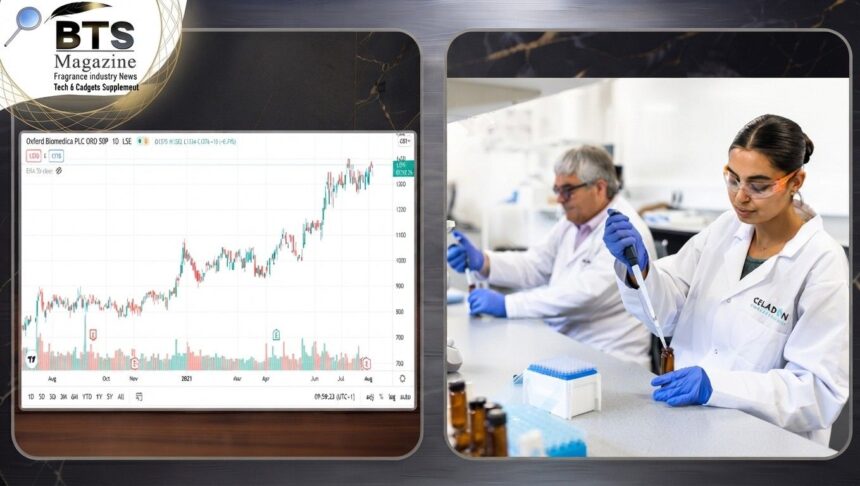
The shares closed at 505p on August 7, 2026, compared with the previous close of 591p. Earlier in the trading session, the stock had fallen by more than 24% after Oxford Biomedica reduced its 2026 revenue forecast.
Here’s the thing: one bad trading day does not tell the whole story. The company is still growing its client base, developing its global manufacturing network and targeting much higher revenue over the longer term. At the same time, delays and changes in customer ordering have reminded investors that growth in biotechnology rarely happens in a perfectly straight line.
What Is Oxford Biomedica?
Oxford Biomedica, now increasingly branded as OXB, is a contract development and manufacturing organisation, or CDMO, focused on cell and gene therapy.
The business started in 1995 as a spinout from the University of Oxford. It has since developed into an international company with development and manufacturing operations in the UK, France and the United States.
Rather than relying mainly on developing its own medicines, Oxford Biomedica now focuses heavily on helping pharmaceutical and biotechnology companies develop and manufacture viral vectors.
These vectors are an important part of many modern gene and cell therapies.
Latest Oxford Biomedica Share Price Movement
The most recent major move happened on August 7, 2026.
According to London Stock Exchange data, Oxford Biomedica shares finished the session at 505p. The stock had closed at 591p the previous trading day, representing a closing decline of about 14.6%. Trading volume also jumped sharply to more than 6.6 million shares.
During the session, however, the decline was even steeper. Reuters reported that the shares were down more than 24% at one stage and had reached their lowest level in almost a year.
That difference is worth understanding. Headlines about a 24% fall referred to the intraday movement, while the final closing decline was smaller.
Why Did Oxford Biomedica Shares Fall?
The main reason was a reduction in expected 2026 revenue.
Oxford Biomedica had previously expected full-year revenue of around £220 million to £240 million. On August 7, management lowered that forecast to approximately £180 million to £200 million.
For a growth company, a forecast reduction of that size naturally gets investors’ attention.
The market had been pricing in strong expansion. When expectations suddenly changed, the Oxford Biomedica Share Price adjusted very quickly.
What Changed in the 2026 Guidance?
There was not one single problem.
Oxford Biomedica said some customer programmes had been deferred or delayed because of changes in client strategy and clinical data. It also reported a change in procurement strategy and the approval pathway of a larger customer.
Another factor was the company’s facility in Durham, North Carolina.
Its operational readiness was roughly six months later than expected. Oxford Biomedica said the integration programme was back on track and that the first GMP run was taking place, but the delay still affected expected revenue for 2026.
Oxford Biomedica Key Facts
| Detail | Information |
|---|---|
| Company | Oxford Biomedica plc / OXB |
| Stock ticker | OXB |
| Exchange | London Stock Exchange |
| Industry | Cell and gene therapy |
| Business model | Contract development and manufacturing organisation |
| Founded | 1995 |
| Origin | University of Oxford spinout |
| Headquarters | Oxford, UK |
| 2025 reported revenue | £168.7 million |
| August 7, 2026 closing price | 505p |
| Updated 2026 revenue guidance | £180m–£200m |
| 2030 revenue ambition | Around £500 million |
Company and financial information is based on Oxford Biomedica’s published results and trading updates.
What Does Oxford Biomedica Actually Do?
Understanding the business makes it easier to understand the Oxford Biomedica Share Price.
OXB works with biotechnology and pharmaceutical companies that are developing cell and gene therapies. It provides expertise covering viral vector development, manufacturing and commercialisation.
Its technologies include work with lentiviral vectors, adeno-associated virus or AAV vectors, adenoviral vectors and other vector types.
This means Oxford Biomedica can earn revenue as client programmes move through different stages of drug development.
Why Viral Vector Manufacturing Matters
Gene therapies often need a delivery system capable of carrying genetic material into cells.
Viral vectors can perform that job.
Producing those vectors consistently and at commercial standards is highly specialised work. Biotechnology companies do not always want to build their own manufacturing infrastructure, which creates an opportunity for CDMOs such as OXB.
That is the basic investment story behind the company.
If demand for advanced therapies grows and more treatments move toward commercial production, manufacturing partners may benefit too.
Why the Oxford Biomedica Share Price Can Be Volatile
Biotechnology stocks can move much faster than shares in mature industries such as utilities or consumer staples.
OXB is no exception.
Its valuation depends heavily on expectations for future revenue, manufacturing demand, client programmes and profitability. A relatively small change in the timing of a major contract can therefore have a noticeable effect on investor expectations.
Client Ordering Can Change Quickly
Oxford Biomedica’s August update showed exactly why this matters.
Some customers are taking a more staged approach to ordering work packages. That does not necessarily mean the work has disappeared, but it can mean revenue takes longer to arrive.
To be honest, that distinction is important.
A cancelled programme and a delayed programme are not the same thing. Investors will now want to see whether postponed work eventually turns into recognised revenue.
The Durham Facility Is Another Key Factor
Oxford Biomedica acquired a commercial-scale viral vector manufacturing facility in Durham, North Carolina, strengthening its presence in the US market.
The company reported that the facility was FDA-approved when acquired and said the deal expanded its commercial manufacturing capabilities, particularly in AAV.
The six-month integration delay has therefore become an important issue.
If the facility ramps up successfully, concerns may begin to ease. Continued delays would likely create more questions about costs and execution.
Profitability Matters as Much as Revenue
Investors should not look only at sales.
Oxford Biomedica also reduced its expected 2026 EBITDA margin. Management now expects a mid-single-digit percentage margin before one-off costs, with a low-single-digit percentage margin on a reported basis.
Lower revenue can make it harder to absorb fixed operating costs.
That is why future improvements in profitability may become one of the biggest drivers of the Oxford Biomedica Share Price.
Oxford Biomedica’s 2025 Performance
It is worth looking at what happened before the latest setback.
Oxford Biomedica reported £168.7 million of revenue for 2025, up 31% from £128.8 million in 2024. At constant currency, revenue reached £170.9 million.
Reported Operating EBITDA moved into positive territory at £2.3 million, compared with a £15.3 million loss in 2024.
The company also ended 2025 with approximately £96.9 million in cash and £55.4 million in net cash.
What’s interesting is that the latest guidance cut comes after a year of significant financial improvement.
That creates a mixed picture rather than a simple good-or-bad story.
Revenue Backlog Remains Important
Another figure worth following is the company’s revenue backlog.
At the end of 2025, backlog stood at around £204 million. By June 30, 2026, it was approximately £193 million.
OXB also reported around £97 million of contracted client orders during the first half of 2026.
Around £165 million of forecast 2026 revenue was covered by contracted client orders at the time of the August update, although recognising that revenue remains subject to performance obligations.
That provides some visibility, but investors will still want to see those contracts convert into actual reported sales.
New Client Growth Offers Some Encouragement
There were positive numbers inside the same update that triggered the sell-off.
OXB signed 17 new clients during the first half of 2026, more than 30% above the total number signed during the entire 2025 financial year.
Its non-risk-adjusted new business pipeline also increased about 30% year over year to roughly $713 million.
This does not guarantee future revenue. A sales pipeline is not the same thing as money already booked.
Still, it suggests demand has not disappeared.
Bristol Myers Squibb Partnership Adds Commercial Weight
Oxford Biomedica has also entered into a multi-year commercial supply agreement with Bristol Myers Squibb.
The agreement covers the manufacture and supply of lentiviral vectors supporting BMS’s CAR-T programmes.
For investors, relationships with major pharmaceutical businesses can be valuable because they demonstrate that OXB’s manufacturing capabilities are being used for advanced commercial programmes.
Large partnerships can also help diversify the company away from depending too heavily on individual early-stage biotech customers.
The EQT Takeover Story Also Moved the Shares
The Oxford Biomedica Share Price has not been driven only by financial results.
Earlier in 2026, Swedish private equity group EQT considered a takeover of the company.
Oxford Biomedica said it had received several proposals but believed they undervalued the business. EQT later announced that it would not proceed with an offer, and Oxford Biomedica shares dropped following the news.
Takeover speculation can push a stock higher because investors begin pricing in the possibility of an acquisition premium.
When an interested buyer walks away, some of that premium can disappear just as quickly.
Four Things Investors Should Watch Next
Several developments may influence the Oxford Biomedica Share Price over the coming months.
1. September 2026 Interim Results
Oxford Biomedica is scheduled to report detailed interim results for the six months ended June 30, 2026 on September 22, 2026.
This is likely to give investors more detail about costs, margins, cash flow, client activity and progress at Durham.
It could be an important update.
2. Progress at the Durham Facility
The market will want evidence that the six-month delay was temporary.
Successful GMP manufacturing and increased activity at Durham would support the argument that the facility can contribute meaningfully to future growth.
Another delay could have the opposite effect.
3. Order Conversion and Revenue Backlog
Signing customers is useful.
Turning orders into recognised revenue is better.
Investors should therefore watch contracted order values, revenue backlog and the pace at which projects move from development into manufacturing.
4. 2027 Growth Targets
Despite reducing its near-term outlook, Oxford Biomedica maintained guidance for 25% to 30% revenue growth in 2027.
Management also expects at least a double-digit EBITDA margin in 2027 and continues to target approximately £500 million of annual revenue by 2030.
These targets are ambitious.
Whether investors continue to believe them will depend heavily on execution during the next several reporting periods.
The Bull Case for Oxford Biomedica Shares
There is still a logical bullish argument.
OXB operates in the growing cell and gene therapy manufacturing industry and has decades of viral vector experience. It has added customers, expanded internationally and secured relationships with major pharmaceutical businesses.
The company’s first-half 2026 revenue was approximately £80 million, around 9% higher than the comparable period, even though the full-year forecast was reduced.
If delayed projects restart, Durham ramps successfully and new client wins develop into larger commercial contracts, the company’s earnings potential could improve.
That would likely help sentiment toward the Oxford Biomedica Share Price.
The Risk Case Investors Should Understand
The risks are just as real.
OXB depends partly on customers successfully advancing complicated biotechnology programmes. Clinical results, financing conditions, strategic decisions and regulatory developments can all affect when those customers place orders.
Manufacturing expansion also requires investment.
Oxford Biomedica reported gross cash of £75 million and net cash of approximately £21 million as of June 30, 2026, down from £97 million and £55 million respectively at the end of 2025.
Cash levels, debt, capital expenditure and profitability should therefore remain on investors’ watchlists.
How to Read Oxford Biomedica Share Price Movements
Investors sometimes make the mistake of treating every large daily move as a permanent change in a company’s value.
That can be risky.
The Oxford Biomedica stock price reflects both current results and expectations about what the company may earn years into the future.
When those expectations rise, the stock can move quickly higher.
When expectations are cut, the opposite happens.
Don’t Focus on One Trading Day Alone
The August 7 decline is significant, but it should be viewed alongside longer-term performance.
London Stock Exchange data showed a 52-week trading range of approximately 423.5p to 962p as of August 7.
That wide range shows just how much investor sentiment toward OXB has changed during the past year.
Instead of focusing only on whether the share price rises or falls tomorrow, investors may get more useful information from revenue growth, margins, cash generation, backlog and new commercial contracts.
Is Oxford Biomedica a Good Share to Buy?
There is no simple answer.
The company offers exposure to cell and gene therapy manufacturing, and its longer-term growth targets remain substantial. At the same time, the recent revenue downgrade shows that timing risk and execution risk are very real.
A falling share price does not automatically mean a stock is cheap.
Likewise, a rising share price does not automatically mean the underlying business is improving.
Anyone considering an investment should look at valuation, financial results, cash generation, competitive position and personal risk tolerance rather than relying on a single price target or headline.
This article is for informational purposes and should not be treated as personalised financial advice.
Final Thoughts on Oxford Biomedica Share Price
The Oxford Biomedica Share Price is likely to remain closely watched after the company’s August 2026 guidance reduction. The fall to a 505p closing price reflected real concerns about delayed customer programmes, the slower-than-expected Durham ramp-up and lower near-term profitability. Yet OXB still reported record new-client activity, a large business pipeline and unchanged longer-term ambitions, including roughly £500 million of revenue by 2030. Investors now need to see whether management can turn those ambitions into consistent revenue and improving margins. For readers who want more background on the company’s history, its origins as an Oxford University spinout and its development over the years, the Oxford Biomedica Wikipedia page provides a useful additional overview.