

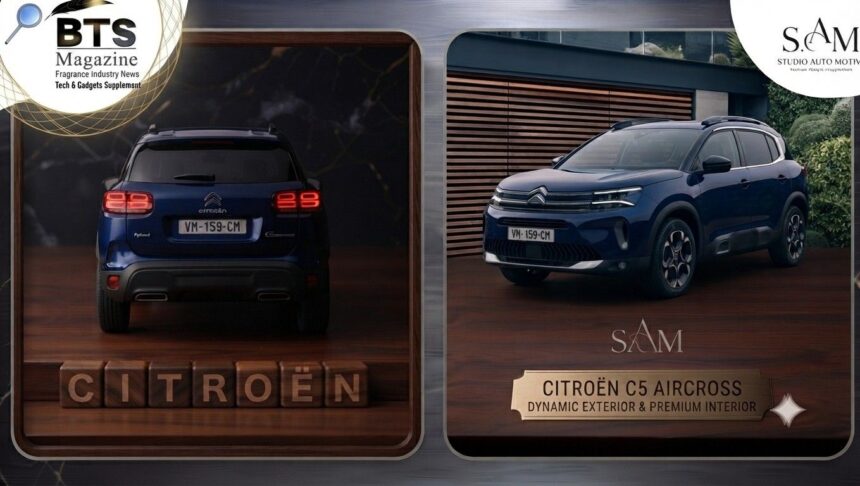
stellantis reintroduces diesel cars is becoming a surprising automotive story in Europe. At a time when electric vehicles, hybrids, and stricter emissions targets dominate the conversation, Stellantis has started bringing diesel engines back to selected models that had previously moved away from them.
- What Does Stellantis Reintroduces Diesel Cars Really Mean?
- Who Is Stellantis?
- Why Stellantis Reintroduces Diesel Cars Now
- Which Diesel Cars Are Returning?
- The Citroën Berlingo Shows the Strategy Clearly
- Why the Diesel Return Seems Surprising
- Diesel Sales Are Still Falling
- Electric Cars Are Still Growing
- Hybrid Cars Are Playing an Even Bigger Role
- Stellantis Is Moving Toward More Choice
- Why Diesel Can Still Make Business Sense
- What About Emissions?
- What Does This Mean for Car Buyers?
- Will Other Carmakers Follow Stellantis?
- What Happens Next?
- Stellantis Reintroduces Diesel Cars: A Practical Reset
The change began in late 2025 and involves at least seven passenger cars and passenger vans across Europe. Models connected with the shift include the Peugeot 308, DS No. 4, Opel Astra, Opel Combo, Peugeot Rifter, and Citroën Berlingo. Stellantis says the main reason is simple: it wants to respond to what customers actually want.
Here’s the thing. This does not mean Stellantis has suddenly abandoned electric cars. Instead, it shows how complicated the transition from traditional engines to electric mobility has become.
What Does Stellantis Reintroduces Diesel Cars Really Mean?
When people hear that stellantis reintroduces diesel cars, it can sound like the company is reversing its entire electric vehicle strategy.
That is not quite what is happening.
Stellantis told Reuters that it had decided to keep diesel engines in its portfolio and, in some situations, increase the number of powertrain choices available to customers. The company said its focus is on customer demand and generating growth.
So this is better understood as a selective return rather than a complete comeback for diesel.
Who Is Stellantis?
Stellantis is one of the world’s major automotive groups. It was created in 2021 through the merger of PSA Group and Fiat Chrysler Automobiles.
The company controls 14 well-known automotive brands, including Peugeot, Fiat, Jeep, Citroën, Opel, Alfa Romeo, Dodge, Ram, Chrysler, DS Automobiles, Maserati, Lancia, Abarth, and Vauxhall.
That large collection of brands makes any major Stellantis powertrain decision important for the wider European car industry.
Why Stellantis Reintroduces Diesel Cars Now
The story behind stellantis reintroduces diesel cars is largely about flexibility.
Stellantis had invested heavily in electrification and previously set ambitious EV targets. Reuters reported that electric vehicle sales had not developed as quickly as Stellantis originally expected in some important markets, encouraging the company to adjust its product strategy.
Instead of relying too heavily on one type of powertrain, Stellantis appears to be giving customers more choices.
That can include battery-electric vehicles, hybrids, petrol engines, and selected diesel engines depending on the vehicle and market.
Customer Demand Still Matters
Automakers can set ambitious long-term strategies, but customers ultimately decide what they purchase.
Some European drivers still want diesel, especially people who regularly make long journeys or use larger family vehicles.
Citroën directly explained this reasoning when announcing the return of diesel engines to the Berlingo. The company said the decision addresses the needs of frequent drivers, families making long journeys, and people without access to home charging.
That gives us a much clearer explanation of why diesel has not completely disappeared.
Long-Distance Driving Remains Important
Electric cars work well for many drivers, especially when convenient home or workplace charging is available.
The situation can be different for people who cover large distances regularly or cannot easily charge at home.
Citroën specifically highlights long-distance range and fast refueling as advantages of its diesel Berlingo models.
For these customers, the choice is often based on everyday practicality rather than a debate about whether diesel or electric technology is universally better.
Which Diesel Cars Are Returning?
The stellantis reintroduces diesel cars strategy covers more than a single vehicle.
Reuters found that diesel versions of at least seven passenger cars and vans were being restored in European markets. The Peugeot 308 and premium DS No. 4 hatchback were among the passenger cars mentioned in the report.
The Opel Astra was also identified as one of the models receiving renewed diesel availability.
Availability can vary significantly by country, so buyers should not assume every diesel version will be offered throughout Europe.
Peugeot 308 and DS No. 4
The Peugeot 308 is one of the most recognizable models connected with the diesel return.
The DS No. 4 is another important example because it sits in a more premium part of the market.
Their inclusion shows that Stellantis is not restricting diesel only to commercial-style vehicles or basic transport.
Opel Astra and Combo
Reuters also identified the Opel Astra and Opel Combo among the vehicles involved in the diesel strategy.
The Combo is especially relevant because practical passenger vans can have very different usage patterns from small city cars.
Owners may carry passengers, luggage, equipment, or travel long distances, making powertrain choice more important.
Peugeot Rifter and Citroën Berlingo
The Peugeot Rifter and Citroën Berlingo are also connected with the return.
Citroën has officially confirmed that its Berlingo range is expanding again with BlueHDi 100 and 130 diesel engines in 2026, depending on the market.
The diesel versions sit alongside the electric ë-Berlingo rather than completely replacing it.
The Citroën Berlingo Shows the Strategy Clearly
The Berlingo may be one of the best examples of what Stellantis is trying to achieve.
Instead of saying every customer must choose one power source, Citroën is offering different solutions.
Its 2026 Berlingo range includes the returning diesel options while the electric ë-Berlingo remains available.
In the UK, Citroën had already announced diesel and petrol versions of the Berlingo alongside its electric model, saying the broader range was being introduced in response to customer demand.
Why the Diesel Return Seems Surprising
The stellantis reintroduces diesel cars news attracts attention because diesel’s share of the European passenger car market has been falling for years.
Diesel once played a much larger role in European motoring. Reuters notes that diesel represented at least half of European new-car sales as recently as 2015 before declining sharply following the Dieselgate emissions scandal and the industry’s shift toward cleaner technologies.
The current market looks completely different.
That is what makes Stellantis’ decision interesting.
Diesel Sales Are Still Falling
A few diesel models returning should not be confused with a general diesel recovery.
In the first half of 2026, diesel represented only 7.5% of new passenger car registrations in the European Union, according to the European Automobile Manufacturers’ Association. Diesel registrations were down 16.5% compared with the same period a year earlier.
This means diesel remains a shrinking part of the passenger car market.
Stellantis appears to be targeting particular customers rather than betting on a full diesel revival.
Electric Cars Are Still Growing
This is another important part of the story.
It would be misleading to say stellantis reintroduces diesel cars simply because Europeans have stopped buying electric vehicles.
Battery-electric cars actually reached 20.7% of new EU registrations during the first half of 2026, rising from 15.6% during the same period in 2025. More than 1.22 million battery-electric cars were registered in those six months.
So EV adoption is still moving forward at the broader EU level.
The challenge for Stellantis is more specific: finding the right balance between its electrification plans, its own sales performance, customer demand, affordability, and different driving needs.
Hybrid Cars Are Playing an Even Bigger Role
What’s interesting is that the biggest story may not be diesel versus electric at all.
Hybrid-electric cars captured 37.3% of EU registrations during the first half of 2026, making them the most popular powertrain category measured by ACEA. Plug-in hybrids held another 9.8%.
This suggests European buyers are spreading across several technologies.
The market is becoming more mixed, not less.
Stellantis Is Moving Toward More Choice
One theme repeatedly appears in Stellantis brand announcements: customer choice.
Citroën said that offering petrol and diesel engines alongside electric versions gives buyers greater flexibility. The company pointed specifically to the needs of families and businesses.
This approach allows Stellantis to sell vehicles to people who are ready for EVs while keeping options available for customers whose lifestyle or charging situation makes combustion engines more practical.
It Is Not the End of Stellantis EVs
The return of selected diesel models should not be treated as proof that Stellantis has given up on electric vehicles.
For example, when Citroën announced returning combustion engines for the Berlingo, it continued selling the electric ë-Berlingo at the same time.
Opel’s current brand strategy also promotes multi-energy platforms and continues offering fully electric versions across its model lineup.
What has changed is the degree of flexibility Stellantis appears willing to offer.
Why Diesel Can Still Make Business Sense
From a business point of view, stellantis reintroduces diesel cars may help the company reach customers who are not currently interested in buying an EV.
Reuters also highlighted another competitive factor: many fast-growing Chinese automotive companies entering Europe have built their strength around electric cars rather than diesel engines. That leaves a smaller diesel market where established European manufacturers may face less direct competition from those EV-focused rivals.
It does not make diesel a growth technology.
But even a shrinking market can remain commercially useful if enough customers still want the product.
Vans Are Different From Small City Cars
Passenger vans deserve special attention.
A Berlingo, Combo, Rifter, or SpaceTourer may be used by large families, frequent travelers, or people carrying substantial loads.
Citroën’s new SpaceTourer diesel engine, for example, was introduced with 150 hp and 180 hp versions in selected markets, while the company emphasized improved torque and flexibility for loaded vehicles and overtaking.
That helps explain why diesel may survive longer in certain vehicle categories than in small urban cars.
What About Emissions?
The environmental question cannot be ignored.
Diesel engines still produce tailpipe emissions, including carbon dioxide, and modern European models must comply with increasingly strict emissions requirements.
Citroën says its updated 2.2-liter diesel used in vehicles such as the SpaceTourer complies with the Euro 6e standard. The company also reports lower fuel consumption and CO₂ emissions compared with the engine it replaced.
Still, an improved diesel engine is not the same thing as a zero-tailpipe-emission battery-electric vehicle.
That distinction matters when discussing Europe’s long-term climate goals.
What Does This Mean for Car Buyers?
For buyers, the biggest benefit is simply more choice.
Someone with easy charging access and mostly predictable daily travel may prefer an electric vehicle.
Another customer who covers long motorway distances, carries a large family, or cannot install a home charger may still see value in diesel.
There is no single powertrain that works perfectly for every driver today.
And Stellantis appears to be recognizing that reality.
Will Other Carmakers Follow Stellantis?
The stellantis reintroduces diesel cars decision does not automatically mean every major automaker will begin bringing diesel engines back.
Diesel’s EU passenger car market share is still declining, while electric and hybrid vehicles continue gaining ground.
Because of that, a huge industry-wide diesel comeback appears unlikely based on current market data.
However, manufacturers may continue keeping combustion engines available in selected models where clear customer demand remains.
What Happens Next?
The most important thing to watch is whether Stellantis expands diesel availability to additional models or treats the current lineup as a limited response to specific customer groups.
Market-by-market differences will matter too.
Charging infrastructure, fuel prices, vehicle taxation, emissions rules, purchase incentives, and customer driving habits can all affect which powertrain works best in a particular country.
To be honest, the future is unlikely to be as simple as “electric wins” or “diesel returns.”
For the next several years, multiple technologies may continue competing side by side.
Stellantis Reintroduces Diesel Cars: A Practical Reset
The fact that stellantis reintroduces diesel cars is best viewed as a practical adjustment rather than a complete reversal of automotive electrification.
Stellantis began restoring diesel versions of selected European cars and passenger vans from late 2025 while continuing to sell and develop electric vehicles. At the same time, EU data shows electric vehicle market share rising and diesel continuing to decline.
That combination tells the real story.
Stellantis is trying to manage the transition instead of betting everything on one technology. Diesel may have a smaller future than it once did, but selected models can still serve drivers who value long-distance range, fast refueling, practicality, and familiar ownership.
For readers who want more background on the company behind this strategy, the history of its 2021 formation, its major automotive brands, and its place in the global car industry can also be explored through the Stellantis page on Wikipedia.