
The BMW Isetta is one of those cars that makes people smile the moment they see it. It’s small, round, and looks a little like a bubble on wheels. But behind that cute shape sits a real piece of automotive history. Here’s the thing: this tiny car helped save a major company and put a struggling post-war Europe back on the road.
- What Exactly Is the BMW Isetta?
- Where Did the Isetta Come From?
- How BMW Got Involved
- Key Specs of the BMW Isetta
- Models and Variations
- Why the BMW Isetta Became So Popular
- The Cultural Impact of the Isetta
- Collecting a BMW Isetta Today
- The Legacy of the BMW Isetta
- Fun Facts About the BMW Isetta
- Is the BMW Isetta Worth Knowing About?
Let’s take a proper look at how it all happened.
What Exactly Is the BMW Isetta?
The BMW Isetta was a microcar, or what many people back then called a “bubble car.” It had a single door at the front, sat two people, and ran on a small engine. To be honest, it looked more like a scooter with a roof than a traditional car.
It wasn’t fast. It wasn’t fancy. But it was cheap, reliable, and easy to park just about anywhere.
Where Did the Isetta Come From?
Here’s a fun surprise. The Isetta wasn’t originally a BMW at all.
The design came from Italy. A company called Iso SpA created the first Isetta back in 1953. The word “Isetta” actually means “little Iso” in Italian, which makes total sense once you see the size of it.
The Italian Roots
Iso was better known for making refrigerators and scooters. The founder, Renzo Rivolta, wanted to build a cheap car for everyday people. That idea led to the original Isetta.
What’s interesting is that the little car didn’t sell as well as expected in Italy. So Iso started licensing the design to other companies around the world.
How BMW Got Involved
By the mid-1950s, BMW was in trouble. The company made expensive luxury cars and motorcycles, but sales were weak. They needed something affordable and quick to build.
So BMW bought a license to produce the Isetta. Production under the BMW name ran from 1955 to 1962. That decision turned out to be a lifesaver.
A Car That Rescued a Company
The BMW Isetta sold in big numbers. It brought in steady cash during a rough period. Without that little bubble car, some historians argue BMW might not have survived the decade.
Key Specs of the BMW Isetta
Let’s talk numbers, because they tell you a lot about this car.
- Engine: A small motorcycle-based engine, around 250cc to 300cc depending on the model
- Top speed: Roughly 50 mph (about 85 km/h)
- Seating: Two adults, snugly
- Doors: Just one, at the very front
- Fuel economy: Fantastic for its time
The BMW Isetta wasn’t built for speed. It was built to be practical and cheap to run. And it nailed both.
That Famous Front Door
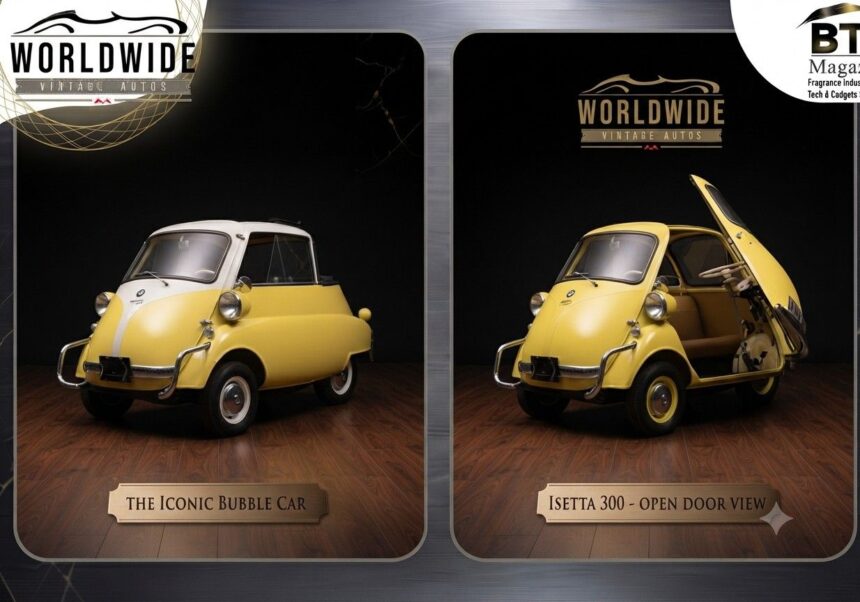
The single front-opening door is the Isetta’s signature feature. The steering wheel actually swung out with the door, which made getting in and out surprisingly easy.
Parking was a breeze too. You could nose it right up to a curb and step straight out onto the pavement.
Models and Variations
BMW made a few different versions during the production run. Here are the main ones worth knowing.
The Isetta 250
This was the first BMW version. It used a 247cc single-cylinder engine borrowed from a BMW motorcycle. Small but dependable.
The Isetta 300
BMW later bumped the engine up to around 298cc. This gave it a bit more pulling power, which drivers appreciated on hills.
Export Versions
Different markets got slightly different setups. Some export models came with tweaks to headlights, bumpers, and window styles to meet local rules. The UK, for example, had its own take on the little car.
Why the BMW Isetta Became So Popular
Timing had a lot to do with it. After World War II, money was tight across Europe. People wanted transport that was affordable, not luxurious.
The BMW Isetta fit that need perfectly. It cost less than a full-size car, sipped fuel, and was easy to maintain.
Cheap to Buy, Cheap to Run
For many families, this was their first taste of car ownership. That’s a big deal. It meant freedom and mobility without breaking the bank.
The Cultural Impact of the Isetta
Over the years, the BMW Isetta became a bit of a pop culture icon. Its quirky shape made it hard to forget.
You’ve probably spotted one in old films, TV shows, or vintage photos. It even popped up in the sitcom Family Matters, where the character Steve Urkel drove one around.
A Symbol of Its Era
The Isetta represents a very specific moment in history. It’s tied to recovery, optimism, and clever problem-solving during hard times.
That emotional connection is a big reason people still love it today.
Collecting a BMW Isetta Today
Here’s where things get interesting for car fans. The BMW Isetta has become a genuine collector’s item.
Clean, well-restored examples can sell for surprisingly high prices at classic car auctions. What was once a budget car is now a prized piece of history.
What Collectors Look For
- Original engines and parts
- Solid, rust-free bodywork
- Matching numbers and documentation
- That trademark front door in good working order
To be honest, finding a mint-condition BMW Isetta isn’t easy anymore. That scarcity keeps demand strong.
Restoration Challenges
Restoring one takes patience. Some parts are rare and pricey. But enthusiasts happily put in the work because the payoff is a rolling piece of automotive history.
The Legacy of the BMW Isetta
So what did this little car leave behind? Quite a lot, actually.
The BMW Isetta helped keep BMW alive during its darkest years. That alone earns it a special place in the company’s story.
Paving the Way for Bigger Things
The success of the Isetta gave BMW breathing room. It bought time for the company to develop bigger, more profitable models later on. In a sense, the little bubble car helped set the stage for the BMW we know today.
A Nod to Modern Microcars
You can even see echoes of the Isetta in modern city cars and electric microcars. The idea of a tiny, efficient vehicle for crowded streets never really went away.
Fun Facts About the BMW Isetta
A few extra tidbits that make this car even more charming:
- The whole car weighed around 350 kg, lighter than some modern motorcycles with sidecars.
- Because of its single front door, backing into a wall could trap you inside. So most models had a fabric sunroof as an emergency exit.
- Nicknames for it included “bubble car” and “egg on wheels.”
Is the BMW Isetta Worth Knowing About?
Absolutely. It’s more than a cute curiosity. It’s a reminder that smart, simple ideas can have a huge impact.
The BMW Isetta proved that a small, affordable car could solve real problems and even rescue a company. That’s a pretty big legacy for something so tiny.
If you ever get the chance to see one in person, take it. Photos really don’t capture how small and charming these things are. And if you want to dig deeper into its full history, from the original Italian design to all the licensed versions worldwide, the detailed rundown over on Wikipedia’s Isetta page is a great next stop.