

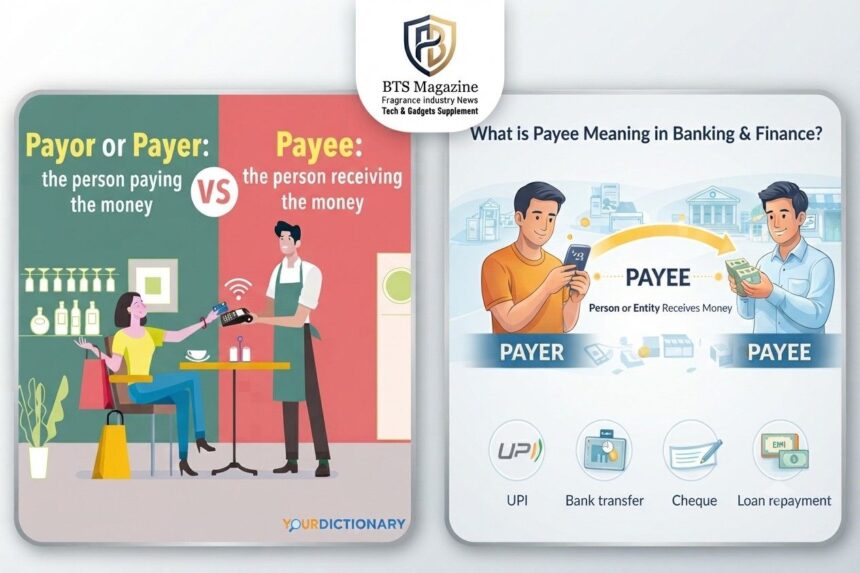
The payee definition is pretty simple once you break it down. A payee is the person or company that receives money in a payment. When someone sends you money, you’re the payee. When you write a check to your landlord, your landlord is the payee. That’s the short version.
- What Is a Payee? A Simple Explanation
- Payee Meaning in Plain Words
- Payer vs Payee: What’s the Difference?
- Where You’ll See the Term “Payee”
- Types of Payees
- Why the Payee Matters in a Financial Transaction
- Real-World Examples of a Payee
- Common Mistakes People Make With Payees
- Quick Checklist: Getting the Payee Right
- Payee vs Beneficiary: A Small but Useful Note
- Final Thoughts on the Payee Definition
But there’s a bit more to it than that. Understanding who the payee is helps you avoid mistakes with checks, invoices, and bank transfers. By the end of this post, you’ll know exactly what a payee is, how it differs from a payer, and where the term shows up in everyday money matters.
What Is a Payee? A Simple Explanation
Here’s the thing. In any payment, there are two main sides. One side sends the money. The other side receives it. The payee is the one receiving it.
So the payee definition boils down to this: the payment recipient in a financial transaction. That’s it. No fancy jargon needed.
You’ll see the word “payee” printed on checks, listed on invoices, and used in banking apps. It always points to the same idea — the party getting paid.
Payee Meaning in Plain Words
To be honest, banks love to make things sound more complicated than they are. But the payee meaning is one of those rare terms that stays clear.
If money is moving toward you, you are the payee. If it’s moving away from you, you’re something else (more on that in a second).
Think of it like mailing a letter. The person whose name is on the front — the one getting the letter — is like the payee. They’re the destination for what’s being sent.
Payer vs Payee: What’s the Difference?
This trips people up all the time, so let’s clear it up.
- Payer: the person or business sending or paying the money.
- Payee: the person or business receiving the money.
Same transaction, two roles. One pays, one gets paid.
A Quick Example
Say you buy a coffee and pay with your card. You’re the payer. The coffee shop is the payee. Flip the situation — the shop pays its supplier, and now the shop becomes the payer while the supplier turns into the payee.
The roles switch depending on the direction of the money. That’s the key takeaway.
Where You’ll See the Term “Payee”
The word pops up in more places than you’d expect. Let’s look at the most common ones.
Payee on a Check
When you write a check, there’s a line that says “Pay to the order of.” Whoever you write there is the check payee. That named payee is the only person or business allowed to cash or deposit that check.
This matters for security. A properly named payee stops random people from grabbing your money.
Payee on an Invoice
On a bill or invoice, the invoice payee is the business you owe money to. It’s usually printed near the top along with payment details like a bank account or address.
If you’re paying a freelancer, their name or company sits in the payee spot. Simple as that.
Payee in Online Banking
Open your banking app and try to send money. You’ll be asked to add a “payee” first. Here, the payee is just the account you’re sending funds to — a friend, a utility company, or a credit card.
What’s interesting is that banks make you save payees so you don’t type the wrong account number every time.
Types of Payees
Not every payee looks the same. Here are the main types you’ll run into.
Individual Payee
This is a single person. Think of paying a friend back for dinner or sending cash to a family member.
Business Payee
Companies get paid too. When you settle a bill with your phone provider, that provider is a business payee.
Named Payee
A named payee is a specific person or entity written directly on the payment. This is common with checks. Only that exact name can collect the funds, which adds a layer of protection.
Third-Party Payee
Sometimes money goes to someone acting on another person’s behalf. For example, a representative payee manages benefits for someone who can’t handle their own finances. The money is meant for one person but received by another.
Why the Payee Matters in a Financial Transaction
Getting the payee right isn’t just a formality. Mess it up, and your payment can go to the wrong place — or vanish into processing limbo.
In any financial transaction, the payee details tell the bank exactly where the money should land. Wrong name or wrong account? The transfer can bounce back or, worse, land in a stranger’s account.
That’s why banking terms like “payee” exist in the first place. They keep money moving to the right hands.
Real-World Examples of a Payee
Let me give you a few quick scenarios so this sticks.
- You pay rent by check. Your landlord is the payee.
- Your employer pays your salary. You are the payee.
- You buy groceries online. The store is the payee.
- You send money to a friend through an app. Your friend is the payee.
See the pattern? Whoever ends up with the money is always the payee.
Common Mistakes People Make With Payees
Even something this simple can go sideways. Here are the slip-ups I see most.
Misspelling the Payee Name
Banks can be picky. If the payee name on a check doesn’t match the account, it might get rejected. Double-check spelling before you hand it over.
Adding the Wrong Account Details
In online banking, one wrong digit sends your money to someone else entirely. Some banks can’t reverse it. Always confirm the payee’s account number twice.
Leaving the Payee Line Blank
A blank check with no named payee is risky. Anyone who finds it could fill in their own name. Never leave that line empty.
Quick Checklist: Getting the Payee Right
Before you send any payment, run through this:
 Is the payee name spelled correctly?
- Do the account details match the payee?
- For checks, is the “Pay to the order of” line filled in?
- Are you sure the money is going to the right payment recipient?
Ten seconds of checking can save you a huge headache later.
Payee vs Beneficiary: A Small but Useful Note
People sometimes mix these two up. A payee usually gets money in a direct transaction — like a check or a transfer. A beneficiary often refers to someone who receives money from things like insurance policies, wills, or trusts.
They overlap sometimes, but the context is different. When you’re dealing with everyday payments, “payee” is the word you want.
Final Thoughts on the Payee Definition
So there you have it. The payee definition really just means the party receiving money in a payment. Whether it’s a check payee, an invoice payee, or a saved contact in your banking app, the idea stays the same — that’s the person or business getting paid.
Once you understand the payer vs payee difference, everyday money tasks get a lot less confusing. Next time you write a check or set up a transfer, you’ll know exactly who the payee is and why those details matter.
If you want to dig deeper into where this term comes from, checks are a classic example of a written payment order, and you can read more about how they work on the Wikipedia page for cheques. It’s a handy reference if you’re curious about the history and the mechanics behind the payee line you see every day.
Continue reading: ufabetwin77.online Win – Everything You Need to Know About This Online Betting Platform