

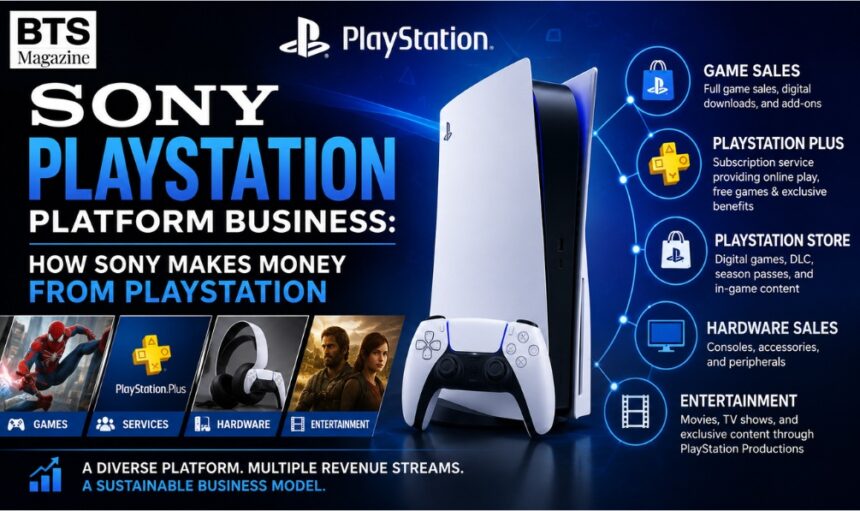
Sony’s PlayStation platform business is much bigger than selling PS5 consoles. Today, Sony makes money across a broad gaming ecosystem that includes hardware, digital game sales, add-on content, network services, subscriptions, accessories, first-party games, and third-party publisher activity.
- What Is the Sony PlayStation Platform Business?
- How Does Sony Make Money From PlayStation?
- 1. PS5 Hardware
- 2. Digital Game Sales
- 3. Downloadable Content and In-Game Purchases
- 4. PlayStation Plus Subscriptions
- Why the PlayStation Store Matters
- PlayStation’s Platform Advantage
- The Role of Third-Party Publishers
- PlayStation Studios and First-Party Games
- PlayStation and PC
- Why Sony’s Gaming Business Is Becoming Less Hardware-Dependent
- PlayStation’s Digital Transformation
- PlayStation Plus and Recurring Revenue
- Sony PlayStation vs. a Traditional Console Business
- What Makes the PlayStation Business Model Strong?
- Large User Base
- Strong Intellectual Property
- Digital Distribution
- Subscription Revenue
- Third-Party Ecosystem
- Brand Recognition
- What Are the Biggest Challenges for Sony’s PlayStation Business?
- Rising Game Development Costs
- Competition
- Live-Service Risk
- Digital Ownership Concerns
- Dependence on Hit Games
- The Future of Sony’s PlayStation Platform Business
- Frequently Asked Questions
- How does Sony make money from PlayStation?
- Is PlayStation a platform business or a console business?
- What is PlayStation Plus?
- Why is the PlayStation Store important to Sony?
- Does Sony make money from third-party PlayStation games?
- Is Sony moving beyond console gaming?
- Final Takeaway
That shift is important because PlayStation is increasingly functioning as a platform rather than simply a console brand. Sony’s latest disclosures show that game content and network services have become a major part of the Game & Network Services business, helping create recurring revenue from a large installed base of players.
For readers interested in broader technology and business trends, BTS Magazine also covers business, technology, brands and digital trends.
What Is the Sony PlayStation Platform Business?
The Sony PlayStation platform business is the collection of products, services, content and digital infrastructure built around the PlayStation ecosystem.
At the center is the PlayStation console, currently led by the PS5. Around that hardware, Sony operates a digital ecosystem where players can buy games, downloadable content, subscriptions and other digital products.
The basic model can be viewed like this:
PS5 → PlayStation account → PlayStation Store → Games & Add-ons → PlayStation Plus → Online Services → Long-term Customer Spending
This ecosystem gives Sony several ways to generate revenue from the same customer over time.
Sony’s Game & Network Services segment reported an installed base of more than 93 million PS5 units and 125 million monthly active accounts as of March 2026, demonstrating the scale of the platform.
How Does Sony Make Money From PlayStation?
Sony’s PlayStation business generates revenue through several major channels rather than depending only on console sales.
1. PS5 Hardware
The most visible part of the business is PS5 hardware.
Sony sells PlayStation consoles to establish the installed base that supports the wider ecosystem. A larger installed base creates more potential customers for games, subscriptions, accessories and digital content.
Hardware therefore serves two purposes:
- It generates direct sales.
- It brings customers into the broader PlayStation ecosystem.
This is why judging PlayStation only by console revenue can give an incomplete picture of Sony’s strategy.
2. Digital Game Sales
Digital software is one of the most important parts of the modern PlayStation business.
Players can purchase full games directly through the PlayStation Store. Sony also earns platform-related revenue from digital transactions involving third-party publishers and developers.
Sony’s financial reporting separates Game & Network Services sales into categories including digital software and add-on content, network services, and hardware and other products.
The digital model also gives Sony an important advantage: customers can continue spending after purchasing the console.
3. Downloadable Content and In-Game Purchases
The PlayStation ecosystem also benefits from add-on content.
Depending on the game, players may purchase:
- Expansion packs
- Downloadable content
- Season passes
- Cosmetic items
- Virtual currency
- Other digital upgrades
These purchases can create additional revenue long after the original game sale.
For a platform company, this recurring spending is valuable because the same installed user base can generate multiple transactions over time.
4. PlayStation Plus Subscriptions
PlayStation Plus is another major part of the platform strategy.
Sony offers multiple PlayStation Plus tiers, including Essential, Extra and Premium. Benefits can include online multiplayer, monthly games, discounts, cloud storage, game catalogues, classics, game trials and cloud streaming, depending on the membership level.
This creates a subscription relationship between Sony and its customers.
Instead of relying entirely on one-time purchases, Sony can generate recurring subscription revenue while giving users additional reasons to remain active inside the PlayStation ecosystem.
For more business and technology coverage, readers can explore BTS Magazine for additional industry-focused content.
Why the PlayStation Store Matters
The PlayStation Store is central to Sony’s digital strategy.
It provides a direct marketplace where PlayStation users can purchase:
- Full games
- Add-on content
- Expansions
- Digital editions
- Subscriptions
- Other gaming products
The importance of the Store goes beyond simply selling games. It keeps customers connected to Sony’s platform and makes digital purchasing convenient.
Sony’s own financial disclosures show the importance of digital software, add-on content and network services within Game & Network Services.
This is one reason the PlayStation platform can continue generating revenue after a customer has already purchased a PS5.
PlayStation’s Platform Advantage
A major strength of Sony’s business model is the network effect created by its ecosystem.
More players make the platform attractive to game developers and publishers. More games make the platform attractive to players. More players create a larger audience for digital purchases and subscriptions.
The cycle looks like this:
More PS5 Users → More Games → More Digital Spending → More Developer Interest → Stronger PlayStation Ecosystem
This is fundamentally different from a traditional hardware-only business.
The console is the entry point, but the ecosystem is where much of the long-term customer value is created.
The Role of Third-Party Publishers
Sony does not need to develop every successful game itself.
Third-party publishers bring major franchises and independent titles to PlayStation. Those games help keep players engaged and create additional activity across the PlayStation Store and network.
Sony has specifically highlighted the importance of attracting creators ranging from major publishers to independent studios, saying this broad ecosystem helps provide recurring revenue.
This creates an important relationship:
Publishers need players, players need games, and PlayStation provides the platform connecting them.
That makes the PlayStation ecosystem valuable even when the game itself is developed by another company.
PlayStation Studios and First-Party Games
Sony’s first-party studios are another important part of the strategy.
PlayStation Studios develops and publishes games that can help differentiate the platform. Successful franchises can encourage players to buy consoles, remain active and purchase additional games or services.
First-party games therefore have value beyond the initial software sale.
A successful PlayStation title can contribute to:
- Hardware demand
- Digital game sales
- PlayStation Plus engagement
- User retention
- Brand recognition
- Merchandise and entertainment opportunities
Sony has also stated that first-party titles can enhance third-party content and help attract and retain players on the PlayStation network.
PlayStation and PC
Sony’s gaming strategy is no longer limited entirely to console hardware.
The company has expanded the reach of selected PlayStation titles to PC, giving Sony another way to monetize its intellectual property.
This creates an interesting balance.
On one side, Sony wants PlayStation consoles to remain attractive. On the other, releasing selected games on PC can expand the audience for Sony-owned franchises and create additional software revenue.
That means Sony increasingly treats its game franchises as valuable intellectual property that can potentially reach customers across multiple platforms.
Why Sony’s Gaming Business Is Becoming Less Hardware-Dependent
The traditional console model focused heavily on selling hardware and then making money from games.
Sony’s current platform strategy is broader.
The company can generate value from:
- Console hardware
- Digital game purchases
- Add-on content
- Network services
- PlayStation Plus subscriptions
- Third-party games
- First-party software
- Accessories
- PC releases
- Long-term user engagement
Sony’s recent filings indicate that game content and network services account for more than two-thirds of Game & Network Services revenue, highlighting how important the platform ecosystem has become compared with a hardware-only approach.
PlayStation’s Digital Transformation
The gaming market has steadily moved toward digital distribution, and PlayStation is part of that broader shift.
Digital distribution can reduce dependence on physical manufacturing and makes it easier for publishers and platform operators to sell games and additional content directly to customers.
Sony’s financial reporting already separates digital software and add-on content from hardware and other products, reflecting how significant these categories have become.
For Sony, digital distribution also supports the wider platform strategy because the customer can purchase content without leaving the PlayStation ecosystem.
PlayStation Plus and Recurring Revenue
One of the most important changes in the PlayStation business is the growth of subscription-based services.
PlayStation Plus provides a recurring relationship with customers. Depending on the plan, subscribers can receive monthly games, online multiplayer, discounts, cloud storage, game catalogues and other benefits.
This model is strategically important because subscriptions can encourage customers to remain engaged even when they are not purchasing a new full-price game.
The higher PlayStation Plus tiers also give Sony additional opportunities to monetize users who want larger game libraries and premium features.
Sony PlayStation vs. a Traditional Console Business
A traditional console company might be described simply as:
Make console → Sell console → Sell games
Sony’s modern PlayStation ecosystem is closer to:
Build hardware → Acquire users → Build network → Sell digital content → Offer subscriptions → Retain users → Monetize intellectual property
That difference explains why the PlayStation platform business is strategically important to Sony.
The console remains essential, but it is increasingly the gateway into a much larger digital ecosystem.
What Makes the PlayStation Business Model Strong?
Several factors make Sony’s gaming platform particularly powerful.
Large User Base
A large installed base gives developers an incentive to support PlayStation with new games.
Strong Intellectual Property
Franchises and first-party studios help differentiate the platform.
Digital Distribution
Digital sales provide an efficient way to reach customers and sell additional content.
Subscription Revenue
PlayStation Plus provides an ongoing revenue stream and encourages user retention.
Third-Party Ecosystem
Sony does not have to produce every game itself. External publishers expand the platform’s content library.
Brand Recognition
PlayStation has decades of brand equity and global recognition.
For readers researching the wider business side of major technology brands, BTS Magazine provides another useful starting point for related business and technology topics.
What Are the Biggest Challenges for Sony’s PlayStation Business?
Despite its scale, the PlayStation business faces several challenges.
Rising Game Development Costs
Modern AAA games can require enormous budgets and years of development. A major commercial failure can therefore have a significant financial impact.
Competition
Sony competes with Microsoft’s Xbox ecosystem, Nintendo, PC gaming platforms and an increasingly large mobile gaming market.
Live-Service Risk
Sony has invested in live-service games, but these projects can be difficult to develop and maintain successfully.
Digital Ownership Concerns
As more games move toward digital distribution, consumers continue to debate pricing, ownership, access and preservation.
Dependence on Hit Games
Even with a large ecosystem, major releases remain important for attracting attention and maintaining engagement.
The Future of Sony’s PlayStation Platform Business
The future of PlayStation is likely to involve an increasingly interconnected ecosystem rather than a simple console cycle.
Sony’s current strategy emphasizes a large PS5 user base, strong platform engagement, recurring revenue and the continued expansion of game content and network services. Sony reported more than 93 million PS5 units in the installed base and 125 million monthly active accounts as of March 2026.
The company is also continuing to develop subscription services, digital distribution, first-party intellectual property and opportunities beyond traditional console hardware.
The key question is therefore no longer simply how many PlayStation consoles Sony can sell.
It is:
How much long-term value can Sony generate from each PlayStation user?
That is the heart of the modern Sony PlayStation platform business.
Frequently Asked Questions
How does Sony make money from PlayStation?
Sony makes money through PS5 hardware, digital game sales, downloadable content, network services, PlayStation Plus subscriptions, accessories and other products and services connected to the PlayStation ecosystem.
Is PlayStation a platform business or a console business?
It is both, but the platform component has become increasingly important. The console brings users into the ecosystem, while digital games, subscriptions, network services and other content create additional revenue opportunities.
What is PlayStation Plus?
PlayStation Plus is Sony’s paid subscription service. Depending on the membership tier, it provides benefits such as online multiplayer, monthly games, discounts, game catalogues, cloud storage, classics and cloud streaming.
Why is the PlayStation Store important to Sony?
The PlayStation Store gives Sony and participating publishers a digital marketplace for selling games, add-ons and other content directly to PlayStation users.
Does Sony make money from third-party PlayStation games?
Yes. Third-party publishers sell games and digital content through the PlayStation ecosystem, contributing to the broader Game & Network Services business. Sony has described its broad creator ecosystem as an important source of recurring revenue.
Is Sony moving beyond console gaming?
Yes. Sony has expanded selected PlayStation games to PC and continues to develop digital services and entertainment opportunities around its gaming intellectual property.
Final Takeaway
The Sony PlayStation platform business is no longer simply about selling consoles.
The PS5 is the entry point, but the bigger opportunity comes from the ecosystem surrounding it: digital games, add-on content, PlayStation Plus, network services, third-party publishers, first-party studios and long-term player engagement.
Sony’s own financial disclosures show how important game content and network services have become within its gaming segment. With a PS5 installed base exceeding 93 million units and 125 million monthly active accounts as of March 2026, the company has a large platform from which to generate recurring customer value.
In simple terms:
Sony sells the hardware, builds the platform, attracts the players, brings in the games and monetizes the ecosystem over time.
That is what makes PlayStation one of Sony’s most important platform businesses.
Sources & Further Reading
- PlayStation — Wikipedia overview of the PlayStation brand and its history.
- Sony Group’s FY2025 Annual Report / Form 20-F — official financial and corporate information.
- Sony’s Game & Network Services 2026 Q&A — current information on the PlayStation business, PS5 installed base and active users.
- PlayStation Plus — official information about subscription tiers and benefits.
- PlayStation Plus Support — official details about PlayStation Plus services.