
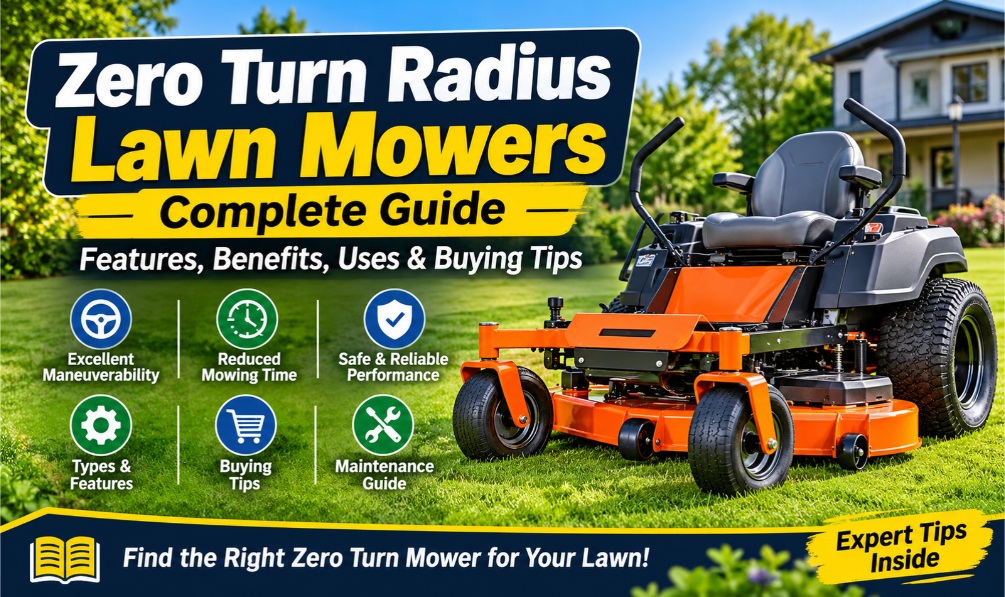
Zero turn radius lawn mowers have become a popular choice for homeowners, property managers, and professional landscaping businesses that need to maintain large grassy areas efficiently. Unlike traditional riding lawn mowers, these machines are designed to make extremely tight turns, move around obstacles, and cover open spaces with fewer unnecessary movements.
Their unique steering system allows the two rear drive wheels to operate independently. This gives the operator better control when moving around trees, flower beds, fences, and other landscaping features. However, not every zero-turn mower design and history is suitable for every property. Lawn size, ground conditions, cutting deck dimensions, engine power, and safety requirements all matter when selecting the right machine.
Understanding how these mowers work and what makes them different can help buyers make a more informed decision.
What Are Zero Turn Radius Lawn Mowers?
Zero turn radius lawn mowers are riding lawn mowers designed to turn within approximately their own footprint. They use independently controlled drive wheels to change direction without requiring the wide turning space needed by conventional riding lawn tractors.
Most traditional riding mowers use a steering wheel connected to their front wheels. Zero-turn models commonly use two steering levers, also called lap bars, that control the rear drive wheels independently.
When both rear wheels move forward at the same speed, the mower travels straight. When one wheel moves faster than the other, the machine turns. When the wheels rotate in opposite directions, the mower can pivot around its center.
This design makes it easier to navigate around landscaping features and return for another mowing pass without performing a large turnaround.
Zero-turn radius mowers are available in residential and commercial configurations. Residential models are generally designed for homeowners maintaining private lawns, while commercial machines are built for more frequent operation and demanding landscaping work.
How Do Zero Turn Radius Lawn Mowers Work?
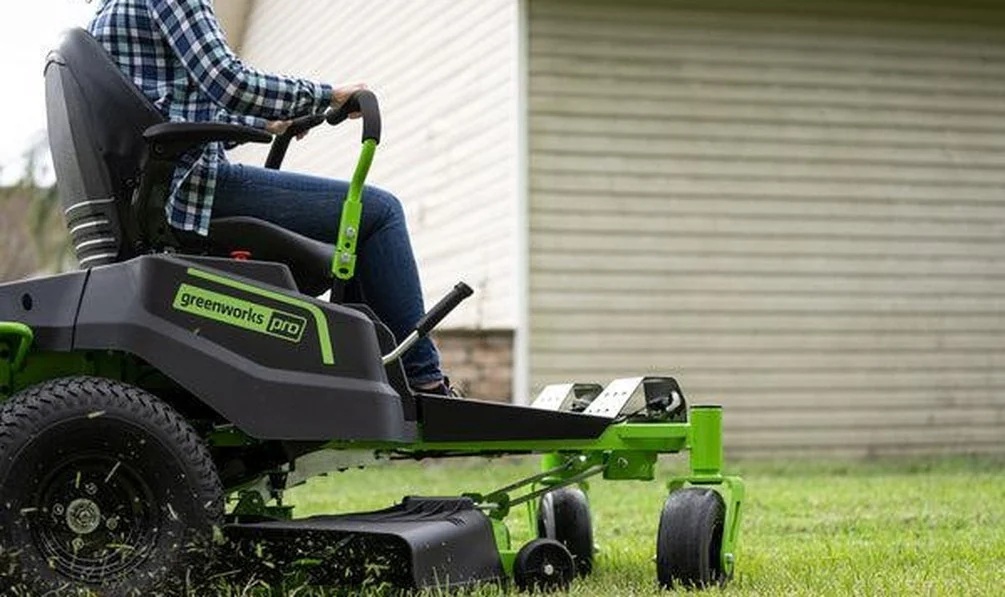

The main feature behind a zero-turn mower is its independent hydrostatic drive systems.
Most conventional gasoline-powered models use two separate hydrostatic drive systems. Each system controls one rear wheel, allowing the operator to adjust the speed and direction of each side independently.
The main components include:
1. Dual hydrostatic transmission
The transmission controls the movement of the rear wheels. It allows the operator to adjust speed smoothly without manually changing traditional gears.
2. Steering control levers
The two lap bars control the left and right drive wheels. Moving both levers forward makes the mower travel forward, while pulling them backward makes it reverse. Different lever movements create turns.
3. Rear drive wheels
The larger rear wheels provide the traction and movement needed to operate the mower. Their independent movement is what makes tight turning possible.
4. Front caster wheels
Most conventional zero-turn models have smaller front wheels that rotate freely. These wheels help support the front of the machine and follow the direction created by the rear drive system.
5. Cutting deck
The cutting deck houses the mower blades and determines the width of grass cut during each pass. Deck sizes vary depending on the machine’s intended application.
Some electric zero turn models use independently controlled electric drive motors instead of conventional hydraulic drive systems. Their operating principles are similar, but their power delivery and maintenance requirements differ.
Main Types of Zero Turn Radius Lawn Mowers
Zero-turn mowers are available in several configurations. The right option depends on the property, workload, and operator’s requirements.
1. Residential Zero-Turn Mowers
Residential zero-turn mowers are designed for homeowners who maintain medium-sized or large lawns. They generally offer comfortable seating, manageable controls, and cutting decks suited to private properties.
These models can help homeowners reduce mowing time when maintaining lawns with trees, flower beds, and other obstacles.
2. Commercial Zero-Turn Mowers
Commercial zero-turn mowers are designed for professional landscapers, groundskeeping teams, and businesses that mow regularly.
They commonly feature heavier-duty frames, stronger cutting decks, and components intended for longer operating hours. Their specifications vary by manufacturer and model.
3. Stand-On Zero-Turn Mowers
Stand-on mowers allow operators to stand on a platform rather than sit in a conventional seat.
They are commonly used by landscaping professionals who need to move between different properties and work in areas where a compact machine is beneficial.
4. Electric Zero-Turn Mowers
Electric zero-turn mowers use rechargeable batteries instead of conventional gasoline engines.
They produce no exhaust emissions during operation and generally require less routine powertrain maintenance than gasoline-powered models. However, buyers must consider battery capacity, charging time, operating conditions, and the availability of replacement batteries.
Benefits of Zero Turn Radius Lawn Mowers
Zero-turn mowers offer several practical advantages, especially when maintaining larger properties with multiple landscaping features.
1. Excellent Maneuverability
Their independent rear-wheel steering allows operators to turn around trees, garden beds, fences, and other obstacles without repeatedly reversing or repositioning the machine.
This can make mowing complicated landscapes more convenient.
2. Reduced Mowing Time
Zero-turn machines can cover open grassy areas efficiently because they combine relatively high operating speeds with tight turning capabilities.
Their cutting decks can also cover wider sections of grass with each pass. Actual mowing time depends on lawn layout, machine specifications, operator experience, and ground conditions.
3. Better Control Around Landscaping Features
The ability to make tight turns helps operators navigate around landscaping features with fewer unnecessary movements.
This can reduce the amount of additional trimming required after mowing, although some areas will still need a string trimmer or smaller mower.
4. Multiple Cutting Options
Many zero-turn mowers support different grass-disposal options, depending on their deck design and available accessories.
These commonly include:
- Side discharge, which releases grass clippings from the side of the deck.
- Mulching, which cuts grass into smaller pieces and distributes them across the lawn.
- Bagging, which collects grass clippings in an attached collection system.
The availability of these options depends on the particular model and compatible attachments.
5. Comfortable Operation
Many riding zero-turn mowers include padded seats, adjustable controls, and suspension-related features.
These features can make longer mowing sessions more comfortable compared with operating a push mower.
Disadvantages of Zero Turn Radius Lawn Mowers
Despite their advantages, zero-turn mowers are not the right choice for every property.
1. Higher Purchase Cost
Zero-turn mowers can cost more than comparable conventional riding lawn tractors. Commercial models with larger decks and heavy-duty components can require a substantially larger investment.
Buyers should consider the purchase price alongside maintenance, fuel or electricity, replacement parts, and storage requirements.
2. Learning Curve
The dual-lever steering system works differently from a traditional steering wheel.
New operators may need time to learn how to control speed, make smooth turns, and reverse safely. Practising in an open, level area can help build confidence.
3. Limitations on Steep Slopes
Many zero-turn mowers rely on rear-wheel traction for both movement and steering. On steep, wet, or slippery ground, the drive wheels may lose traction, making it difficult to maintain control.
A conventional riding mower or another suitable machine may be a better option for properties with challenging slopes.
4. Potential Grass Damage
Tight turns can cause rear tires to scuff or tear grass, particularly when the operator turns aggressively or the ground is wet.
Repeatedly following the same wheel paths can also contribute to soil compaction.
Operators should use smooth movements, avoid sharp turns on vulnerable turf, and vary mowing patterns when practical.
5. Limited Attachment Compatibility
Traditional lawn tractors often support a wider range of property-maintenance attachments.
Some zero-turn mowers support baggers, mulch kits, and other accessories, but compatibility varies. Buyers should check the manufacturer’s approved attachment list before purchasing.
How to Choose the Right Zero Turn Radius Lawn Mower
Selecting a mower involves more than choosing the widest cutting deck or the most powerful engine. The machine should match the property and the amount of work it will perform.
1. Consider Your Lawn Size
Start by measuring the area that actually needs mowing.
A smaller residential property may not require a large commercial machine. Larger properties with broad, open spaces may benefit from a wider cutting deck.
Think about obstacles, narrow gates, trees, and storage space before deciding on a machine.
2. Select an Appropriate Cutting Deck Size
The cutting deck determines how much grass the mower can cut in a single pass.
Common deck sizes include:
- 32–34 inches: Compact properties and tighter access areas.
- 36–42 inches: Smaller residential lawns.
- 48–52 inches: Larger residential properties and some professional applications.
- 54–60 inches: Large lawns and demanding mowing workloads.
- 61–72 inches: Extensive properties and commercial applications.
These are general size categories, not fixed property-size rules. Actual suitability depends on machine dimensions, obstacles, terrain, and manufacturer recommendations.
A wider deck may reduce the number of passes, but it can also make navigating narrow spaces more difficult.
3. Check Engine Power
Engine power affects how effectively a mower operates under different working conditions.
Gas-powered residential models commonly use single-cylinder or V-twin engines. V-twin engines are often selected for machines that need more power and smoother operation.
However, engine power should be considered alongside cutting deck size, transmission capacity, and the type of grass being maintained.
4. Compare Gas and Electric Models
Gas-powered mowers are suitable for buyers who need conventional refueling and longer operating periods without waiting for battery charging.
Electric models appeal to users who prefer quieter operation and want to avoid gasoline engine exhaust during mowing.
Before selecting an electric machine, check its stated operating time, battery capacity, charging requirements, and whether its performance suits the size of your property.
5. Evaluate Seat Comfort and Controls
Comfort becomes particularly important when mowing for extended periods.
Look for an adjustable seat, accessible controls, suitable legroom, and features that help reduce vibration.
If possible, test the steering system before purchasing. This can help determine whether the controls feel comfortable and manageable.
6. Review Maintenance and Warranty
Maintenance requirements differ between manufacturers and models.
Check the warranty coverage, availability of replacement parts, dealer support, and servicing requirements.
A mower with accessible service support can be easier to maintain over several years of use.
Are Zero Turn Radius Lawn Mowers Suitable for Hills?
Zero-turn mowers can operate on certain sloping properties, but their suitability depends on the machine, ground conditions, and manufacturer’s instructions.
Their rear-wheel drive design can make traction and steering more challenging on steep slopes. Wet grass, uneven surfaces, sudden directional changes, and unstable ground can increase the risk of sliding or losing control.
There is no single safe slope limit for every zero-turn mower safety recommendations.
For example, Toro provides guidance against operating its specified zero-turn machines on slopes greater than 15 degrees, while certain Husqvarna models specify a lower 10-degree limit.
Always follow the operator’s manual for the exact mower being used. Avoid mowing wet or slippery slopes, sudden turns, and areas near ditches, retaining walls, and drop-offs.
If a section of the property is unsuitable for riding equipment, use an appropriate walk-behind mower or string trimmer instead.
Zero Turn Mowers vs. Traditional Riding Lawn Mowers
Both machines are designed to make lawn maintenance easier, but their steering systems and applications are different.
| Feature | Zero-Turn Mower | Traditional Riding Mower |
|---|---|---|
| Steering | Independent drive wheels | Steering wheel |
| Turning | Very tight turning ability | Wider turning radius |
| Maneuverability | Excellent around obstacles | More limited |
| Learning curve | Requires practice | Generally easier |
| Large open lawns | Very suitable | Suitable |
| Sloped terrain | Model-dependent limitations | Often preferred for certain slopes |
| Attachments | Model-dependent | Often broader compatibility |
A zero-turn mower is generally a strong choice for large, relatively flat lawns with multiple obstacles. A traditional riding lawn tractor may be more appropriate for buyers who prioritize familiar steering and broader property maintenance capabilities.
How to Maintain Zero Turn Radius Lawn Mowers
Regular maintenance helps protect mower performance and reduce avoidable repair costs.
Clean the cutting deck: Remove accumulated grass and debris according to the manufacturer’s cleaning instructions.
Inspect the blades: Check for damage and sharpness. Dull or damaged blades can produce uneven cutting results.
Check tire pressure: Maintain the recommended pressure to help keep the mower deck level and improve handling.
Inspect air filters: Clean or replace filters according to the service schedule, particularly when operating in dusty conditions.
Check belts and components: Inspect drive belts, deck belts, and other accessible components for wear or damage.
Follow transmission service requirements: Hydrostatic systems may have specific inspection or fluid-service requirements. Follow the manufacturer’s schedule rather than assuming every model needs the same maintenance.
Store the mower properly: Keep the machine in a suitable covered area and follow the manufacturer’s recommendations for seasonal storage.
Who Should Buy a Zero Turn Radius Lawn Mower?
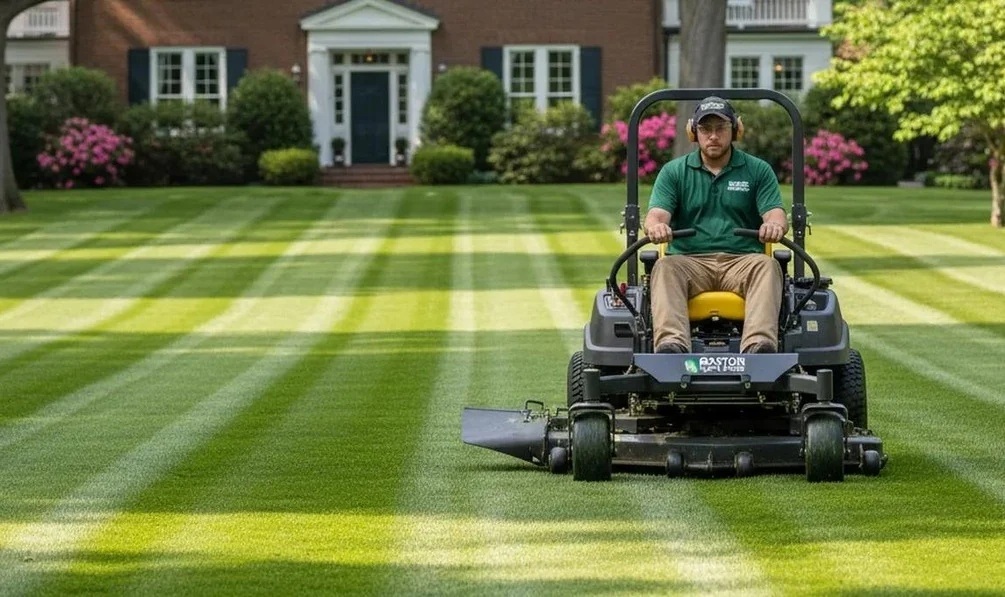
Zero-turn mowers can be useful for different types of property owners.
Homeowners with large lawns may benefit from their maneuverability and ability to cover open areas efficiently.
Professional landscapers may find commercial models useful when maintaining multiple properties and completing regular mowing jobs.
Property managers responsible for parks, institutional grounds, and large outdoor spaces may also benefit from the productivity these machines offer.
However, buyers with small lawns, steep terrain, or a need for multiple non-mowing attachments should compare other mower types before making a decision.
Frequently Asked Questions
1. What does zero turn radius mean on a lawn mower?
Zero turn radius means a mower can pivot within approximately its own footprint. It achieves this through independently controlled drive wheels, allowing it to make very tight turns.
2. Are zero-turn mowers better than regular riding mowers?
They can be better for large, relatively flat lawns with trees, flower beds, and other obstacles. Traditional riding mowers may be more suitable for buyers who want familiar steering or need a wider range of attachments.
3. What size zero-turn mower do I need?
The appropriate size depends on your lawn’s total area, layout, access restrictions, and terrain. Smaller decks are generally easier to navigate through tight spaces, while wider decks can cover open areas more quickly.
4. Can zero-turn mowers be used on hills?
Some models can operate on certain slopes, but safe operating limits vary. Always follow the manufacturer’s slope guidance and avoid wet, slippery, or unstable ground.
5. Do zero-turn mowers damage grass?
They can damage turf when operators make aggressive turns, spin the rear tires, or repeatedly drive over wet ground. Smooth steering and changing mowing patterns can help reduce this risk.
6. Are electric zero-turn mowers worth considering?
Electric models are worth considering when quieter operation, reduced routine engine maintenance, and avoiding exhaust emissions during mowing are priorities. Buyers should evaluate battery capacity and operating time before choosing one.
7. How long do zero-turn lawn mowers last?
Their lifespan depends on construction quality, operating hours, maintenance, storage, and working conditions. Commercial and residential models may have different durability expectations, so check the manufacturer’s warranty and service guidance.
Conclusion
Zero turn radius lawn mowers offer a practical solution for maintaining large lawns and properties where maneuverability and mowing efficiency matter. Their independent steering systems make it easier to navigate around landscaping features while reducing unnecessary turning movements.
However, choosing the right mower requires careful consideration of cutting deck size, engine or battery power, ground conditions, maintenance requirements, and operator comfort.
For homeowners with relatively flat, obstacle-filled lawns and professional landscapers maintaining extensive grassy areas, a suitable zero-turn mower can make regular lawn care more efficient. The best choice is ultimately the machine that matches the property’s layout, workload, and safety requirements.