
Solana is a blockchain network designed to make digital transactions faster, more affordable, and easier to use. It supports cryptocurrency transfers, decentralized applications, digital payments, gaming, and other online services. Its native cryptocurrency, called SOL, plays an important role in paying transaction fees and supporting the network.
As blockchain technology continues to develop, Solana has become an important name in the cryptocurrency industry. Developers use its infrastructure to create applications, while individuals use it to transfer digital assets, explore decentralized finance, and interact with blockchain-based services.
However, understanding Solana requires more than knowing its token price. Its technology, transaction system, security model, and potential limitations are equally important.
This guide explains what Solana is, how the network operates, what makes SOL different, where the technology is used, and what beginners should understand before getting involved.
What Is Solana?
Solana is an open source blockchain network that allows people to transfer digital assets and use applications without depending on a traditional central authority to maintain the transaction record.
It is a Layer 1 blockchain, meaning it has its own underlying infrastructure for processing transactions and maintaining network records. Developers can build applications directly on this infrastructure rather than creating a completely separate blockchain.
Solana was originally introduced by software engineer Anatoly Yakovenko, who published its initial technical proposal in 2017. The network’s mainnet beta launched in March 2020.
Its main purpose is to provide blockchain infrastructure that can support large numbers of transactions while keeping transaction costs relatively low.
Unlike a traditional financial institution, Solana operates through a distributed network of computers called validators. These participants help process transactions, maintain agreement about the network’s state, and support its security.
Solana is used across several areas, including:
-
Cryptocurrency transfers and payments.
-
Decentralized finance (DeFi).
-
Non-fungible tokens (NFTs).
-
Blockchain-based gaming.
-
Digital asset exchanges.
-
Decentralized applications.
-
Token creation and management.
One important distinction is that Solana and SOL are not the same thing. Solana refers to the blockchain network, while SOL is the cryptocurrency used within that network.
What Is SOL Cryptocurrency?
SOL is the native cryptocurrency of the Solana blockchain. It is an essential part of how the network operates because users need it to pay certain transaction fees and participate in staking.
People can hold SOL in compatible cryptocurrency wallets, transfer it to other users, or use it within applications built on Solana.
The token has several important functions.
1. Paying Transaction Fees
Every blockchain transaction requires network resources. On Solana, SOL is used to pay transaction fees when users transfer assets or interact with applications.
These fees are generally low compared with many blockchain alternatives, although the exact amount can change depending on network conditions and transaction requirements.
2. Staking SOL
SOL holders can delegate their tokens to validators to participate in the network’s proof-of-stake security system.
Validators help process transactions and maintain the blockchain. People who delegate SOL may receive a share of staking rewards, depending on validator performance, network conditions, and applicable fees.
Staking does not guarantee a fixed return, and users should understand the associated risks before participating.
3. Using Blockchain Applications
SOL is also used throughout the Solana ecosystem. People may need it to interact with decentralized exchanges, NFT platforms, blockchain games, and other applications.
For example, someone exchanging digital tokens through a decentralized application may need SOL to cover the transaction fee.
This makes SOL more than a cryptocurrency that people simply buy and sell. It also has a functional role within the network.
How Does Solana Blockchain Work?
Solana uses a combination of technologies to process transactions and maintain agreement between network participants.
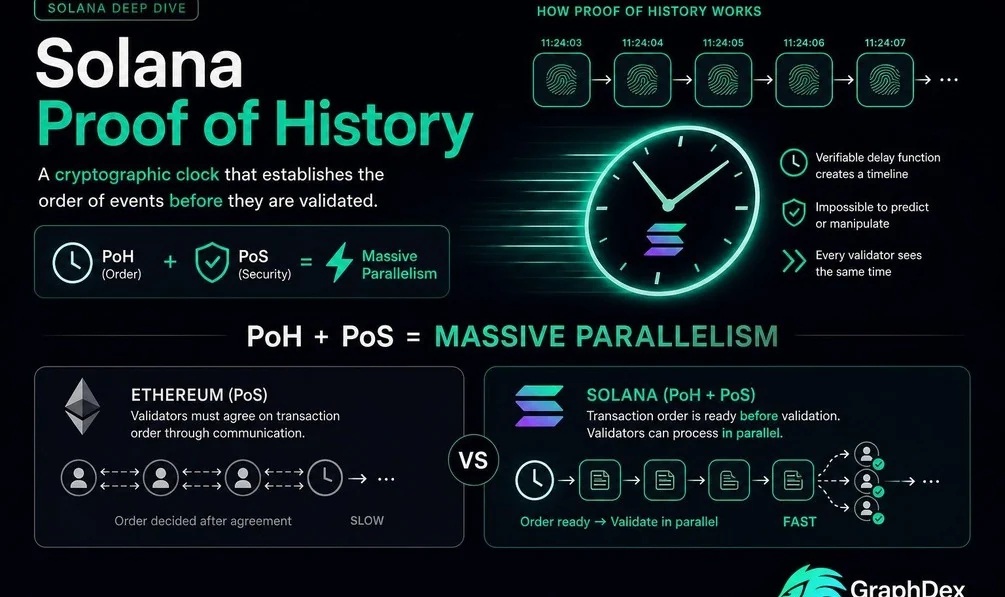
Two important parts of its design are Proof of Stake (PoS) and Proof of History (PoH).
Understanding these systems makes it easier to see why Solana was designed differently from some earlier blockchain networks.
Proof of Stake (PoS)
Proof of Stake is a blockchain security mechanism that allows participants to support network operations by staking cryptocurrency.
On Solana, validators are responsible for processing transactions and participating in the network’s consensus process.
SOL holders can delegate their tokens to validators without personally operating a validator.
The system uses stake-weighted participation to help determine validator influence in the consensus process.
This approach differs from Bitcoin’s Proof of Work system, which relies on computational mining.
Proof of History (PoH)
Proof of History is one of Solana’s best-known technical features.
It provides a cryptographically verifiable way to establish the order and passage of time between events.
In simple terms, imagine a shared digital record in which events receive a verifiable sequence. Network participants can use that sequence to understand when events occurred relative to one another.
This helps reduce the coordination required to establish transaction ordering.
However, Proof of History does not replace Proof of Stake or independently secure the entire blockchain. It works alongside Solana’s consensus mechanism.

Parallel Transaction Processing
Another important part of Solana’s design is parallel transaction execution.
Its Sealevel runtime can process transactions simultaneously when they do not conflict with one another.
For example, if two people transfer assets between completely separate accounts, those transactions may be processed in parallel.
This design helps the network handle a larger workload without requiring every independent transaction to wait for another one to finish.
Together, these technologies help Solana support applications that require frequent interactions and relatively quick transaction processing.
Key Features of Solana
Solana offers several features that make it attractive to developers and cryptocurrency users.
Fast Transaction Processing
Solana was designed to process transactions quickly. Its architecture supports high transaction throughput, making it suitable for applications where users expect relatively quick responses.
This can be useful for digital payments, decentralized exchanges, and interactive blockchain applications.
However, theoretical processing capacity and actual user transaction performance are not always the same. Network conditions and transaction types can affect real-world results.
Low Transaction Costs
Transaction fees are another major feature of Solana.
Many ordinary transactions cost only a small fraction of a dollar. This makes smaller transfers and frequent interactions more practical than they may be on networks with higher fees.
However, fees are not guaranteed to remain identical in every situation. Priority fees and network demand can affect the total cost.
Open-Source Infrastructure
Solana is built around open-source software and publicly accessible blockchain infrastructure.
Developers can study its documentation, create applications, and contribute to its broader ecosystem.
This allows different teams to develop services without needing permission from a traditional central platform.
Smart Contract Support
Solana supports on-chain programs, which are commonly compared with smart contracts on other blockchains.
These programs execute predefined instructions and can power financial applications, token transfers, digital marketplaces, and other services.
Developers can use these programs to create applications that interact directly with blockchain data.
Growing Application Ecosystem
Solana supports a broad range of applications, including decentralized exchanges, NFT marketplaces, payment services, and gaming platforms.
This variety gives developers different ways to use the network and provides users with multiple services through compatible wallets.
What Is Solana Used For?
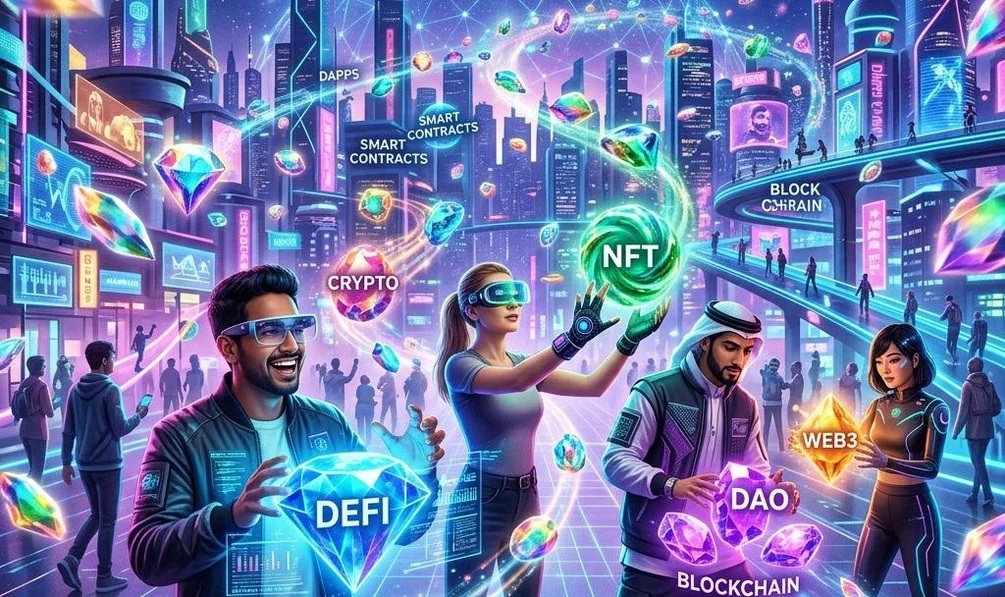
Solana is not limited to buying and selling cryptocurrency. Its blockchain infrastructure supports several practical and developing use cases.
1. Decentralized Finance (DeFi)
Decentralized finance refers to financial services that operate through blockchain-based applications rather than relying entirely on traditional financial intermediaries.
Solana supports DeFi applications that allow users to exchange tokens, provide liquidity, borrow digital assets, and access other financial services.
For example, a decentralized exchange can allow users to trade supported tokens through blockchain programs.
These services involve financial and technical risks, including smart contract vulnerabilities and changing asset prices.
2. Digital Payments
Solana can be used to transfer SOL and supported tokens between compatible wallets.
Its relatively low transaction costs make it suitable for exploring smaller digital payments and international transfers.
Stablecoins issued on Solana can also support digital payments because they are designed to maintain a value linked to another asset, such as the US dollar.
However, stablecoin value depends on the issuer, reserves, redemption arrangements, and other factors.
3. NFTs and Digital Collectibles
Non-fungible tokens are digital tokens that represent unique assets or ownership records on a blockchain.
Solana supports NFT creation, trading, and collection management.
Artists, creators, and developers can use the network to create digital collectibles, while marketplaces allow users to explore and exchange supported NFTs.
An NFT does not automatically provide copyright ownership or guarantee the value of the artwork it represents.
4. Blockchain Gaming
Gaming is another area where Solana’s transaction design can be useful.
Developers can create games that use blockchain-based tokens and digital items.
Depending on the game, players may be able to own, transfer, or trade supported digital assets outside the game’s traditional account system.
However, not every blockchain game provides meaningful ownership or long-term value. Users should review each project’s actual features.
5. Decentralized Applications
A decentralized application, commonly called a dApp, is software that uses blockchain programs for some of its functions.
Solana provides infrastructure for developers who want to create applications involving payments, digital identity tools, asset management, and other services.
These applications can connect with compatible wallets and interact with blockchain records without requiring a conventional centralized database for every operation.
Solana vs Bitcoin vs Ethereum
Solana, Bitcoin, and Ethereum are three different blockchain projects. Although all are associated with cryptocurrency, they were designed with different priorities.
| Feature | Solana | Bitcoin | Ethereum |
|---|---|---|---|
| Main purpose | High-performance blockchain applications | Peer-to-peer digital money | Smart contracts and decentralized applications |
| Native asset | SOL | BTC | ETH |
| Consensus | Proof of Stake with PoH-based transaction ordering | Proof of Work | Proof of Stake |
| Smart contract ecosystem | Yes | More limited base-layer scripting | Yes |
| Common uses | DeFi, payments, NFTs and gaming | Digital money and store of value | DeFi, NFTs and applications |
Bitcoin primarily focuses on decentralized digital money and maintaining a secure monetary network.
Ethereum provides a programmable blockchain ecosystem for smart contracts and decentralized applications.
Solana focuses heavily on transaction performance and low-cost application interactions.
There is no single winner for every use case. The right network depends on what a developer or user wants to accomplish.
Benefits of Using Solana
Solana offers several potential advantages for people interested in blockchain technology.
Affordable transactions: Its relatively low fees can make frequent blockchain interactions more accessible.
Fast processing: Its architecture supports quick transaction processing, which can improve the experience of applications that require frequent updates.
Developer flexibility: Developers can build different types of blockchain applications using its programming environment and infrastructure.
Multiple use cases: The network supports payments, DeFi, gaming, NFTs, and token-based services.
Staking participation: SOL holders can delegate tokens to validators and participate in the network’s staking system.
Accessible ecosystem: Users can access compatible applications through supported cryptocurrency wallets without opening a traditional bank account.
These advantages explain why Solana attracts attention from developers and cryptocurrency users. However, they do not mean the network is free from technical or financial limitations.
Disadvantages and Risks of Solana
Understanding Solana also means looking at its limitations. No blockchain network is completely risk-free.
Network Reliability
Solana has experienced network outages and performance disruptions in the past.
Although the network has undergone technical improvements, future disruptions remain possible. Users can check the official Solana network status page for operational updates and incident information.
Cryptocurrency Price Volatility
SOL is a cryptocurrency, and its market price can change significantly.
Its value may be affected by market demand, economic conditions, regulation, investor sentiment, and developments across the wider cryptocurrency industry.
Someone purchasing SOL could lose part or all of the money invested.
Security and Scams
Solana’s ecosystem includes independent applications and token projects. Not every project is legitimate or secure.
Scammers may create fake tokens, websites, wallet connection pages, or investment opportunities to steal funds.
Users should verify website addresses, research projects carefully, and never share their wallet recovery phrases or private keys.
Decentralization Concerns
The network relies on validators and technical infrastructure to maintain its operations.
Validator requirements, stake distribution, infrastructure providers, and network participation can all influence decentralization.
These factors remain important considerations when evaluating the network’s long-term resilience.
Regulatory Uncertainty
Cryptocurrency rules differ between countries and may change over time.
SOL trading, taxation, exchanges, and digital asset services can be subject to different legal requirements depending on where someone lives.
Users should understand the rules that apply in their own jurisdiction before using cryptocurrency services.
How Can Beginners Get Started With Solana?
Someone interested in exploring Solana does not need to become a blockchain developer first.
A beginner can start by understanding the network and learning how cryptocurrency wallets work.
Here is a basic approach:
Step 1: Learn About Solana and SOL
Understand the difference between the Solana blockchain and its native cryptocurrency. Learn about transaction fees, wallets, validators, and common security risks.
Step 2: Choose a Compatible Wallet
A Solana wallet allows users to manage their private keys and interact with supported blockchain applications.
Some wallets are available as browser extensions, while others operate as mobile applications. Hardware wallets can also provide an additional layer of key protection.
Step 3: Understand How to Obtain SOL
SOL is available through cryptocurrency platforms that support the token, subject to local availability and regulations.
Before using an exchange, check its reputation, fees, withdrawal options, and security practices.
Step 4: Start With a Small Transaction
If you decide to use the network, learn how to send and receive a small amount of SOL.
Always double-check the receiving address and network before confirming a transfer.
Step 5: Explore Applications Carefully
Once you understand the basics, you can explore decentralized exchanges, NFT platforms, and other Solana applications.
Avoid connecting your wallet to unfamiliar websites or approving transactions you do not understand.
Is Solana a Good Investment?
Solana may attract investors because of its blockchain infrastructure, application ecosystem, transaction capabilities, and demand for its native token. For a broader understanding of financial markets and digital assets, readers can also explore this FintechZoom.io Nasdaq guide on BTS Magazine.
However, whether SOL is a suitable investment depends on an individual’s financial circumstances, risk tolerance, and understanding of cryptocurrency markets.
There are several factors worth researching before making a decision:
-
Adoption of the Solana network.
-
Developer activity and application growth.
-
Network reliability and technical improvements.
-
Competition from Ethereum and other blockchains.
-
SOL supply, token economics, and market demand.
-
Cryptocurrency regulations and wider market conditions.
It is also important to understand that using a blockchain and investing in its cryptocurrency are two different decisions.
Someone may find Solana’s technology useful without wanting to hold SOL as an investment.
There is no guaranteed price target or assured return. Independent research and careful risk management are essential before committing money.
Conclusion
Solana is a blockchain network designed to support fast digital transactions, relatively low fees, and a wide range of decentralized applications. Its combination of Proof of Stake, Proof of History, and parallel transaction processing gives it a distinct technical approach.
Readers interested in more financial and technology topics can explore additional guides on BTS Magazine.
Its native cryptocurrency, SOL, supports transaction fees, staking, and interactions across the network’s ecosystem.
From digital payments and decentralized finance to NFTs and blockchain gaming, Solana provides infrastructure for several types of online services.
However, its benefits should be considered alongside cryptocurrency volatility, security concerns, network reliability, and regulatory uncertainty.
For beginners, the best starting point is understanding how the blockchain works, how SOL is used, and how to protect a cryptocurrency wallet before participating in the ecosystem.
Frequently Asked Questions
1. What is Solana in simple words?
Solana is a blockchain network that allows people to transfer digital assets and use decentralized applications. It is designed to support fast transactions and relatively low fees. Its native cryptocurrency is called SOL.
2. Is Solana the same as SOL?
No. Solana is the blockchain network, while SOL is its native cryptocurrency. SOL is used to pay transaction fees, participate in staking, and interact with applications built on Solana.
3. Who created Solana?
Solana was originally proposed by software engineer Anatoly Yakovenko in 2017. Its mainnet beta launched in March 2020.
4. Why is Solana popular?
Solana attracts attention because of its transaction speed, relatively low fees, developer infrastructure, and ecosystem of decentralized finance, payment, gaming, and NFT applications.
5. Is Solana safe to use?
Solana has a network security system based on validators and Proof of Stake. However, users still face risks from scams, malicious applications, wallet theft, smart contract vulnerabilities, and possible network disruptions. Safe usage requires careful verification and wallet security.