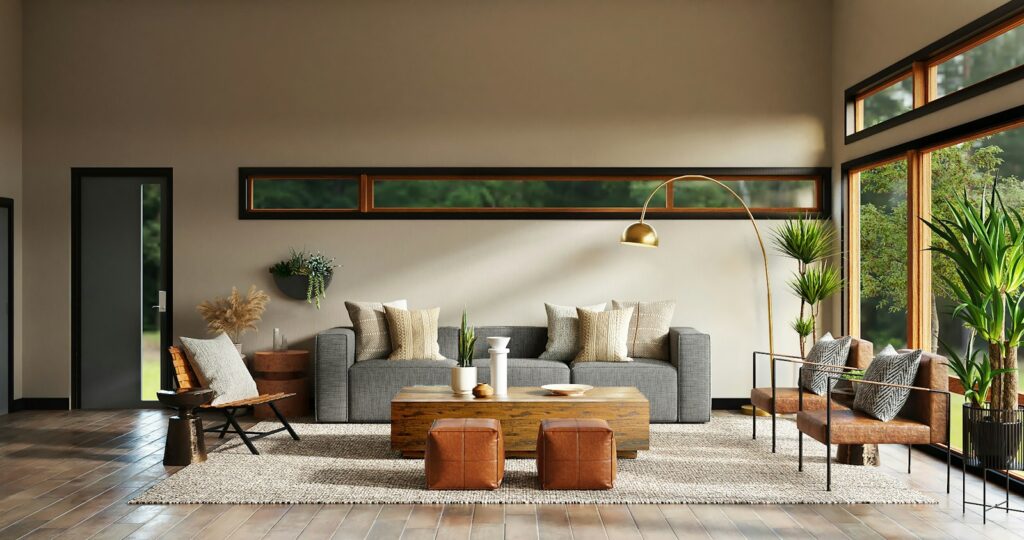
A complete guide to interior design courses: the different levels, what you will study, the software you need, how to choose a course and the careers it can lead to.
Quick answer: An interior design course teaches you to plan and design functional, safe and attractive indoor spaces, covering space planning, colour, materials, lighting, furniture, building codes and design software like AutoCAD, SketchUp and Revit. Options range from short online certificates (weeks to months) and diplomas (one to two years) to bachelor’s degrees such as B.Des or BSc in Interior Design (three to four years). Many careers also need a strong portfolio and, in some countries, professional certification.
Interior design is about much more than choosing cushions and paint colours. Designers plan layouts, select materials, manage budgets and make sure spaces meet safety rules, all while creating places people love to live and work in.
This guide compares the main types of interior design course, explains the syllabus and software, covers entrance exams and fees, and shows how to choose the right course and build a career.
Whether you want a full degree, a career-change diploma or a short course for your own home projects, you will find the right starting point here.
In this article
- What types of interior design course are available?
- What will you study in an interior design course?
- Which software do interior design courses teach?
- What skills do you need to become an interior designer?
- What is the eligibility and how do you get admission?
- How much does an interior design course cost?
- What is the career scope after an interior design course?
- Are online interior design courses worth it?
- How do you choose the right interior design course?
- Frequently Asked Questions
- Final Thoughts
What types of interior design course are available?
| Course type | Duration | Best for |
|---|---|---|
| Short online course | A few weeks to 3 months | Beginners and home projects |
| Certificate course | 3 to 12 months | Career starters and decorators |
| Diploma in interior design | 1 to 2 years | Practical, job-focused training |
| Bachelor’s degree (B.Des, BSc, BA Interior Design) | 3 to 4 years | Full professional career |
| Master’s (M.Des, MA) | 1 to 2 years | Specialisation and senior roles |
Interior design and interior decoration are different. Decorators focus mainly on finishes and furnishings, while interior designers also handle space planning, structure-related decisions and building regulations.
What will you study in an interior design course?
- Design fundamentals: elements and principles of design, colour theory
- Drawing and drafting: sketching, technical drawing, perspective
- Space planning: layouts, circulation and ergonomics
- Materials and finishes: wood, stone, tiles, fabrics, sustainable materials
- Lighting design: natural and artificial lighting
- Furniture design: custom furniture and joinery
- Building services: basic plumbing, electrical and HVAC coordination
- Codes and safety: fire safety, accessibility and local building rules
- Design history: styles from classical to contemporary
- Professional practice: budgets, contracts, client management
Which software do interior design courses teach?
| Software | Used for |
|---|---|
| AutoCAD | 2D floor plans and technical drawings |
| SketchUp | Quick 3D modelling |
| Revit | Building information modelling (BIM) |
| 3ds Max with V-Ray or Corona | Photorealistic renders |
| Enscape or Lumion | Real-time visualisation and walkthroughs |
| Adobe Photoshop and InDesign | Mood boards and portfolios |
Strong software skills make your portfolio stand out. Interior designers also borrow ideas from digital design; see our UI UX design guide for user-centred thinking that applies to physical spaces too.
What skills do you need to become an interior designer?
- Creativity: imagining spaces and combining colours, textures and styles
- Technical drawing: accurate plans, elevations and sections
- Spatial awareness: understanding how people move and use space
- Communication: presenting ideas and listening to clients
- Project management: handling budgets, suppliers and timelines
- Attention to detail: measurements, finishes and safety requirements
- Business sense: pricing work and managing clients if you go freelance
Most of these skills improve quickly with practice on real projects, even small ones.
What is the eligibility and how do you get admission?
- Certificate and diploma: usually Class 10 or 12 (or equivalent) from any stream
- Bachelor’s degree: Class 12 (or A-levels or equivalent) from any stream, often with an entrance test or portfolio
- Master’s degree: a bachelor’s in design, architecture or a related field
- Entrance exams in India: NID DAT, UCEED, NIFT and institute-specific design tests
- UK and US admissions: usually a portfolio plus school grades
Fatima, a 29-year-old office administrator, takes a one-year interior design diploma at evening classes. She learns AutoCAD and SketchUp, redesigns two friends’ flats for her portfolio and joins a design studio as a junior designer.
How much does an interior design course cost?
Fees vary widely by country, course level and institute.
- Online short courses: free to low cost
- Certificate and diploma courses: moderate, depending on the institute and city
- Private degree programmes: usually the most expensive option
- Government or public institutes: often cheaper but very competitive
- Extra costs: software licences, drawing materials, laptop and site visits
Ask for the total cost, including materials and software, before you enrol.
Scholarships, instalment plans and employer sponsorship can reduce the cost, so ask each institute what support is available.
What is the career scope after an interior design course?
| Role | What they do |
|---|---|
| Interior designer | Plans and designs residential or commercial spaces |
| Space planner | Designs office and retail layouts |
| 3D visualiser | Creates realistic renders and walkthroughs |
| Furniture designer | Designs custom furniture and joinery |
| Set designer | Designs sets for film, TV and events |
| Retail and exhibition designer | Designs shops and exhibition stands |
| Freelance designer | Runs their own design business |
In the US, many states recognise the NCIDQ certification from CIDQ, which requires education, work experience and exams. In the UK, the British Institute of Interior Design offers professional membership.
After a diploma, Karan starts by designing small cafés at low rates to build his portfolio. He photographs every finished project, posts before-and-after images online and gets referrals. Within three years he runs a small studio with two junior designers.
Running your own studio means handling clients, marketing and money; see our guides to starting a business and bookkeeping.
Are online interior design courses worth it?
Pros
- Flexible timing alongside work or study
- Lower cost than full-time programmes
- Good for learning software and design basics
Cons
- Less hands-on material and site experience
- Limited face-to-face feedback
- May not be enough alone for professional certification
A mix works well: learn theory and software online, then build practical experience through internships or real projects.
How do you choose the right interior design course?
- Decide your goal: hobby, career change or full professional career.
- Check accreditation and the institute’s reputation.
- Look at the portfolios of recent graduates.
- Make sure the course teaches current software and includes site visits or internships.
- Compare total fees and payment options.
- Ask about placement support and industry links.
Start building your portfolio from your first assignment. Photograph your sketches, models and renders, because a strong portfolio often matters more than the name of your course.
Measure one room in your home, draw a simple floor plan to scale, and try two different furniture layouts. It is the core skill of every interior design course.
Frequently Asked Questions
What is an interior design course?
It is training that teaches you to plan and design functional, attractive indoor spaces, including layouts, materials, lighting and design software.
How long is an interior design course?
Short courses take weeks, diplomas one to two years and bachelor’s degrees three to four years.
Can I do an interior design course after 12th?
Yes. Students from any stream can apply for certificates, diplomas and many degree programmes.
Is interior design a good career?
Yes, for creative people who enjoy problem-solving and working with clients, though income can vary in the early years.
Which software is needed for interior design?
AutoCAD, SketchUp, Revit and rendering tools such as V-Ray or Enscape are the most common.
Can I learn interior design online?
Yes. Many online courses teach the basics, but practical projects and a portfolio are essential for professional work.
Final Thoughts
- Interior design courses range from short online classes to full degrees.
- Expect to study space planning, materials, lighting, codes and design software.
- Choose a course based on your goal, accreditation, portfolio results and cost.
- A strong portfolio is the key to getting hired or winning clients.