
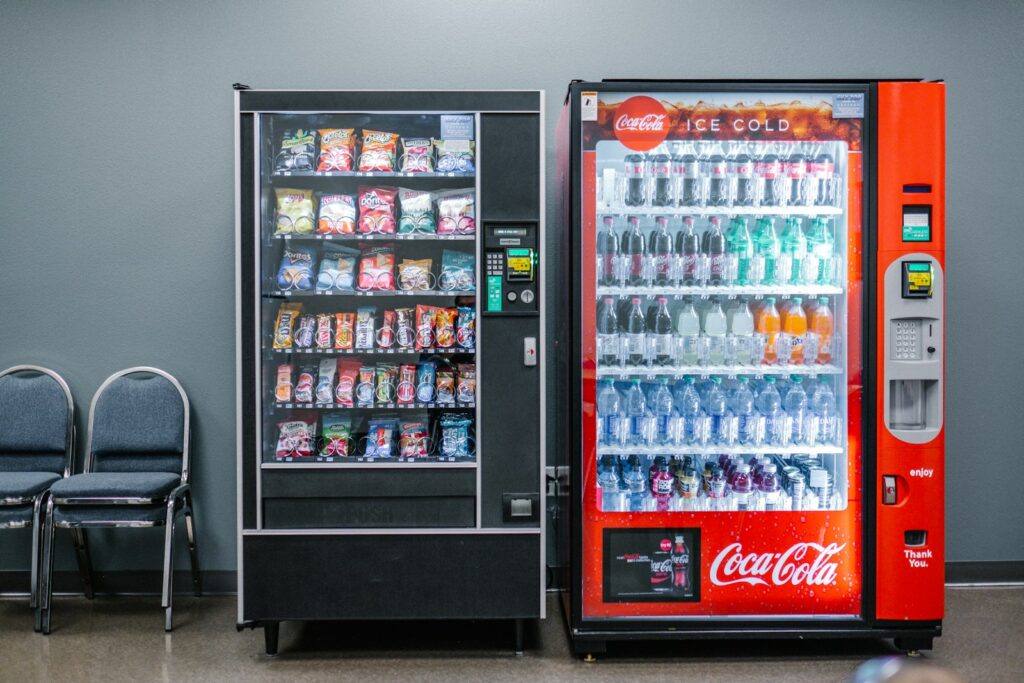
A practical guide to starting a vending machine business: picking machines, budgeting, finding and negotiating locations, legal setup, stocking, cashless payments and scaling your route.
Quick answer: To start a vending machine business, choose a niche (snacks, drinks, combo or healthy vending), research locations with steady foot traffic, budget for machines (new or used), register your business and get any required permits and sales tax registration, negotiate a location agreement with the property owner, stock products that sell well locally and add cashless payment readers. Start with one to three machines and expand once you know what works.
Vending machines can earn money around the clock with relatively little day-to-day work. That makes them a popular side business and a stepping stone to a larger route of machines.
But profit depends heavily on location, product choice and costs. This guide explains how to start a vending machine business step by step, including startup costs, the best locations, legal requirements, stocking strategies and how to scale.
Costs and rules vary by city, state and country, so check local requirements and get real quotes before you invest.
In this article
- Is a vending machine business a good idea?
- Step 1: Choose your vending niche
- Step 2: Estimate startup costs
- New vs used vending machines
- Step 3: Register your business and get permits
- Step 4: Find profitable locations
- Step 5: Pitch and negotiate with location owners
- Step 6: Stock smart and add cashless payments
- Common vending business mistakes
- Step 7: Track profit and grow your route
- Frequently Asked Questions
- Final Thoughts
Is a vending machine business a good idea?
Pros
- Flexible hours that fit around a job
- Low staffing needs
- Scalable one machine at a time
- Sales can happen 24 hours a day
Cons
- Upfront cost for machines
- Profit depends heavily on location
- Repairs, theft and vandalism risks
- Restocking and driving take real time
It suits people who like simple systems, driving routes and tracking numbers, rather than those looking for completely hands-off income.
Step 1: Choose your vending niche
| Machine type | What it sells | Things to know |
|---|---|---|
| Snack machines | Chips, chocolate, cookies | Lower cost, long shelf life |
| Drink machines | Sodas, water, energy drinks | Need refrigeration, high demand in warm places |
| Combo machines | Snacks and drinks | Good for smaller locations |
| Healthy vending | Protein bars, nuts, sparkling water | Popular in gyms, offices and schools |
| Fresh food | Sandwiches, salads | Higher margins but waste risk and food rules |
| Specialty | Phone chargers, PPE, toys, gumballs | Niche locations |
Many beginners start with snack or combo machines because they are cheaper and easier to manage.
Step 2: Estimate startup costs
| Cost | What to expect |
|---|---|
| Machines | Used machines cost far less than new; new combo machines can cost several thousand dollars |
| Card readers | Cashless readers plus monthly service fees |
| Initial stock | A few hundred dollars per machine |
| Transport and installation | Moving heavy machines needs a dolly, van or delivery service |
| Business registration and permits | Varies by location |
| Insurance | General liability and equipment cover |
Get several quotes and inspect used machines carefully, including the coin mechanism, bill validator and cooling system.
Build a simple payback estimate before buying: expected weekly profit per machine multiplied by 52, compared with the machine’s total cost. Good locations can pay back a used machine much faster than average ones.
New vs used vending machines
| Option | Pros | Cons |
|---|---|---|
| New machine | Warranty, modern features, reliable | Higher upfront cost |
| Used or refurbished | Much cheaper, faster payback | Possible repairs, older payment systems |
| Leased machine | Low upfront cost | Ongoing payments, contract terms |
Many operators buy refurbished machines from reputable dealers and add modern card readers to get the best balance of price and reliability.
Step 3: Register your business and get permits
- Business structure: sole proprietor or LLC; see our guide to LLC meaning
- EIN and bank account: separate business and personal money
- Sales tax registration: vending sales are taxable in many places
- Vending or health permits: some cities and states require them, especially for food
- Insurance: liability coverage protects you and location owners
The US Small Business Administration explains how to find local licences and permits.
Step 4: Find profitable locations
Location is the biggest factor in vending success. Look for places with steady foot traffic, people waiting and few nearby food options.
- Offices and warehouses: especially with 50+ staff and shift work
- Gyms and sports centres: great for drinks and healthy snacks
- Car repair shops and laundromats: customers waiting with time to spare
- Hospitals and care homes: visitors and staff around the clock
- Schools and colleges: check rules on product types
- Apartment buildings and hotels: convenient late-night snacks
Kamran places a combo machine in a 24-hour logistics warehouse with 120 workers on three shifts and no canteen. Sales are steady day and night, and the manager asks for a second machine within three months.
Step 5: Pitch and negotiate with location owners
- Explain the benefits: free service, happy staff or customers, no work for them.
- Offer a commission, often a percentage of sales, if needed.
- Agree who pays for electricity and how often you restock.
- Put everything in a simple written agreement, including how either side can end it.
- Leave your contact details on the machine for service issues.
Step 6: Stock smart and add cashless payments
- Start with best-sellers: popular brands sell fastest
- Track sales by slot: replace slow products quickly
- Match the location: healthy options in gyms, energy drinks in warehouses
- Price sensibly: compare nearby shop prices
- Cashless readers: many customers rarely carry cash; card and phone payments often increase sales
- Telemetry: remote monitoring shows stock levels and saves wasted trips
After two months, Sara’s telemetry shows that two slots of mints barely sell while energy drinks sell out every week. She swaps the mints for a second energy drink flavour and raises machine revenue noticeably without any extra trips.
Common vending business mistakes
- Buying many machines before testing a single location.
- Choosing low-traffic spots because they were easy to get.
- Ignoring card payments and losing cashless customers.
- Overstocking slow-selling items that expire.
- Not having a written agreement with the location owner.
- Underestimating fuel, time and repair costs.
Avoiding these mistakes early protects your cash and helps every new machine pay for itself faster.
Step 7: Track profit and grow your route
- Know your numbers: revenue, product cost, commission, card fees, fuel and time
- Reinvest profits: buy machines for your best location types
- Plan efficient routes: group machines close together
- Keep machines clean and working: broken machines lose trust and sales
- Consider micro markets: self-checkout kiosks for larger offices
Keep tidy records for tax time; see our small business tax deductions checklist and guide to bookkeepers.
Visit a potential location at different times of day before signing. Busy mornings and dead afternoons can tell you more than any promise from the owner.
List ten businesses near you with 50 or more staff or regular waiting customers. Call or visit three of them this week to ask whether they would like a free vending service.
Frequently Asked Questions
How much does it cost to start a vending machine business?
It depends on machine type and whether you buy new or used; many start with one used machine plus stock, a card reader and permits.
Are vending machines profitable?
They can be in good locations with the right products, but profit varies widely by location, pricing and costs.
Do I need a licence for a vending machine?
You usually need a business registration and sales tax permit; some places also require vending or health permits.
Do I have to pay location owners?
Not always. Some locations accept free service; others ask for a commission on sales.
What sells best in vending machines?
Popular drinks, chips, chocolate and energy drinks, but the best products depend on the location.
Can a vending machine business be passive income?
It is semi-passive. You still need to restock, maintain machines, collect money and manage locations.
Final Thoughts
- Choose a vending niche that fits your budget and target locations.
- Location quality matters more than anything else.
- Register properly, get permits and use clear location agreements.
- Track sales data, add cashless payments and grow your route gradually.