
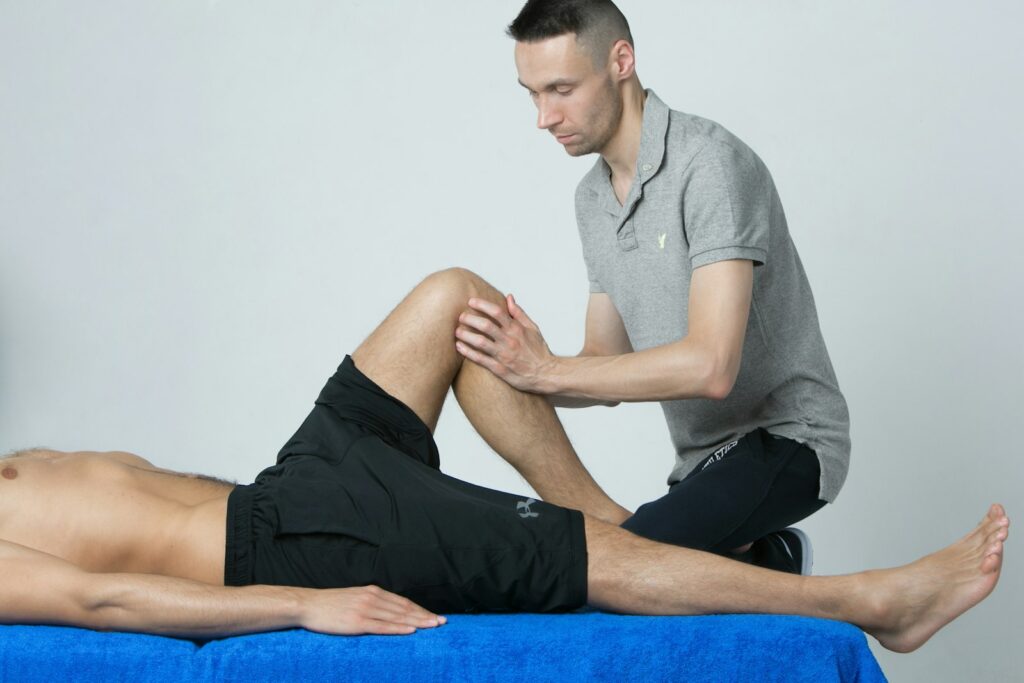
A step-by-step guide to becoming a physical therapist: education, the Doctor of Physical Therapy degree, clinical experience, licensing, salary, job outlook and specialist paths.
Quick answer: To become a physical therapist in the US, earn a bachelor’s degree with science prerequisites, gain observation hours, complete a three-year Doctor of Physical Therapy (DPT) programme from an accredited school, and pass the National Physical Therapy Examination (NPTE) plus any state requirements to get licensed. Physical therapists earned a median of $102,760 in May 2025, and jobs are projected to grow 12% from 2025 to 2035.
Physical therapists, often called PTs, help people recover from injuries, surgery, strokes and chronic pain, and help athletes and older adults move better and avoid injury. It is a hands-on, people-focused career with strong demand.
Becoming a PT takes about seven years of study after high school, including a doctoral degree. This guide covers each step, from choosing prerequisites to passing the licensing exam, plus pay, job outlook, specialties and tips to strengthen your application.
Licensing rules vary by state, so check with your state physical therapy board as you plan.
In this article
- What does a physical therapist do?
- How to become a physical therapist step by step
- What do you study in a DPT programme?
- How much does it cost to become a physical therapist?
- How much do physical therapists earn?
- Where do physical therapists work?
- What specialties can physical therapists pursue?
- What skills does a physical therapist need?
- Tips to get into a DPT programme
- Is physical therapy a good career for the future?
- Frequently Asked Questions
- Final Thoughts
What does a physical therapist do?
- Assess patients: measure strength, movement, balance and pain
- Create treatment plans: set goals and choose exercises and techniques
- Provide hands-on therapy: joint mobilisation, soft tissue work and stretching
- Teach exercises: home programmes so patients keep improving
- Use equipment: canes, walkers, braces and therapeutic devices
- Track progress: adjust treatment as patients recover
PTs work with people of all ages, from children with developmental conditions to athletes and older adults recovering from falls.
How to become a physical therapist step by step
1. Earn a bachelor’s degree
Any major can work, but exercise science, kinesiology, biology and health sciences are common because they cover the prerequisites.
2. Complete prerequisite courses
Typical requirements include anatomy, physiology, chemistry, physics, biology, statistics and psychology.
3. Gain observation hours
Many programmes ask for volunteer or work hours shadowing licensed PTs in different settings.
4. Apply through PTCAS
Most DPT programmes use the Physical Therapist Centralized Application Service. Some still ask for GRE scores, but many have dropped it.
5. Complete a DPT programme
Doctor of Physical Therapy programmes usually take three years, combining classroom study and full-time clinical rotations.
6. Pass the NPTE
The National Physical Therapy Examination, administered by the Federation of State Boards of Physical Therapy, is required for licensure in every state.
7. Meet state requirements
Some states also require a jurisprudence (law) exam and a background check.
8. Consider a residency or specialisation
Optional residencies and board certification deepen expertise.
What do you study in a DPT programme?
| Area | Examples |
|---|---|
| Foundational sciences | Anatomy (often with cadaver lab), physiology, neuroscience, kinesiology |
| Clinical skills | Examination, manual therapy, therapeutic exercise |
| Patient populations | Orthopaedics, neurology, cardiopulmonary, paediatrics, geriatrics |
| Professional practice | Ethics, documentation, healthcare policy, research |
| Clinical education | Full-time rotations in hospitals, clinics and rehab centres |
Programmes must be accredited by CAPTE, the Commission on Accreditation in Physical Therapy Education, for graduates to sit for the NPTE.
How much does it cost to become a physical therapist?
The biggest expense is the DPT programme. Tuition differs widely between public and private universities, and three years of study plus living costs can lead to significant student debt. Compare total cost, graduation rates and first-time NPTE pass rates before choosing a school.
- Application costs: PTCAS fees for each programme
- Exam fees: NPTE and state licensing fees
- Clinical rotations: travel and housing if placements are far from home
- Funding options: scholarships, graduate assistantships and loan repayment programmes for underserved areas
How much do physical therapists earn?
According to the US Bureau of Labor Statistics, physical therapists earned a median of $102,760 per year ($49.40 per hour) in May 2025. There were about 283,700 jobs, and employment is projected to grow 12% from 2025 to 2035, much faster than average, with about 13,400 openings each year.
- Home health and nursing care: often among the higher-paying settings
- Outpatient clinics: the most common workplace
- Hospitals: acute care and rehabilitation units
- Private practice owners: can earn more but take on business risk
Where do physical therapists work?
- Outpatient clinics: sports injuries, back pain and post-surgery rehab
- Hospitals: helping patients move safely after surgery or illness
- Rehabilitation centres: stroke, spinal cord and brain injury recovery
- Home health: treating patients in their own homes
- Schools and paediatric clinics: children with developmental needs
- Sports teams and fitness centres: performance and injury prevention
- Nursing homes: balance, mobility and fall prevention
What specialties can physical therapists pursue?
| Specialty | Focus |
|---|---|
| Orthopaedic | Bones, joints, muscles and post-surgery rehab |
| Sports | Athletes, injury prevention and return to play |
| Neurologic | Stroke, Parkinson’s, spinal cord and brain injuries |
| Geriatric | Older adults, balance and mobility |
| Paediatric | Children and developmental conditions |
| Cardiovascular and pulmonary | Heart and lung conditions |
| Women’s health | Pelvic health, pregnancy and postpartum care |
PTs can earn board certification in specialties through the American Board of Physical Therapy Specialties after meeting experience requirements and passing an exam.
Jake played college football and studied kinesiology. During his DPT he chooses sports and orthopaedic rotations, completes a sports residency and now works with a professional soccer team’s medical staff.
What skills does a physical therapist need?
- Communication: motivating patients through slow, sometimes painful recovery
- Empathy and patience: progress can take weeks or months
- Physical stamina: standing, lifting and demonstrating exercises all day
- Problem-solving: finding the cause of pain or weakness
- Detail and documentation: accurate notes for care and insurance
Sana worked in marketing but loved fitness. She takes evening prerequisite classes for two years, volunteers in an outpatient clinic and is accepted into a DPT programme at 30. She now treats older adults recovering from hip replacements.
Tips to get into a DPT programme
- Keep a strong GPA, especially in science prerequisites.
- Get observation hours in at least two different settings.
- Build relationships with PTs who can write recommendation letters.
- Write a personal statement that explains why you want to be a PT, with real examples.
- Apply to several programmes through PTCAS and compare costs and NPTE pass rates.
Other healthcare careers to compare include becoming a pharmacist and becoming a therapist.
Track every observation hour with the date, setting and supervising PT’s signature from the start. Rebuilding records later is stressful and some programmes verify them.
Contact two local physical therapy clinics and ask whether you can shadow for a few hours. It is the fastest way to know if the career suits you.
Is physical therapy a good career for the future?
Demand is driven by an ageing population, more people living with chronic conditions, and growing interest in staying active. Telehealth and digital exercise programmes are also creating new ways for PTs to work. Most PTs report high job satisfaction because they see patients improve, though heavy caseloads and documentation can be challenging.
Frequently Asked Questions
How long does it take to become a physical therapist?
Usually about seven years after high school: four years for a bachelor’s degree and three for a DPT.
Do you need a doctorate to be a physical therapist?
Yes. New physical therapists in the US need a Doctor of Physical Therapy degree.
What exam do physical therapists take?
The National Physical Therapy Examination (NPTE), plus any state law exams.
How much do physical therapists make?
The BLS reports a median of $102,760 per year in May 2025.
Is physical therapy a growing career?
Yes. Employment is projected to grow 12% from 2025 to 2035, much faster than average.
What is the difference between a PT and a PTA?
A physical therapist assistant has an associate degree and works under a PT’s supervision; the PT evaluates and designs treatment plans.
Final Thoughts
- Physical therapists need a bachelor’s degree, a three-year DPT and a licence.
- The NPTE exam is required in every state.
- Median pay was $102,760 in 2025, with 12% projected growth.
- Specialties range from sports and orthopaedics to neurology and paediatrics.