

How old is clavicular bone development, really? It’s one of those questions that sounds simple but has a surprisingly interesting answer. The clavicle, or collarbone, actually has one of the longest development timelines of any bone in your body. It starts forming super early and takes over two decades to fully finish.
- What Is the Clavicle, Anyway?
- Where Does the Name “Clavicle” Come From?
- How Old Is Clavicular Bone When It First Forms?
- When Does the Clavicle Finish Developing?
- The Stages of Clavicular Development
- Key Anatomy Facts About the Clavicle
- The Structure of the Clavicle Bone
- What Does the Clavicle Actually Do?
- Clavicle Fractures: Why the Collarbone Breaks So Often
- Variations in the Clavicle
- Clinical Significance You Should Know
- How Old Is Clavicular Bone Compared to Other Bones?
- Frequently Asked Questions
- 1. How old is clavicular bone when it fully finishes forming?
- 2. When does the clavicle first start developing?
- 3. Why is the clavicle called the collarbone?
- 4. Is the clavicle really the most commonly broken bone?
- 5. How long is the clavicle bone?
- Final Thoughts
Let me break it all down for you in plain English.
What Is the Clavicle, Anyway?
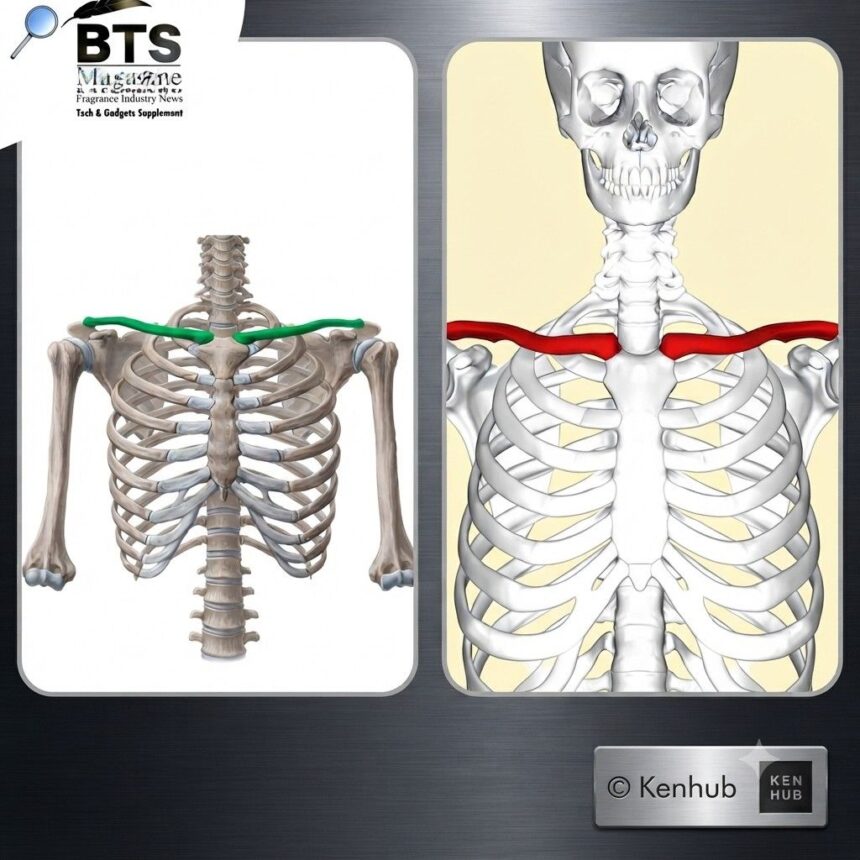
The clavicle is that slender bone you can feel running across the top of your chest, just below your neck. Most people call it the collarbone. It sits between your shoulder blade and your breastbone.
There are two of them — one on each side. Together with your shoulder blades, they form what’s called the shoulder girdle.
Where Does the Name “Clavicle” Come From?
Here’s a fun little fact. The word clavicle comes from the Latin word clavicula, which means “little key.”
Why a key? Because the bone rotates along its axis like a key turning in a lock when you lift your arm out to the side. Pretty neat, right?
How Old Is Clavicular Bone When It First Forms?
So let’s get to the main question. How old is clavicular bone when it starts developing? The answer takes us all the way back to before birth.
The collarbone is actually the very first bone in the body to begin ossification. That’s the process where minerals get laid down to turn soft tissue into hard bone. This kicks off during the fifth and sixth weeks of pregnancy.
To be honest, that’s incredibly early. Most other bones haven’t even thought about forming yet.
When Does the Clavicle Finish Developing?
Here’s where it gets interesting. Even though the clavicle starts first, it’s actually one of the last bones to finish ossification.
The collarbone doesn’t fully complete its development until around 21 to 25 years of age. So if you’re asking “how old is clavicular bone when it’s truly done growing,” the honest answer is your early-to-mid twenties.
That’s a long journey — from six weeks in the womb to your mid-twenties.
The Stages of Clavicular Development
Bone development doesn’t happen all at once. The clavicle forms in a couple of different ways at the same time, which is a bit unusual.
Two Types of Ossification
What’s interesting is that the clavicle uses two ossification methods together. Its lateral end (the shoulder side) forms through intramembranous ossification. The medial end (the breastbone side) forms through endochondral ossification.
Most bones stick to just one method. The clavicle likes to keep things mixed.
Ossification Centers That Fuse
The spongy inner bone forms from two ossification centers — one medial and one lateral. These two centers eventually fuse together as you grow older.
The outer shell of compact bone develops as the covering layer, called fascia, triggers ossification in the tissue around it. That final compact layer is known as a periosteal collar.
Key Anatomy Facts About the Clavicle
Now that you know how old clavicular development gets, let’s cover the basics of what this bone actually looks like and does.
- It’s an S-shaped long bone.
- It measures roughly 15 centimeters (about 6 inches) long.
- It’s the only long bone in your body that lies horizontally.
- It connects the scapula (shoulder blade) to the sternum (breastbone).
- It’s the most commonly broken bone in the human body.
That last one surprises a lot of people. But once you know how exposed the collarbone is, it makes total sense.
The Structure of the Clavicle Bone
The clavicle can be split into three parts: the medial end, the lateral end, and the shaft in between.
The Medial End
This is also called the sternal end. It’s quadrangular in shape and connects with the sternum to form the sternoclavicular joint. It’s the rounded end closer to the middle of your chest.
The Lateral End
Also known as the acromial end, this part is flat. It joins with the shoulder to form the acromioclavicular joint. This is the flatter end near your shoulder.
The Shaft
The shaft is the long middle section. The medial region takes up about two-thirds of the whole shaft, making it the longest part. The lateral region is both the widest and the thinnest area.
What Does the Clavicle Actually Do?
The collarbone pulls its weight in a few important ways. It’s not just sitting there looking pretty.
- It acts as a strut, holding your shoulder blade in place so your arm can hang and move freely.
- It protects the neurovascular bundle — the nerves and blood vessels heading into your arm.
- It transmits physical impacts from your arm to the main skeleton.
Think of it as a flexible, crane-like support beam for your entire shoulder setup.
Clavicle Fractures: Why the Collarbone Breaks So Often
Here’s the thing about the clavicle — because it’s positioned right up front and takes a lot of force, it breaks more than any other bone.
Most fractures happen when someone falls onto their shoulder or lands on an outstretched hand. A direct hit to the collarbone will also do the trick.
The weakest point is the junction between the two curves of the bone. That’s where breaks tend to happen most often.
Variations in the Clavicle
Not every collarbone is identical. In fact, the clavicle’s shape varies more than most other long bones.
In males, the clavicle is usually longer and larger than in females. The left clavicle also tends to be longer and weaker than the right one.
There’s even a rare situation called cleidocranial dysostosis where the collarbones are partly or completely missing. And about 2–3% of people have an extra muscle, the levator claviculae, attached to the clavicle.
Clinical Significance You Should Know
Doctors actually use the clavicle as a landmark during exams. A vertical line drawn from the middle of the collarbone — called the mid-clavicular line — helps locate the heart’s apex beat.
It’s also handy for checking an enlarged liver and finding the gallbladder. So this bone does double duty as a body map reference point.
How Old Is Clavicular Bone Compared to Other Bones?
When people ask how old is clavicular bone development versus other bones, the answer stands out. It’s both the earliest to start and one of the latest to finish.
That combination is genuinely rare. It means your collarbone is essentially “working” on itself longer than almost anything else in your skeleton.
Frequently Asked Questions
1. How old is clavicular bone when it fully finishes forming?
The clavicle finishes ossification around 21 to 25 years of age. That makes it one of the last bones in the body to fully mature.
2. When does the clavicle first start developing?
It begins forming during the fifth and sixth weeks of pregnancy. It’s the first bone in the body to start ossification.
3. Why is the clavicle called the collarbone?
Because it sits across the top of your chest like a collar. The medical name, clavicle, comes from Latin clavicula, meaning “little key,” since it rotates like a key when you move your arm.
4. Is the clavicle really the most commonly broken bone?
Yes. Its exposed position and its role in absorbing arm impacts make it very prone to fractures, especially from falls.
5. How long is the clavicle bone?
The clavicle is around 15 centimeters, or about 6 inches, long. It’s the only long bone in the body that lies horizontally.
Final Thoughts
So, how old is clavicular bone development from start to finish? It kicks off just a few weeks after conception and doesn’t fully wrap up until your early-to-mid twenties. That’s an impressive span for a bone most of us never think twice about.
The collarbone quietly supports your shoulder girdle, protects vital nerves, and gives your arms their range of motion — all while taking decades to finish growing. If you want to dig deeper into the clavicle’s anatomy, ossification, and clinical details, the Wikipedia article on the clavicle is a solid place to keep reading.
Continue reading: Merisant CEO Paul Block: Entertainment Background, Bankruptcy, and the Comeback Story