

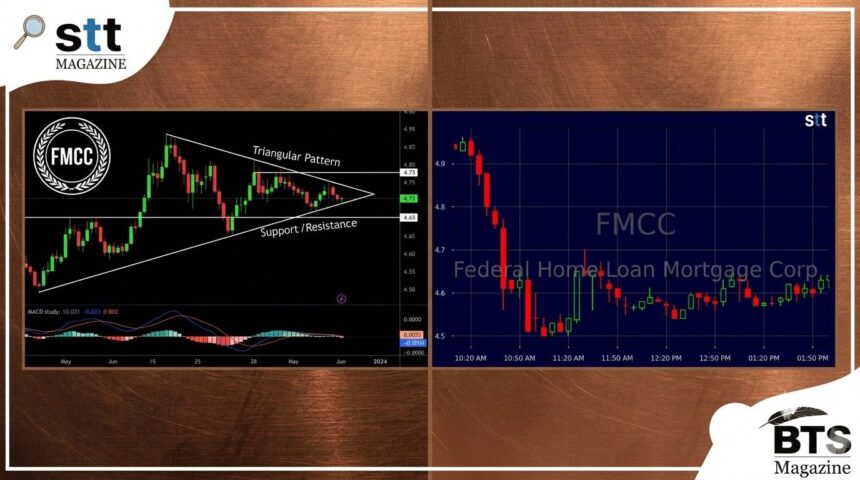
The fmcc stock price is one of those tickers that grabs a lot of attention, but also confuses a lot of people. It’s cheap, it trades on the OTC market, and it carries a story most stocks don’t.
- What Is FMCC Anyway?
- A Quick Look at Freddie Mac
- Where Does FMCC Stock Actually Trade?
- The 2008 Conservatorship Story
- The Stock Crash History
- How Freddie Mac Actually Makes Money
- Current Leadership at Freddie Mac
- Freddie Mac’s Fortune 500 Ranking
- What About FMCC’s Credit Ratings?
- Why the FMCC Stock Price Is So Low
- What Investors Should Know Before Buying
- Is FMCC the Same as Fannie Mae?
- Quick Facts About FMCC Stock
- So, Should You Watch the FMCC Stock Price?
So let’s break it all down in plain English. No jargon dumps. Just the stuff that actually matters.
What Is FMCC Anyway?
FMCC is the ticker symbol for Freddie Mac. The full legal name is the Federal Home Loan Mortgage Corporation, often shortened to FHLMC.
It’s a big name in the U.S. housing world. And it’s been around for decades.
Here’s the thing though, Freddie Mac isn’t your typical company. It’s a government-sponsored enterprise, also called a GSE. That detail changes everything about how you should think about the stock.
A Quick Look at Freddie Mac
Freddie Mac was created back in 1970. The goal was simple: make more money available for home loans across the country.
Its headquarters sit in McLean, Virginia. And it works hand in hand with its sister company, Fannie Mae.
Together, these two buy mortgages from lenders, bundle them up, and sell them to investors. That keeps cash flowing so more people can buy homes.
Where Does FMCC Stock Actually Trade?
This part trips up a lot of new investors. Freddie Mac stock used to trade on the New York Stock Exchange.
That changed in 2010.
The shares were delisted from the NYSE in June 2010, after the price fell below the exchange’s minimum requirements. Since July 8, 2010, FMCC has traded exclusively on the OTC market. Today it sits under the ticker OTCQB: FMCC.
So when you check the fmcc stock price, you’re looking at an over-the-counter quote, not a major exchange listing.
The 2008 Conservatorship Story
To really understand the fmcc stock price, you have to go back to 2008.
That year, the housing market collapsed. Freddie Mac and Fannie Mae were sitting on a huge chunk of America’s mortgages, and the losses piled up fast.
On September 7, 2008, the Federal Housing Finance Agency, known as the FHFA, stepped in. It placed both companies under conservatorship.
This was described as one of the biggest government moves into private markets in decades. And it still shapes the company today.
What Conservatorship Means for Shareholders
Under the FHFA conservatorship, the government basically took the wheel. The U.S. Treasury also got senior preferred stock plus a warrant for nearly 80% of Freddie Mac’s common shares.
To be honest, that’s a heavy weight on regular shareholders. Common stock dividends were eliminated back in 2008 too.
So anyone buying FMCC today is buying into a company that’s still controlled by its conservator.
The Stock Crash History
The fmcc stock price has a dramatic past. Shares once traded at solid levels when the company was a Wall Street name.
Then 2008 hit.
By September 8, 2008, the stock had crashed to around one dollar. It dropped even further before the NYSE delisting in 2010.
What’s interesting is that the company itself recovered. As the housing market healed, Freddie Mac became profitable again, even though the stock never returned to the exchange.
How Freddie Mac Actually Makes Money
Let’s talk business model, because it’s pretty clever.
Freddie Mac mainly earns through guarantee fees. When it buys mortgages and turns them into mortgage-backed securities, it charges a fee for guaranteeing those loans.
That guarantee is the key. Freddie Mac promises investors they’ll get paid even if borrowers default.
Investors like that safety net, so they’re happy to let Freddie Mac keep the fee. It’s a steady, volume-based income stream.
Single-Family and Multifamily Segments
The company runs two main segments. One handles single-family homes, the other handles multifamily properties like apartments.
The single-family side buys conforming home loans from lenders of all sizes. The multifamily side funds rental housing, and around 90% of those apartments stay affordable for low- or moderate-income renters.
Both feed into those mortgage-backed securities that drive the business.
Current Leadership at Freddie Mac
Leadership has changed hands a lot in recent years. As of late 2025, Kenny M. Smith stepped in as the new CEO.
Bill Pulte serves as chairman, and Michael Hutchins holds the president role. Hutchins also served as interim CEO during a couple of leadership gaps.
Leadership shifts can matter for investor sentiment, so it’s worth keeping an eye on who’s running the show.
Freddie Mac’s Fortune 500 Ranking
Don’t let the low share price fool you. This is a massive company.
Freddie Mac ranked No. 45 on the 2023 Fortune 500 list of the largest U.S. corporations by revenue. It manages trillions in assets.
Its total assets reportedly reached around $3.497 trillion in 2025. So the size and the stock price tell two very different stories.
What About FMCC’s Credit Ratings?
Credit ratings give you a peek at financial strength. And Freddie Mac’s senior debt ratings are strong.
As of recent data, the company held an AA+ from Standard & Poor’s, an Aaa from Moody’s, and an AA+ from Fitch on its senior long-term debt.
Here’s the catch though. The preferred stock ratings are far lower, sitting at distressed levels. That gap reflects the unusual situation the company is in.
Why the FMCC Stock Price Is So Low
A lot of folks ask why the fmcc stock price stays in penny-stock territory. The answer comes back to that conservatorship.
The government’s stake, the lack of dividends, and the uncertain future all weigh on the common shares. Investors simply don’t know what happens next.
Will the company exit conservatorship someday? Maybe. That uncertainty is exactly why the stock swings on political and policy news.
What Investors Should Know Before Buying
Buying FMCC isn’t like buying a normal blue-chip stock. It’s more of a bet on the future of Freddie Mac itself.
Keep these points in mind:
It Trades Over the Counter
The OTC market can be less liquid and more volatile than major exchanges. Spreads can be wider too.
The Government Holds Major Control
With the FHFA as conservator and the Treasury holding warrants, common shareholders sit at the back of the line.
News Moves It Fast
Policy talk about ending the conservatorship can send the fmcc stock price jumping or sliding in a hurry.
Is FMCC the Same as Fannie Mae?
Not quite, but they’re close cousins. Fannie Mae trades under the ticker FNMA, and it operates with a very similar charter and mission.
Both are government-sponsored enterprises. Both went into conservatorship in 2008. And both play a central role in U.S. housing finance.
So if you research one, you’ll naturally bump into the other.
Quick Facts About FMCC Stock
Here’s a simple rundown to keep things clear:
- Ticker: OTCQB: FMCC
- Company: Federal Home Loan Mortgage Corporation (Freddie Mac)
- Founded: 1970
- Headquarters: McLean, Virginia
- Status: Under FHFA conservatorship since 2008
- Trading: OTC market since July 2010
- CEO: Kenny M. Smith
So, Should You Watch the FMCC Stock Price?
If you like following unusual market stories, FMCC is a fascinating one. The fmcc stock price reflects more than earnings, it reflects politics, policy, and a long road since 2008.
Just go in with your eyes open. This is a speculative play, not a steady dividend stock.
Do your own homework, understand the risks of the OTC market, and never invest money you can’t afford to lose.
If you want to dig deeper into the company’s full history, the Freddie Mac page on Wikipedia lays out the timeline, the conservatorship details, and the leadership changes in one place, and it’s a solid next stop after this read.
Continue reading: Leadership Film Genre: Why These Movies Stick With Us