
If you have recently come across Domikyo.com, you may be wondering what the website actually does. Perhaps you found the domain through a search result, a shared link, or an article that mentioned it. Understanding the type of website it is can help you decide how much value to place on its content.
This guide takes a closer look at Domikyo.com, including its main topics, available ownership information, guest post activity, and the smart home information associated with the site. It also explains how to check website credibility, understand sponsored content, and verify technical information before relying on it.
What Is Domikyo.com?
Domikyo.com is described in public sources as an online information website covering different subjects. Smart home technology, the Internet of Things (IoT), and home networking are among the topics associated with the domain. Other descriptions also connect it with broader subjects such as business, finance, health, education, and lifestyle.
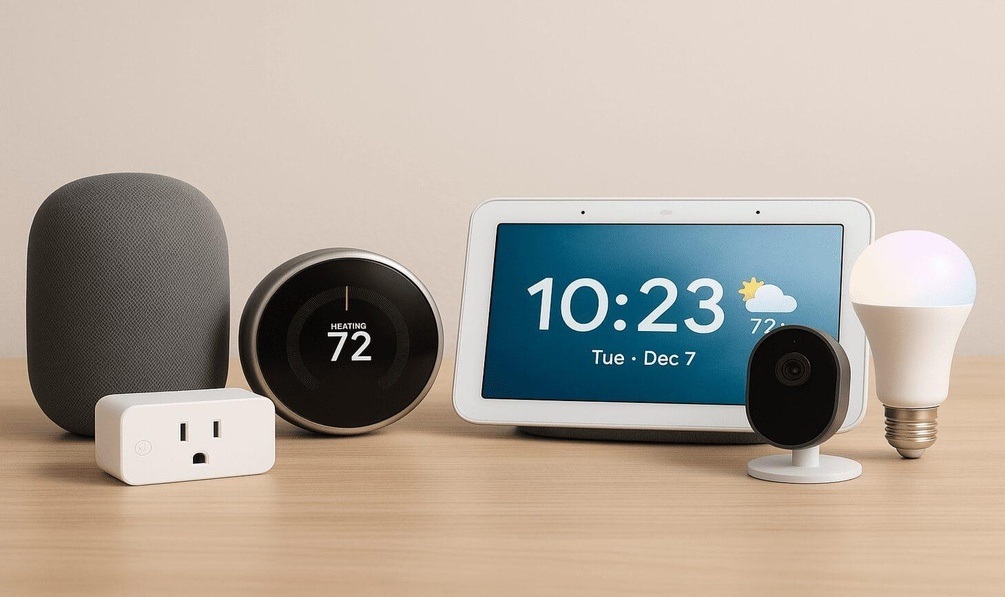
IoT refers to everyday objects that can connect to a network and exchange information. Smart lights, security cameras, thermostats, door locks, speakers, and connected sensors are common examples.
Topics associated with Domikyo.com include:
- Setting up networks for connected home devices
- Improving Wi-Fi performance around a smart home
- Basic security practices for IoT equipment
- Understanding smart home systems
- Learning about communication standards such as Matter and Thread
- Exploring general technology and lifestyle subjects
These topics can help beginners understand connected devices without requiring advanced networking or engineering knowledge. However, the range of subjects mentioned in third-party descriptions should not be treated as proof that every category receives regular or expert-level coverage.
For readers exploring other online information sources, BTS Magazine’s technology coverage provides another starting point for discovering technology-related articles.

Who Is Behind Domikyo.com?
Public information about the people or organization behind Domikyo.com appears limited. The information reviewed for this article does not establish a clearly identified owner, a verified operating company, or a fully documented editorial team.
This makes it harder for readers to determine who is responsible for producing, reviewing, and correcting the site’s content. However, limited public information does not automatically mean that a website is fraudulent or unreliable.
Some third-party descriptions have reported technical details associated with the domain, including Cloudflare services and DNS configuration. Cloudflare is widely used to provide services such as content delivery, website performance improvements, and protection against certain types of online traffic.
These technical details can help explain how a website is configured, but they do not verify its ownership or prove that its articles have undergone professional fact-checking. Similarly, an active domain or a valid HTTPS connection does not guarantee that every page is trustworthy.
Readers researching an unfamiliar company or website should distinguish between technical records, business records, and editorial evidence. Each answers a different question.
For additional background on researching organizations, see this company research dossier guide.
What Can Be Verified About Domikyo.com?
When researching Domikyo.com, it is important to separate published descriptions from independently established facts.
| Question | What the available information supports |
|---|---|
| What type of website is it? | Public descriptions identify it as an information or publishing website. |
| What topics are associated with it? | Smart homes, IoT, networking, and broader informational subjects appear in third-party descriptions. |
| Who owns it? | A named owner or operating company has not been established by the information reviewed. |
| Does it have an editorial team? | A clearly documented editorial team has not been established by the information reviewed. |
| Does it publish sponsored content? | Third-party listings advertise publishing opportunities associated with the domain. |
| Does that prove every article is sponsored? | No. A publishing listing does not establish the commercial status of every article. |
These distinctions matter because a third-party article can report a claim without independently proving that claim. Domain records, business directories, and publishing marketplaces should be used as supporting evidence rather than treated as complete proof of a website’s identity.
Does Domikyo.com Accept Guest Posts?
Some third-party publishing and guest-post listings advertise opportunities associated with Domikyo.com. These listings suggest that outside publishing or sponsored-content opportunities may be available through third-party services.
However, a marketplace listing is not the same as an official statement from the website. It does not independently confirm current prices, editorial requirements, publication times, or whether every advertised offer has been authorized by the site’s operator.
Guest posting is a common publishing practice. Businesses, researchers, and independent writers may contribute articles to websites to reach new audiences. Sponsored articles can also be legitimate when the commercial relationship is handled transparently.
The main concern is the purpose and quality of the content. An article that provides useful information, supports its claims, and clearly identifies commercial relationships serves readers better than one written primarily to insert promotional links.
What Should You Check Before Buying a Guest Post?
Before paying for a placement associated with Domikyo.com, consider these checks:
- Confirm the offer: Ask the website or seller to confirm the exact publishing terms and whether the placement is authorized.
- Review the content: Check whether articles provide original information or mainly promote other websites.
- Understand link attributes: Paid links should be appropriately qualified under Google’s guidance, typically using
rel="sponsored"orrel="nofollow"where applicable. - Check the audience: Do not rely solely on traffic estimates or SEO metrics supplied by a marketplace.
- Review disclosure practices: Readers should be able to recognize sponsored content when appropriate.
Google identifies buying or selling links intended to manipulate search rankings as a link-spam practice. Paid advertising and sponsorship can still be legitimate when links are appropriately qualified and the arrangement follows applicable policies.
Read Google Search Central’s official spam policies before making decisions about paid placements.
For related publishing and business topics, you can also explore BTS Magazine’s business articles.
What Topics Does Domikyo.com Cover?
The subjects associated with Domikyo.com can generally be grouped into several areas. The amount and consistency of coverage may vary, so individual articles should be evaluated on their own merits.
Smart Home Technology
Smart home technology allows compatible devices to perform tasks automatically or respond to user commands. Examples include automated lighting, connected thermostats, smart locks, security cameras, and voice-controlled speakers.
A smart home may use a central hub, a mobile application, a wireless router, or a combination of these components. The exact setup depends on the devices, their communication standards, and the platform used to control them.
Readers should check product documentation before assuming that two smart devices can work together. Products may support different standards or require specific hubs and software.
Home Networking
Home networking is an important part of a reliable connected home. Many smart devices depend on a stable wireless connection to communicate with applications, cloud services, or other equipment.
Common networking subjects include router placement, Wi-Fi coverage, interference, network congestion, and connected-device performance.
For example, a camera that frequently disconnects may be experiencing weak wireless coverage rather than a hardware failure. Checking the router’s location and signal strength can help identify the cause.
IoT Security
Connected devices can introduce security and privacy risks when they are poorly configured or no longer receive software updates. A compromised device may expose information, disrupt normal operation, or create an entry point into a home network.
Basic precautions include:
- Replacing default passwords with strong, unique credentials
- Installing firmware and security updates
- Enabling multifactor authentication when supported
- Disabling remote access features that are not needed
- Using a separate guest or IoT network when the router supports it
- Replacing devices that no longer receive essential security updates when appropriate
These measures reduce avoidable risks, although no single setting can guarantee complete security.
For more detailed advice, consult the Cybersecurity and Infrastructure Security Agency (CISA). Its resources provide guidance on protecting devices, accounts, and networks.
New Technology Standards: Matter and Thread
Matter and Thread are relevant to discussions about modern smart-home connectivity, but they perform different roles.
Matter is an interoperability standard designed to help compatible smart-home products work across supported ecosystems. Thread is a low-power wireless networking technology that can connect compatible devices. Matter can operate over supported networking technologies, including Thread and Wi-Fi, depending on the device and implementation.
A product that supports one technology does not necessarily support every feature of the other. Buyers should check certification, supported functions, hub requirements, and manufacturer documentation before purchasing devices.
What Is New in Matter 1.6?
On June 17, 2026, the Connectivity Standards Alliance announced the release of Matter 1.6. The update introduces improvements involving device setup, multi-ecosystem device management, thermostat suggestions, and communication of device capabilities and status.
For example, Matter 1.6 introduces NFC-based commissioning that can make setup easier for certain devices, including equipment that may need to be configured before installation. It also introduces Joint Fabric capabilities intended to support shared device management by multiple authorized controllers.
These are standard-level capabilities. Their availability to consumers depends on whether device manufacturers and smart-home platforms implement the relevant features. A new standard release does not mean that existing products automatically receive every new function.
Read the official Matter 1.6 announcement and the Connectivity Standards Alliance’s Matter overview for authoritative information.
Business, Finance, Health, and Lifestyle Topics
Third-party descriptions also associate Domikyo.com with wider informational categories, including business, finance, health, education, travel, and lifestyle.
A multi-topic website may help readers discover basic information across different subjects. However, broad coverage does not automatically establish specialist expertise in every field.
This is especially important for health and financial content. Readers should compare significant claims with recognized professional guidance, primary documentation, and other reliable sources before making decisions that could affect their money or well-being.
Can You Trust Domikyo.com?
The most reasonable approach is to evaluate Domikyo.com based on the specific information you want to use, rather than automatically trusting or rejecting the entire website.
Public descriptions associate the domain with general information and smart-home topics. At the same time, the available information reviewed here does not establish a fully documented editorial team or a confirmed owner. Third-party publishing listings also suggest possible sponsored-content activity, although they do not prove that every article is paid.
These limitations mean readers should check the evidence supporting each important claim.
How to Evaluate an Article on Domikyo.com
Use the following checklist when deciding whether to rely on a particular article:
- Check the author. Look for a named writer and relevant experience, particularly for technical, financial, or health-related advice.
- Review the sources. Important claims should be supported by official documentation, original research, or credible references.
- Check the publication date. Technology standards, software instructions, and security recommendations can change.
- Look for commercial disclosures. Determine whether a recommendation is sponsored or involves an affiliate relationship.
- Compare technical instructions. Verify important steps against the device manufacturer’s documentation.
- Check ownership claims. Do not assume that a domain record or third-party business listing proves who currently operates a website.
- Use caution with downloads and forms. Avoid unexpected files and do not provide sensitive information without a clear, legitimate reason.
HTTPS helps protect data exchanged between a browser and a website, but it does not independently establish the trustworthiness of the website operator or the accuracy of its content.
For further reading about evaluating technology publications, visit BTS Magazine’s technology category.

Why Are Smart Home Networking Basics Important?
Networking plays a major role in how well connected-home devices work. Even an expensive smart device can perform poorly when the wireless network behind it is weak or overcrowded.
For example, a smart camera may disconnect frequently, a smart lock may respond slowly, or a voice-controlled device may take several seconds to react. The cause may involve wireless coverage, interference, router placement, device compatibility, or network congestion.
A few practical measures can help improve reliability.
Place the Router Carefully
A central, open location often provides better wireless coverage than a position behind large furniture or inside a closed cabinet. Walls, metal objects, and other sources of interference can affect signal quality.
Use Separate Networks When Supported
Some routers allow users to create guest or IoT networks. These features can help separate certain connected devices from computers and phones, but the level of isolation depends on the router’s configuration. Check the manufacturer’s instructions rather than assuming that every guest network provides the same security.
Install Firmware Updates
Firmware updates can correct known security problems, improve stability, and sometimes introduce new features. Install updates through the manufacturer’s official application or website, and check whether the device remains supported.
Check Compatibility Before Buying
Products that support widely adopted standards may offer more flexibility, but compatibility is not guaranteed across every device or feature. Check the product’s supported standards, required hubs, and manufacturer guidance before buying.
Replace Default Passwords
Use strong, unique passwords for devices and accounts. Where available, enable multifactor authentication and disable unnecessary remote access.
Review Older Devices
A device that no longer receives security updates may become harder to protect. Consider replacing unsupported products when the risks cannot be adequately managed.
These steps can improve the reliability and security of a connected home. For broader advice about internet-connected devices and online safety, consult CISA’s official cybersecurity resources.
A Balanced View of Domikyo.com
The available information supports a cautious, evidence-based assessment.
- Domikyo.com is described in public sources as an online information and publishing website.
- Smart-home technology, IoT, and home networking are among the subjects associated with the domain.
- Third-party descriptions also mention broader informational categories.
- A clearly verified owner and fully documented editorial team have not been established by the information reviewed.
- Third-party listings advertise publishing opportunities associated with the domain, but these do not prove that every article is sponsored.
- Technical details such as DNS configuration or HTTPS do not establish editorial quality.
- Important technical, health, financial, and security claims should be checked against authoritative sources.
Taken together, these points suggest that Domikyo.com may be approached as a starting point for general information, while individual articles should be judged by their evidence, authorship, transparency, and relevance.
Final Thoughts
Domikyo.com is associated with online informational content covering smart homes, IoT, home networking, and broader subjects. Such content can help beginners understand connected devices and learn basic networking concepts.
However, the information reviewed for this article does not establish a fully documented ownership structure or editorial operation. Third-party publishing listings provide some evidence of advertised guest-post opportunities, but they do not reveal the commercial status of every article.
The best approach is to read with a critical eye. Use general articles to understand a topic, then confirm important claims through device manufacturers, recognized cybersecurity organizations, official technical standards, and reliable primary sources.
This balanced approach helps readers make better-informed decisions without assuming that every unfamiliar website is either completely trustworthy or inherently unsafe.
Frequently Asked Questions
What is Domikyo.com mainly about?
Domikyo.com is described as an online information website. Smart-home technology, IoT, and home networking are among the topics associated with it, while third-party descriptions also mention broader subjects such as business, finance, health, and lifestyle.
Is Domikyo.com safe to read?
The available information does not establish that every page is safe or unsafe. Use normal browsing precautions, avoid unexpected downloads, and verify important claims through authoritative sources. HTTPS alone does not guarantee trustworthiness.
Does Domikyo.com sell smart-home products?
The descriptions reviewed primarily characterize Domikyo.com as an informational publishing website rather than a dedicated smart-home hardware manufacturer or store. Its current commercial activities should be confirmed directly before making assumptions.
Is Domikyo.com a technology news website?
It is associated with technology-related content, particularly smart homes, IoT, and networking. However, the available information does not establish that it operates like a major specialist technology newsroom with a fully documented editorial team.
Why should I verify information from Domikyo.com?
Verification is useful because ownership and editorial responsibility are not fully established by the information reviewed, and third-party listings advertise publishing opportunities. Checking the author, publication date, sources, and relevant official guidance helps readers judge individual claims.
Does Domikyo.com accept guest posts?
Third-party publishing listings advertise opportunities associated with the domain. These listings do not independently confirm the site’s current official terms, prices, or editorial requirements. Anyone considering a paid placement should verify the offer and its conditions before paying.
What is the difference between Matter and Thread?
Matter is a smart-home interoperability standard, while Thread is a low-power wireless networking technology. Some Matter-compatible devices use Thread, while others use different supported networking technologies. Check each product’s specifications to confirm compatibility.
What should I check before buying a smart-home device?
Check the device’s security-update policy, supported communication standards, compatibility with your existing equipment, privacy settings, and manufacturer documentation. Also consider whether the device can continue receiving essential updates over its expected useful life.