
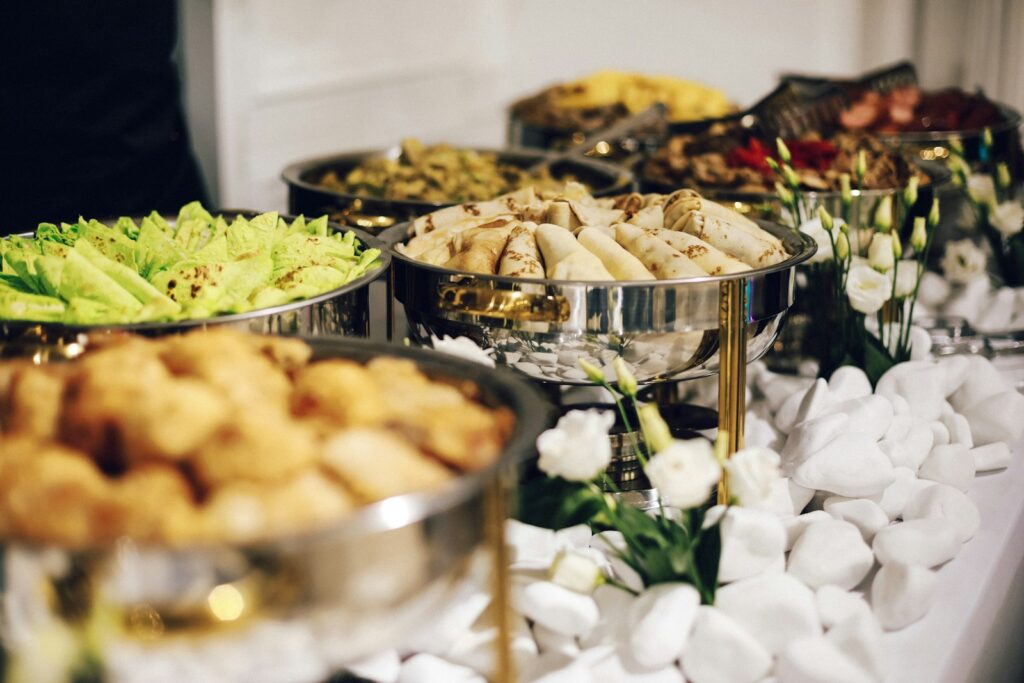
An honest guide to BuffetGo: what the platform is, how buying leftover buffet food works, the food-waste problem it tackles, what we could and could not confirm, and similar apps you can use today.
Quick answer: BuffetGo is a food-waste platform founded in Finland in 2014 that connects buffet restaurants with customers who want to buy surplus food at the end of service. Customers reserve a meal online, arrive during a short pickup window, fill a takeaway box at the buffet and pay a small amount, often around $2 to $6 in the US, where it launched in 2016. If BuffetGo is not available near you, apps such as Too Good To Go, Karma and Flashfood offer similar discounted surplus food.
Buffet restaurants prepare large amounts of food so the trays never look empty. When service ends, much of that food cannot be kept and is thrown away. BuffetGo was created to turn that waste into cheap meals for customers and extra income for restaurants.
This article explains what BuffetGo is, how it works, why it matters for food waste, what to check before you rely on it, and the best alternatives if it does not operate in your area.
You may also find many low-quality “BuffetGo” web pages with exaggerated claims. We have stuck to information from a documented case study and clearly note what we could not confirm.
If you love good food at low prices and hate seeing it wasted, this guide will help you find the best way to save money and reduce waste in your area.
In this article
- What is BuffetGo?
- How does BuffetGo work?
- Why apps like BuffetGo matter
- Pros and cons of buying leftover buffet food
- Is leftover buffet food safe to eat?
- Best BuffetGo alternatives
- How restaurants can benefit
- Tips for using surplus food apps
- A note on online information about BuffetGo
- Frequently Asked Questions
- Final Thoughts
What is BuffetGo?
| Fact | Details |
|---|---|
| Type | Online marketplace for surplus buffet food |
| Founded | 2014, Finland |
| US launch | 2016, with restaurants in cities such as Chicago and New York |
| Partners | Buffet restaurants only |
| Price for customers | Around $2 to $6 per meal in the US |
| Charity link | 20% of each purchase was donated to the UN World Food Programme |
These details come from a Harvard Business School digital initiative case study. We could not confirm which cities BuffetGo currently serves, so check the app or website before planning a visit.
How does BuffetGo work?
1. Search nearby buffets
Customers search by ZIP code or map for restaurants offering surplus meals.
2. Reserve and pay
Each restaurant lists a limited number of meals for a set time window, usually around 30 minutes near the end of a shift.
3. Arrive during the pickup window
Show your order on your smartphone.
4. Fill your container
You serve yourself like a normal buffet, but the food must be taken away rather than eaten in the restaurant.
A student checks the app at 8 p.m. and sees a nearby Indian buffet offering five takeaway meals between 9:00 and 9:30 p.m. for a few dollars. She reserves one, picks up a full box of curry and rice and saves money while preventing food from being thrown away.
Because the number of meals is limited and the window is short, regular users tend to check the app at the same time each day and reserve as soon as listings appear.
Why apps like BuffetGo matter
- Food waste: restaurants throw away large amounts of prepared food every day
- Climate impact: wasted food means wasted water, energy and emissions
- Restaurant income: selling surplus recovers some costs
- Affordable meals: customers get good food at low prices
- Charity: BuffetGo’s model included donations to the World Food Programme
The UN Environment Programme estimates that a large share of the world’s food is wasted at retail, restaurant and household level, making surplus-food apps a practical part of the solution.
Pros and cons of buying leftover buffet food
Pros
- Very low prices for a full meal
- Less food waste
- Try new restaurants cheaply
- Often generous portions
Cons
- Limited and unpredictable choice
- Short pickup windows late in the evening
- Takeaway only
- Availability depends on your city
Is leftover buffet food safe to eat?
Surplus food from restaurants is usually food that would otherwise be thrown away at closing time, not food that has gone off. Restaurants must still follow food safety rules. As a customer, you should:
- Take food home and eat or refrigerate it promptly
- Reheat hot dishes until steaming throughout
- Avoid leaving food at room temperature for long periods
- Ask staff about allergens, as labels may not be available
- Use your judgement and do not eat anything that looks or smells wrong
Local food safety authorities publish clear guidance on storing and reheating takeaway food.
Best BuffetGo alternatives
| App | Where it works | What you get |
|---|---|---|
| Too Good To Go | Many countries in Europe, North America and beyond | “Surprise bags” of surplus food from restaurants, bakeries and shops |
| Karma | Mainly Nordic countries and parts of Europe | Discounted surplus meals and groceries |
| Flashfood | Canada and the US | Discounted groceries near their best-before date |
| Olio | UK and other countries | Free food shared by neighbours and businesses |
| Local restaurant deals | Everywhere | Ask restaurants about end-of-day discounts |
You can learn more about the largest of these on Too Good To Go’s website.
Availability changes often, so check which apps work in your city before you download.
How restaurants can benefit
- Recover costs: earn something from food that would be binned
- Attract new customers: people who try surplus meals may return as regular diners
- Brand image: show customers you take waste seriously
- Simple process: set a pickup window and number of portions
- Data: learn how much food is left over and adjust cooking
A Chinese buffet owner lists ten end-of-night portions each evening. Most sell, waste falls noticeably, and several new customers return later for full-price dinners with friends.
Running a restaurant is a business like any other; see our guides on what a business is and Fore Street restaurant in Portland.
Tips for using surplus food apps
- Check pickup times carefully; windows are short.
- Bring a reusable container if allowed.
- Eat or refrigerate food quickly for safety.
- Ask about allergens before taking food.
- Leave reviews to help good restaurants get noticed.
- Do not expect full choice; you get what is left.
Turn on notifications for your favourite restaurants in surplus food apps. Popular spots often sell out within minutes of listing their meals.
Download one surplus food app available in your city, search within 2 km of your home and save three places to try this week.
A note on online information about BuffetGo
Searching for BuffetGo brings up many auto-generated pages with clickbait headlines and exaggerated claims. Treat these with caution. Reliable details include the 2014 Finnish founding, the 2016 US launch and the end-of-service takeaway model described in the Harvard case study. For current availability, rely on the official app listing or the restaurant itself.
Frequently Asked Questions
What is BuffetGo?
A platform that lets buffet restaurants sell leftover food at the end of service at a discount for takeaway.
Where was BuffetGo founded?
In Finland in 2014, with a US launch in 2016.
How much does BuffetGo cost?
In the US, meals were typically around $2 to $6, according to a Harvard case study.
Is BuffetGo still available?
We could not confirm current coverage; check the official app or website for your city.
Can I eat BuffetGo food in the restaurant?
No. Meals are for takeaway only.
What are good alternatives to BuffetGo?
Too Good To Go, Karma, Flashfood and Olio offer similar ways to buy or share surplus food.
Final Thoughts
- BuffetGo sells surplus buffet food at low prices for takeaway.
- It was founded in Finland in 2014 and launched in the US in 2016.
- Apps like this cut food waste and help both diners and restaurants.
- If BuffetGo is not available near you, try Too Good To Go, Karma or Flashfood.