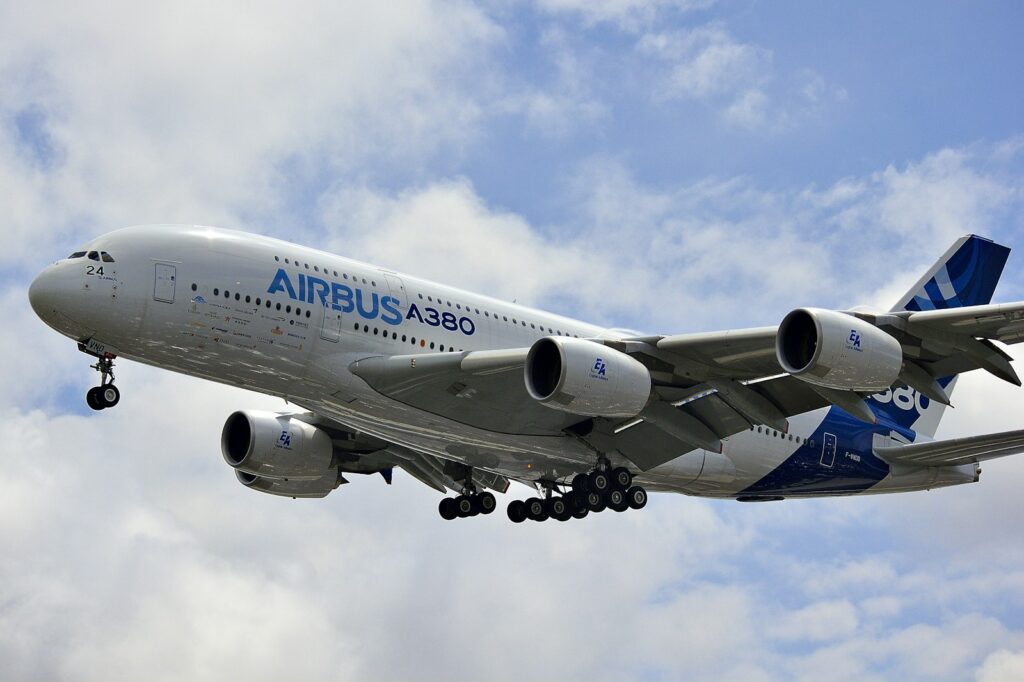
What happened on the British Airways A380 “flight to nowhere” from Johannesburg, why weather radar matters so much, how airlines decide to turn back, and what affected passengers are entitled to.
Quick answer: In August 2026, British Airways flight BA54, an Airbus A380 from Johannesburg to London Heathrow, turned back over the Democratic Republic of the Congo after its weather radar failed and could not be fixed in flight. The superjumbo dumped fuel and landed back in Johannesburg, about seven hours after departure according to reports. Passengers did not reach London that night and British Airways provided overnight accommodation.
Few things frustrate travellers more than spending hours in the air only to land where they started. That is exactly what happened to hundreds of passengers on a British Airways Airbus A380 in August 2026, in what aviation media called a seven-hour “flight to nowhere”.
This article explains what happened on flight BA54, why a weather radar failure is serious enough to turn back a 500-seat aircraft, why pilots sometimes return to the departure airport instead of diverting, and what rights passengers have when this happens.
Details are based on reports from aviation news outlets and the airline’s statement; some figures, such as exact flight time, differ slightly between sources.
In this article
- What happened on the British Airways A380 flight?
- Why would a weather radar failure turn back an A380?
- Why return to Johannesburg instead of diverting?
- What happened to the passengers?
- What are passenger rights after a flight returns?
- Is this the first A380 “flight to nowhere”?
- Why do airlines still fly the A380?
- What should travellers do if their flight turns back?
- Frequently Asked Questions
- Final Thoughts
What happened on the British Airways A380 flight?
| Detail | Information |
|---|---|
| Flight | British Airways BA54 |
| Aircraft | Airbus A380-800 |
| Route | Johannesburg (JNB) to London Heathrow (LHR) |
| Date | 8 August 2026 (overnight departure) |
| Problem | Weather radar failure that could not be fixed in flight |
| Turn-back point | Airspace over the Democratic Republic of the Congo |
| Outcome | Fuel dump, return and landing in Johannesburg |
| Time | About seven hours after departure, according to several reports |
According to Simple Flying, a warning appeared after take-off and briefly cleared, but the radar display remained cluttered and the backup system was not usable. The crew decided it was not safe to continue overnight across Africa without reliable weather radar.
Why would a weather radar failure turn back an A380?
Weather radar lets pilots see thunderstorms, heavy rain and turbulence ahead, especially at night when clouds are invisible. The route from Johannesburg to London crosses equatorial Africa, where large storm systems are common.
- Safety: flying into a severe storm can cause dangerous turbulence, hail damage or icing
- Night conditions: pilots cannot see storms visually in darkness
- Redundancy rules: airlines usually need working backup systems to continue long flights
- Limited airports: suitable diversion airports for a giant A380 are scarce in central Africa
Why return to Johannesburg instead of diverting?
- A380 needs special airports: few airports in central Africa can handle the world’s largest passenger jet
- Maintenance and spare parts: British Airways has engineering support and A380 facilities in Johannesburg
- Passenger care: hotels, rebooking and ground staff are available at a major hub
- Crew limits: returning keeps crews and aircraft in a place where replacements can be arranged
Before landing, the aircraft dumped fuel so it would be below its maximum landing weight, a routine safety procedure for heavy long-haul aircraft that return early.
What happened to the passengers?
Passengers did not continue to London that night. In a statement quoted by aviation media, British Airways said it provided overnight accommodation and support and apologised for the disruption. Passengers were rebooked on later flights.
A traveller boards BA54 at about 9 p.m. expecting breakfast in London. Instead, they land back in Johannesburg in the early hours, spend the night in an airline hotel and fly to London the following evening, arriving about a day late.
What are passenger rights after a flight returns?
British Airways is a UK airline flying to the UK, so flights like BA54 generally fall under UK261, the UK’s version of EU flight delay rules. Under these rules, passengers can be entitled to care (meals and hotels), rebooking or refunds, and sometimes compensation for long delays.
- Care: meals, refreshments and accommodation while waiting
- Rebooking or refund: choose the next available flight or a refund
- Compensation: possible for long delays unless the cause counts as “extraordinary circumstances”
- Technical faults: the UK Civil Aviation Authority says most technical problems are not usually extraordinary, but each case depends on the facts
Check the UK Civil Aviation Authority guidance on delays and contact the airline first before using a claims company.
Is this the first A380 “flight to nowhere”?
No. Long-haul flights sometimes return to their origin after hours in the air because of technical issues, medical emergencies or airspace problems. Other A380 operators, including Qantas and Emirates, have had similar headline-making returns over the years, often caused by technical warnings or satellite and system issues on very long routes.
The A380 is now an ageing fleet: Airbus ended production in 2021, and airlines that still fly it rely heavily on careful maintenance.
Why do airlines still fly the A380?
- Capacity: it carries hundreds of passengers on busy routes with limited airport slots
- Passenger appeal: spacious cabins, bars and quiet flights
- Demand recovery: strong travel demand brought many A380s back after the pandemic
- Challenges: high fuel use, four engines and expensive maintenance
Imagine the crew continued with no radar and met a large storm over central Africa at night. Severe turbulence could injure passengers and crew. Turning back costs time and money, but it removes that risk completely.
What should travellers do if their flight turns back?
- Stay calm and follow crew instructions; returns are a safety decision.
- Keep boarding passes, receipts and any written notices.
- Use the airline app to rebook quickly.
- Ask about meal vouchers and hotel accommodation.
- Check your rights under UK261 or EU261 if your journey qualifies.
- Contact your travel insurer for extra costs not covered by the airline.
Planning complex trips? A travel professional can help; see our guide on how to become a travel agent to understand what agents do, and our latest backpacking Europe news for new border rules.
On long-haul flights, keep essential medicines, a charger and a change of clothes in your carry-on. If your flight returns or diverts, you may not see your checked bag until the next day.
Save the customer service number and app of the airlines you fly most often, and read their delay policy once. It will save time and stress if something goes wrong.
Frequently Asked Questions
Why did the British Airways A380 turn back to Johannesburg?
Its weather radar failed and could not be fixed in flight, so the crew decided it was unsafe to continue overnight across central Africa.
How long was the A380 flight to nowhere?
Reports describe it as about seven hours after departure, though flight-tracking data in some reports suggests a shorter airborne time.
What flight was it?
British Airways BA54 from Johannesburg to London Heathrow in August 2026.
Did passengers get hotels?
Yes. British Airways said it provided overnight accommodation and support.
Can passengers claim compensation?
Possibly. Under UK261, technical problems are often not extraordinary circumstances, but eligibility depends on the details.
Why did the plane dump fuel?
To reduce its weight below the maximum landing weight before returning to Johannesburg.
Final Thoughts
- British Airways BA54, an A380, turned back after a weather radar failure over central Africa.
- The aircraft dumped fuel and landed back in Johannesburg about seven hours after departure, according to reports.
- Returning to a hub is often safer and better for passenger care than diverting.
- Passengers may have rights to care, rebooking and possibly compensation under UK261.