
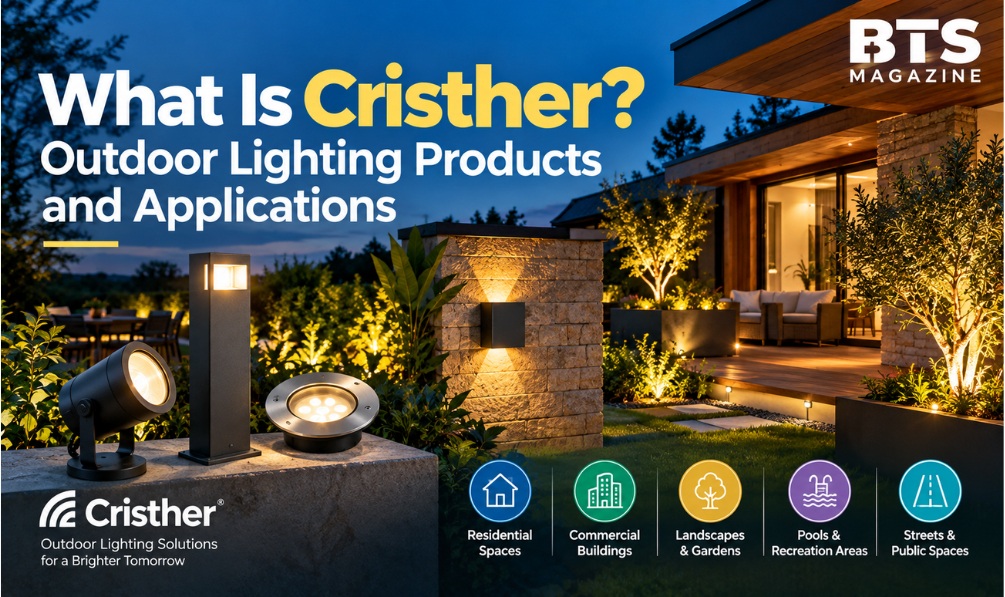
Outdoor lighting can change how a garden, patio, pathway, or building looks after sunset. The right fixtures improve visibility, highlight architectural details, and make outdoor spaces more useful. Cristher is a Spanish lighting brand that focuses on these needs through a range of technical and decorative lighting solutions.
Founded in 1981, Cristher is part of Novolux Lighting Group. Its product range includes LED fixtures, solar lighting, recessed lights, spotlights, bollards, natural stone designs, and underwater lighting. The brand serves residential and professional projects, offering different options for outdoor environments.
This guide explains what Cristher is, which lighting products it offers, where they can be used, and what buyers should consider before choosing a fixture.
What Is Cristher Lighting?
Cristher is a Spanish lighting brand specializing in outdoor and architectural lighting. Its products are designed for areas such as gardens, entrances, walkways, exterior walls, and selected water features.
The brand is associated with practical lighting solutions that combine technical performance with different materials, finishes, and designs. Some fixtures provide general illumination, while others direct light toward a specific feature, such as a tree, stone wall, or building entrance.
Cristher’s range includes several types of outdoor fixtures. This allows homeowners, architects, lighting designers, and contractors to compare products according to the requirements of a project.
You can explore the available collections through the official Cristher product catalog.
The History and Development of Cristher
Cristher began in Spain in 1981. Over time, the brand developed its focus on outdoor lighting for residential and architectural environments.
Lighting technology has changed significantly since the company began. Traditional lamps have increasingly been joined by LED solutions, solar-powered products, and fixtures with more specialized technical features.
Cristher’s current product listings reflect this variety. Buyers can find different mounting styles, light sources, materials, and finishes for projects of different sizes.
The brand’s history also connects it to the wider Spanish lighting industry, where manufacturers supply both decorative products and technical equipment for residential and commercial spaces.
Cristher and Novolux Lighting Group
Cristher is one of the brands associated with Novolux Lighting Group, a lighting company headquartered in the Barcelona area of Spain. Novolux supplies lighting solutions for indoor and outdoor applications through several brands.
This relationship gives customers access to Cristher’s product catalog and technical information through the group’s website and its distribution network.
Before purchasing, buyers should check the exact product reference, current availability, warranty conditions, and local supplier support. These details can vary by model and market.
Main Types of Cristher Lighting Products
Cristher offers several lighting categories for different outdoor applications. Understanding their intended uses makes it easier to select suitable fixtures.
1. LED Outdoor Lighting
LED lighting is widely used in outdoor environments because it can provide useful brightness with relatively low electricity consumption compared with many traditional light sources.
Cristher’s catalog includes LED fixtures in different formats and power ranges. Depending on the model, these may be suitable for entrances, exterior walls, paths, and architectural features.
LED performance should be evaluated using lumens, wattage, color temperature, and beam angle rather than wattage alone.
2. Wall-Mounted Lights
Wall lights are useful for entrances, patios, exterior corridors, and building facades. They can provide general illumination or direct light upward, downward, or across a particular surface.
When selecting a wall fixture, consider its mounting height and the area that needs to be illuminated. A light positioned too high or aimed incorrectly may create glare instead of improving visibility.
3. Bollards and Pathway Lights
Bollards are upright fixtures commonly installed along walkways, driveways, garden borders, and landscaped areas.
They can help people identify walking routes at night while adding a consistent lighting pattern to the landscape. Their height, spacing, and light distribution should match the pathway’s width and surroundings.
For a narrow garden path, low fixtures may be sufficient. Wider walkways may need a different layout to avoid dark sections.
4. Recessed Lighting
Recessed fixtures sit inside a surface rather than projecting far beyond it. Depending on their design, they can be installed in suitable walls, floors, or ceilings.
They are often used where a discreet appearance is important, such as along steps, near entrances, or around covered outdoor spaces.
Always confirm that the selected model is approved for its intended mounting location. A recessed fixture designed for a wall should not automatically be treated as suitable for floor installation.
5. Solar Lighting
Solar lights use energy collected from sunlight and stored in a battery. They can be useful in outdoor areas where running a mains-powered connection would be difficult or expensive.
However, performance depends on the individual model, battery capacity, sunlight exposure, and operating conditions.
Before purchasing a solar fixture, check its charging requirements, expected operating time, brightness, and whether the solar panel receives enough direct sunlight.
6. Natural Stone Lighting
Natural stone fixtures can complement gardens, terraces, and landscaped areas that use stone, gravel, or other natural materials.
Their appearance can help outdoor lighting blend with the surrounding environment rather than stand out as a separate decorative element.
Buyers should review the material, dimensions, light output, and installation requirements of the specific model before choosing it.
7. Underwater Lighting
Underwater fixtures are designed for approved applications involving water, such as certain fountains, ponds, and decorative water features.
These products require particular care because electrical equipment near water presents additional safety risks.
A fixture that is described as waterproof is not necessarily suitable for permanent underwater installation. Check the manufacturer’s instructions, permitted installation depth, electrical requirements, and protection rating before use.
Where Can Cristher Outdoor Lighting Be Used?
The best lighting arrangement depends on the purpose of the space. Different outdoor areas need different brightness levels, beam patterns, and fixture types.
Gardens and Landscaped Areas
Garden lighting can highlight trees, shrubs, pathways, and decorative features. Spotlights can direct attention toward a selected plant or wall, while bollards can help define walking routes.
Avoid pointing bright fixtures directly toward neighboring homes or people’s eyes. Carefully directed lighting can create a more comfortable atmosphere while reducing unwanted glare.
Patios and Outdoor Seating Areas
Patios often benefit from a balanced combination of functional and ambient lighting.
Wall fixtures can provide general visibility, while selected accent lights can highlight plants or architectural details. Warm-white light is often a comfortable choice for relaxed seating areas, although the best color temperature depends on the design.
Entrances and Driveways
Entrance lighting should make doors, steps, locks, and changes in floor level easier to see.
Choose fixtures that provide sufficient illumination without shining directly into the eyes of residents or visitors. Driveways may require a different arrangement from small front porches because vehicles and pedestrians share the space.
Commercial Buildings
Hotels, offices, retail properties, and other commercial buildings may need lighting around entrances, exterior walls, access routes, and landscaped areas.
A coordinated lighting plan can improve visibility and help present the building consistently after dark. Larger projects should consider operating costs, maintenance access, and local lighting requirements.
Understanding LED Specifications Before Buying
Product specifications help buyers compare lighting fixtures accurately. The most important details are not always the ones that appear largest in a product description.
Lumens and Wattage
Lumens measure the amount of visible light produced by a source. Wattage measures its electrical power consumption.
A fixture with higher wattage does not necessarily produce more light than another fixture. Comparing lumens alongside wattage gives a more useful indication of light output and energy efficiency.
Color Temperature
Color temperature describes the appearance of white light and is measured in kelvins (K).
- Warm white: Creates a softer, warmer appearance that often suits patios and gardens.
- Neutral white: Offers a more balanced appearance for general outdoor applications.
- Cool white: Produces a cooler visual effect that may suit certain functional or architectural settings.
The choice should suit the surrounding materials, intended use, and desired atmosphere.
Beam Angle
Beam angle indicates how widely a fixture distributes light.
A narrow beam can emphasize a particular tree, column, or architectural feature. A wider beam can cover a larger area, depending on the fixture’s output and placement.
Selecting the right beam angle helps reduce dark patches and unnecessary light spill.
IP Protection Rating
An IP rating describes protection against the entry of solid particles and water. It is particularly important for fixtures exposed to rain, dust, cleaning, or other outdoor conditions.
The required rating depends on the exact installation environment. A covered entrance, an exposed garden path, and an underwater application do not have the same requirements.
Check the manufacturer’s technical documentation instead of assuming that every outdoor fixture offers the same level of protection.
How to Choose the Right Cristher Fixture
Choosing a light becomes easier when you start with the space rather than the product’s appearance.
Use these factors to narrow your options:
- Identify the location. Decide whether the fixture will be installed on a wall, beside a pathway, in the ground, or near a water feature.
- Define its purpose. Determine whether you need general visibility, decorative accent lighting, or both.
- Compare brightness. Review the lumen output and consider the size of the area.
- Choose the light color. Select a color temperature that suits the surroundings and the intended use.
- Check weather protection. Confirm that the fixture is approved for the expected exposure to rain, dust, and moisture.
- Review the power supply. Establish whether the model requires mains electricity, a suitable driver, or solar charging.
- Measure the installation area. Check the fixture’s dimensions, mounting method, and available space.
- Compare long-term costs. Consider electricity consumption, replacement parts, cleaning, and maintenance access.
For larger projects, a lighting designer or qualified installer can help determine suitable fixture positions and avoid uneven illumination.
Installation and Maintenance Tips
Outdoor lighting must be installed according to the manufacturer’s instructions. The mounting surface, electrical supply, environmental exposure, and access for future maintenance all matter.
Electrical fixtures should be connected by a qualified professional where required by local regulations. Installations near water need additional precautions, including the correct equipment and approved electrical protection.
Regular maintenance can help keep outdoor lights working properly.
- Clean exterior surfaces with a suitable soft cloth.
- Remove dirt and leaves that obstruct light output.
- Keep solar panels free from material that blocks sunlight.
- Inspect visible seals and housings for damage.
- Check for loose fittings or signs of moisture entering the fixture.
- Follow the manufacturer’s instructions for cleaning and servicing.
Switch off the relevant power supply before cleaning wired fixtures. If you notice damaged wiring, water inside a fitting, or other electrical problems, stop using the fixture and contact a qualified electrician.
Where to Buy Cristher Lighting
Cristher products are available through lighting distributors and suppliers. The official Novolux website is a useful starting point for researching product families and reviewing technical specifications.
Before placing an order, confirm the following details with the supplier:
- Exact product reference and finish
- Current price and stock availability
- Delivery time and shipping arrangements
- Installation requirements and compatible accessories
- Warranty coverage and return conditions
- Availability of replacement parts and technical support
Do not rely on a product photograph alone. Two fixtures may look similar but differ in dimensions, electrical requirements, brightness, or suitability for a particular location.
Why Lighting Technology Matters
Modern outdoor lighting involves more than choosing a bulb and fitting it into a fixture. Light output, energy use, direction, control, and environmental protection all affect how well a lighting system performs.
LED technology is one important part of this development. To understand the basics, readers can consult Wikipedia’s overview of the light-emitting diode, which explains how LEDs produce light.
For a real purchasing decision, however, the manufacturer’s product documentation should remain the main reference for electrical specifications, installation conditions, and approved uses.
Is Cristher a Suitable Choice for Your Project?
Cristher may be worth exploring if you need outdoor fixtures for a home, landscaped area, building exterior, or architectural project. Its catalog includes several fixture styles and technical options, allowing buyers to compare products for different applications.
The most suitable choice depends on the space, required brightness, preferred design, power source, and environmental conditions. A decorative fixture may look attractive but still be unsuitable for an exposed or wet location.
Review the technical details carefully, confirm availability with an authorized supplier, and seek professional advice when the installation involves complex wiring or water.
Frequently Asked Questions
What is Cristher?
Cristher is a Spanish lighting brand associated with Novolux Lighting Group. It offers lighting products for outdoor, residential, and architectural applications.
When was Cristher founded?
Cristher dates back to 1981, giving the brand more than four decades of history in the lighting industry.
What types of lights does Cristher offer?
Its catalog includes LED fixtures, wall lights, spotlights, bollards, recessed lights, solar lighting, natural stone designs, and underwater lighting.
Is Cristher lighting suitable for gardens?
Some Cristher products are designed for garden use, including pathway lights, spotlights, and suitable outdoor fixtures. Check each model’s specifications and installation requirements before purchasing.
Are all Cristher lights waterproof?
No. Protection levels vary by product, and not every outdoor fixture is suitable for wet locations or underwater installation. Always check the specific model’s IP rating and manufacturer instructions.
Where can I find Cristher product details?
The official Novolux Lighting website provides brand information, product categories, and technical details. Local distributors can help with pricing, availability, and installation support.
Final Thoughts
Cristher is an established Spanish lighting brand with a product range covering outdoor and architectural applications. Its collections include solutions for gardens, paths, entrances, building exteriors, and selected water features.
The best way to choose a fixture is to match its technical specifications to the intended location. Compare brightness, color temperature, beam angle, power requirements, and IP protection before buying. With suitable product selection and safe installation, outdoor lighting can improve both the usability and appearance of a space.
Read also: Glorvix.com Review: Services, SEO Approach, and How Trustworthy It Looks