

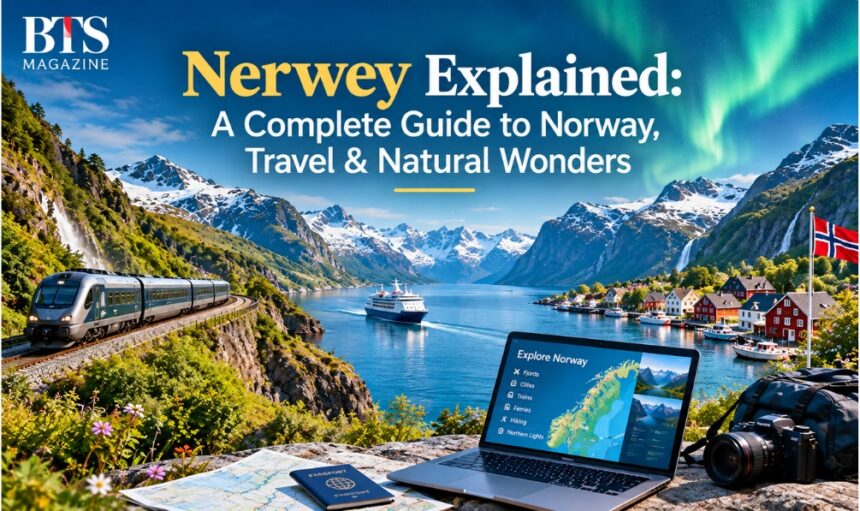
If you have searched for Nerwey, you may actually be looking for Norway. The word “Nerwey” is generally used as an alternative spelling or typing variation of Norway rather than the name of a separate country or destination.
- What Is Nerwey?
- Norway at a Glance
- Why Bergen Is an Important Starting Point
- Exploring Norway by the Flåm Railway
- Norway’s Famous Fjords
- When Is the Best Time to Visit Norway?
- Where Can You See the Northern Lights?
- Norway’s Hydropower and Energy System
- Technology and Modern Farming in Norway
- How to Plan a Norway Trip More Efficiently
- Start With One Main Goal
- Don’t Underestimate Distances
- Book Important Services Early
- Prepare for Changing Weather
- Norway Is More Than Scenic Landscapes
- Final Thoughts on Nerwey
Norway is a Nordic country famous for dramatic fjords, mountain landscapes, coastal towns, modern cities, northern lights, and impressive transport routes. It is also known for hydropower, electric transportation, and technology used in agriculture.
This guide explains what Nerwey means, why the spelling appears online, and what makes Norway an interesting destination for travelers and anyone researching the country.
What Is Nerwey?
Nerwey is not the official name of a country, city, province, or geographical region. In most cases, it is simply a misspelling or alternative search form of Norway.
People can arrive at this spelling for several reasons. Someone may type the word quickly, spell it according to how it sounds, or make a keyboard mistake. Voice-to-text systems and mobile keyboards can also occasionally produce unexpected spellings.
If you are searching for information about the country, use Norway when looking for flights, official travel information, maps, visas, railway tickets, or government services.
For general background, readers can also explore the country through the Wikipedia page for Norway.
Why Does the Spelling “Nerwey” Appear Online?
Search behavior often creates variations of familiar words. A person who has only heard the country’s name might not know its standard English spelling. Typing quickly can produce another variation that still sounds similar.
Search engines are usually able to understand the intended meaning and return information about Norway. As a result, the term Nerwey may appear in websites, articles, or search queries even though it has no separate official meaning.
Norway at a Glance
Norway is located in Northern Europe and is traditionally considered part of Scandinavia. It has a long land border with Sweden and also shares borders with Finland and Russia in the north. Oslo is the country’s capital and largest city.
The country’s geography is one of its defining features. Norway has:
- Tall mountains
- Deep fjords
- Forests and lakes
- Coastal islands
- High plateaus
- Long stretches of coastline
- Arctic landscapes in the north
Because of this terrain, traveling around Norway can take longer than expected. Two places that appear relatively close on a map may be separated by mountains, waterways, or winding roads.
That is why ferries, bridges, tunnels, trains, and regional flights are important parts of Norwegian transportation.
Why Bergen Is an Important Starting Point
Bergen is one of the most popular gateways to western Norway. The city combines a historic waterfront with mountains and access to some of the country’s most famous fjord areas.
Visitors can explore the colorful Bryggen district, walk around the harbor, visit local markets, or take a funicular toward the surrounding hills.
Bergen is also useful as a starting point for trips toward:
- Flåm
- Voss
- Sognefjord
- Nærøyfjord
- Hardangerfjord
- Myrdal
The weather can be wet, even during warmer months, so travelers should be prepared for changing conditions.
For someone searching “Nerwey” because they are planning a Norway trip, Bergen can provide a practical combination of city sightseeing and access to western landscapes.
Exploring Norway by the Flåm Railway
The Flåm Railway is one of Norway’s best-known scenic train journeys. It connects the village of Flåm with Myrdal, climbing through mountainous terrain along the way.
The journey is known for dramatic scenery, including:
- Waterfalls
- Steep mountain slopes
- Green valleys
- Small settlements
- Tunnels
- Fjord landscapes
The railway is particularly attractive because the journey itself is part of the experience. Travelers are not simply using the train to get from one place to another.
Many visitors combine the Flåm Railway with other forms of transport, including the Bergen Railway and fjord cruises. This makes it possible to experience several different sides of Norway during one trip.
The scenery also changes dramatically by season. Summer provides green landscapes and long daylight hours, while winter can create snowy mountain views.
Norway’s Famous Fjords
A fjord is a long, narrow body of seawater surrounded by steep cliffs or mountains. Many Norwegian fjords were formed by glaciers over extremely long periods.
These waterways are now closely connected with tourism, transportation, fishing, farming, and communities along the coast.
Sognefjord
Sognefjord is Norway’s longest and deepest fjord. Its enormous scale makes it one of the country’s major natural attractions.
The surrounding region contains villages, mountains, waterfalls, farms, and hiking opportunities.
Nærøyfjord
Nærøyfjord is a narrower branch of the Sognefjord system. Its steep surroundings and relatively narrow waterway create the dramatic landscape that many visitors associate with Norway.
Hardangerfjord
Hardangerfjord is another important western fjord region. It is particularly known for waterfalls, mountain scenery, villages, and fruit-growing areas.
Travelers should remember that remote fjord locations may require careful transport planning. Ferry schedules, road conditions, weather, and seasonal services can all affect a journey.
When Is the Best Time to Visit Norway?
There is no universal best season for Norway. The ideal time depends on what you want to experience.
Summer: June to August
Summer is popular for hiking, sightseeing, scenic train trips, and exploring the fjords. Days are extremely long, especially in northern areas.
The disadvantage is that popular destinations can become busy, and accommodation or transportation may cost more.
Autumn: September to October
Autumn brings cooler temperatures and changing colors. Visitor numbers generally decline after the main summer period.
However, some seasonal attractions and transportation services may operate less frequently.
Winter
Winter is suitable for snow activities, skiing, winter landscapes, and northern-lights trips. In northern Norway, daylight hours can be very limited.
Snow and icy conditions can also affect roads and transportation, so flexibility is important.
Spring
Spring can bring powerful waterfalls, melting snow, and fewer visitors. However, mountain trails may remain snowy, muddy, or inaccessible during parts of the season.
The best approach is to choose your main activity first and then select the season around it.
Where Can You See the Northern Lights?
Northern Norway is strongly associated with the aurora borealis, commonly called the northern lights.
Popular areas for aurora trips include:
- Tromsø
- Alta
- Senja
- Lofoten
Seeing the aurora depends on several factors. Darkness, clear skies, solar activity, and location all matter.
Even a strong aurora forecast cannot guarantee a visible display because clouds may block the sky. For this reason, travelers who are making the northern lights the main purpose of their trip may benefit from staying several nights instead of relying on one evening.
When comparing tours, consider the guide’s transport arrangements, weather strategy, clothing requirements, and backup plans rather than looking only at the advertised price.
Norway’s Hydropower and Energy System
Norway has a major hydropower system supported by its mountainous terrain, rivers, lakes, and precipitation.
Hydroelectricity plays a central role in the country’s domestic electricity supply. This helps explain why electric vehicles, electric ferries, and electrically powered infrastructure are common parts of modern Norwegian life.
However, Norway’s energy story is more complicated than simply describing it as a “green country.” The nation also has a major petroleum and natural-gas industry and remains an important exporter of oil and gas.
This contrast is important when discussing Norway’s energy system. Its domestic electricity production and its role in global fossil-fuel markets are separate parts of the country’s wider energy picture.
Technology and Modern Farming in Norway
Norway’s agricultural sector operates under challenging conditions. Farmers may have to deal with cold temperatures, short growing seasons, uneven terrain, and high operating costs.
Technology can help address some of these challenges.
Modern agricultural research can involve tools such as:
- Precision farming
- Digital field monitoring
- Sensors
- Remote sensing
- Drones
- Automated equipment
- Data-based farming decisions
- Virtual fencing
These systems can help farmers monitor land and livestock more efficiently. Instead of replacing farmers, technology provides additional information that can support decisions about crops, grazing, fertilizer, and resources.
This is an interesting side of Norway that can easily be missed when the country is discussed only as a tourist destination.
How to Plan a Norway Trip More Efficiently
Norway rewards careful planning, especially if your itinerary includes several regions.
Start With One Main Goal
Decide whether your priority is:
- Fjords
- Hiking
- Cities
- Scenic rail journeys
- Northern lights
- Winter activities
Once the main goal is clear, building the rest of the itinerary becomes easier.
Don’t Underestimate Distances
Norway may look manageable on a map, but mountains, fjords, tunnels, ferries, and weather can make journeys longer.
Trying to visit Oslo, Bergen, Flåm, Lofoten, and Tromsø during a very short trip can result in spending more time traveling than exploring.
Book Important Services Early
Popular trains, accommodation, ferries, cabins, and northern-lights tours can become busy during peak periods.
Reserve the most important parts of your itinerary first, particularly if your dates are fixed.
Prepare for Changing Weather
Layered clothing is more practical than relying on one heavy item. A waterproof outer layer, comfortable walking shoes, and a small daypack can be useful for many types of Norwegian travel.
Always check local conditions before hiking or traveling through remote areas.
Norway Is More Than Scenic Landscapes
The country’s appeal goes beyond fjords and mountain photographs.
Norway combines natural environments with modern cities, public transportation, coastal communities, energy infrastructure, agriculture, and digital technology.
Remote locations also require visitors to be responsible. A place that looks easy to reach in a social-media post may have limited parking, few facilities, weak mobile coverage, or difficult road conditions.
Travelers should therefore check reliable local information before visiting remote attractions.
A good Norway travel guide should discuss not only beautiful scenery but also costs, transportation, weather, distance, safety, and seasonal limitations.
Final Thoughts on Nerwey
Nerwey is best understood as a spelling variation or search term for Norway rather than a separate destination. If you came across the word while searching online, the information you need is most likely related to Norway.
From Bergen and the Flåm Railway to Sognefjord, northern lights destinations, hydropower, and modern agricultural technology, Norway offers much more than its famous landscapes.
Instead of attempting to see everything in one visit, choose a specific region or travel experience and build your itinerary around it. With realistic distances, flexible scheduling, suitable clothing, and advance planning, a Norway trip can become much easier to manage.
Whether your search began with “Nerwey” or the correct spelling “Norway,” the country offers a combination of dramatic nature, modern infrastructure, and distinctive Nordic culture that makes it worth exploring.
Read also: JobSmart 4-Drawer Steel Tool Box Review: Is It Worth It?