

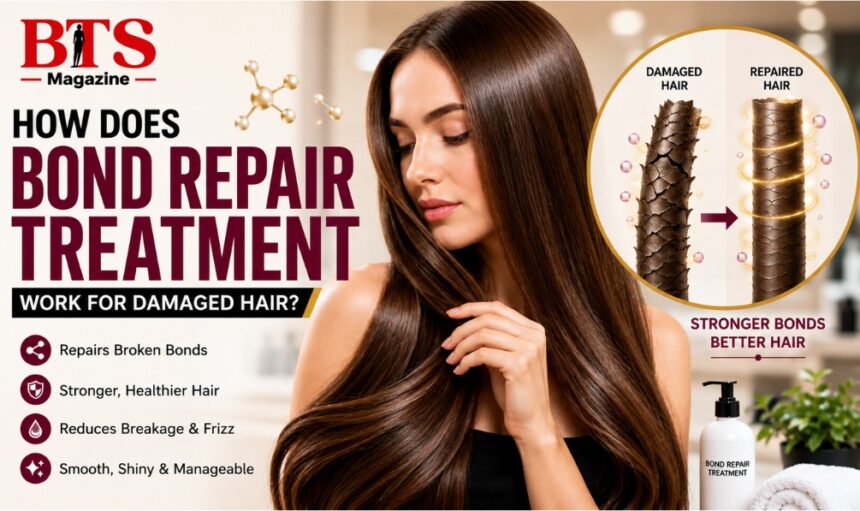
Hair can look fine on the outside while being weak underneath. Bleaching, coloring, heat styling, chemical treatments, and repeated washing can damage the internal structure of the hair fiber. This is where bond repair treatment comes in.
- What Is Bond Repair Treatment?
- How Does Bond Repair Treatment Work?
- Why Is Bond Repair Treatment Important?
- Key Benefits of Bond Repair Treatment
- 1. Helps Strengthen Damaged Hair
- 2. May Reduce Breakage
- 3. Improves Hair Texture
- 4. Helps Chemically Treated Hair
- 5. Makes Hair Easier to Manage
- Who Should Use Bond Repair Treatment?
- How to Use Bond Repair Treatment Step by Step
- Step 1: Wash Your Hair
- Step 2: Apply the Treatment
- Step 3: Allow It to Work
- Step 4: Rinse or Continue With the Routine
- Step 5: Condition and Protect
- Bond Repair vs. Regular Conditioner
- How Often Should You Use Bond Repair Treatment?
- Common Mistakes to Avoid
- FAQs
- Does bond repair treatment really work?
- Can bond repair treatment fix bleached hair?
- Is bond repair better than conditioner?
- Can you use bond repair treatment every day?
- Does bond repair treatment work on natural hair?
- Can bond repair treatment stop split ends?
- Should I use bond repair before or after shampoo?
- Conclusion
Unlike a regular conditioner that mainly smooths the surface, a bond repair treatment is designed to help reinforce weakened connections within the hair fiber. The result can be stronger-feeling, smoother, and more manageable hair.
But how does it actually work, and is it suitable for everyone? Let’s break it down in simple terms.
What Is Bond Repair Treatment?
Bond repair treatment is a hair-care treatment designed to help strengthen and protect damaged hair by supporting weakened bonds within the hair fiber. These bonds contribute to the hair’s structure and strength. Treatments use different ingredients and technologies, so their exact mechanisms vary by product.
Hair contains a protein called keratin, and its structure depends on several types of chemical interactions. Some can be affected by bleaching, coloring, heat, and chemical processing.
Bond-building products aim to help reduce the effects of this damage and improve the hair’s strength, feel, and appearance.
For background on keratin and hair structure, you can also explore this Wikipedia overview of keratin.
How Does Bond Repair Treatment Work?
The easiest way to understand it is to think of damaged hair as a rope with weakened sections.
Healthy hair has a strong internal structure. Repeated chemical or physical stress can weaken parts of that structure. A bond repair treatment is formulated to interact with the hair fiber and support its damaged areas.
Different products work in different ways. Some ingredients are designed to interact with specific chemical bonds, while others form reinforcing films or help improve the hair’s protein and moisture balance.
What Happens Inside Damaged Hair?
Several common activities can weaken hair:
- Bleaching and lightening
- Permanent hair coloring
- Chemical straightening
- Frequent heat styling
- Excessive brushing
- UV exposure
- Repeated washing and drying
The damage can make hair feel rough, dry, stretchy, brittle, or difficult to manage.
A bond repair product may help improve these symptoms by strengthening the hair fiber and reducing breakage.
Important: Bond repair does not literally turn severely damaged hair back into completely untreated hair. Hair is non-living tissue, so treatments mainly improve and reinforce the existing fiber rather than biologically “healing” it.
Why Is Bond Repair Treatment Important?
Damaged hair often creates a cycle. Once the fiber becomes weaker, brushing and styling can cause additional breakage. Split ends and rough sections can then make the hair look thinner and less healthy.
A good bond repair routine can be useful for people who regularly bleach, color, straighten, curl, or heat-style their hair.
It can help:
- Reduce the appearance of damage
- Improve manageability
- Make hair feel stronger
- Reduce breakage caused by routine styling
- Improve softness and smoothness
- Support chemically treated hair
The biggest benefit is usually damage management, not instant restoration.
Key Benefits of Bond Repair Treatment
1. Helps Strengthen Damaged Hair
One of the main reasons people use bond-building products is to improve the strength of weakened hair.
This can be particularly useful after bleaching or repeated chemical processing.
2. May Reduce Breakage
Weak hair is more likely to snap during brushing and styling. A suitable bond repair treatment can help improve fiber strength and make hair less prone to mechanical damage.
3. Improves Hair Texture
Damaged hair often feels rough or uneven. Many bond repair products also contain conditioning ingredients that leave the hair feeling smoother.
4. Helps Chemically Treated Hair
People who bleach, highlight, or frequently color their hair may find bond repair treatments especially useful.
They can be incorporated into a broader damage-prevention routine.
5. Makes Hair Easier to Manage
Stronger, smoother hair can be easier to detangle and style. This may reduce the amount of pulling and friction during everyday hair care.
Who Should Use Bond Repair Treatment?
Bond repair products are most useful for hair that has experienced significant chemical or physical stress.
You may want to consider one if your hair is:
- Bleached or highlighted
- Frequently colored
- Dry and brittle
- Prone to breakage
- Frequently exposed to heat
- Rough or difficult to detangle
- Chemically straightened or permed
However, not every person needs a bond repair treatment.
If your hair is healthy and has never been chemically treated, a basic shampoo, conditioner, and heat-protection routine may be enough.
How to Use Bond Repair Treatment Step by Step
The exact instructions depend on the product, so always follow its label. A typical routine looks like this:
Step 1: Wash Your Hair
Start with the shampoo recommended for your hair type or the bond repair system you’re using.
Remove excess oil and product buildup without aggressively scrubbing the lengths.
Step 2: Apply the Treatment
Apply the bond repair product according to its instructions.
Some treatments are used before shampooing, while others are applied after shampooing. The correct order depends on the formula.
Step 3: Allow It to Work
Leave the product on for the amount of time stated on the packaging.
Leaving it on much longer than recommended does not automatically produce better results.
Step 4: Rinse or Continue With the Routine
Some products must be rinsed, while leave-in treatments remain on the hair.
Follow the manufacturer’s directions rather than treating every bond repair product the same way.
Step 5: Condition and Protect
If the product instructions allow it, follow with conditioner or another suitable moisturizing product.
When heat styling, use a heat protectant and keep temperatures reasonable.
Bond Repair vs. Regular Conditioner
These two products have different purposes.
Conditioner primarily improves slip, softness, detangling, and surface feel. Bond repair products are designed specifically to address or support weakened hair structure, depending on their technology.
For severely damaged hair, you may benefit from using both rather than choosing one exclusively.
A simple routine could include:
Cleanse → Bond treatment → Condition → Leave-in/heat protection
The exact order can change depending on the product.
How Often Should You Use Bond Repair Treatment?
There is no universal schedule.
Some products are intended for regular use, while others are designed as occasional intensive treatments. Using a strong treatment more frequently than recommended does not necessarily improve your hair.
A practical approach is to:
- Follow the product directions.
- Start with the recommended frequency.
- Watch how your hair responds.
- Adjust your routine if the hair becomes stiff, coated, or difficult to manage.
Remember that damaged hair often needs a balance of strength, moisture, gentle handling, and protection from further damage.
Common Mistakes to Avoid
Even a good bond repair product cannot compensate for damaging habits.
Avoid these common mistakes:
- Using excessive heat
- Bleaching repeatedly without enough recovery time
- Brushing wet hair aggressively
- Skipping heat protection
- Using more product than recommended
- Expecting one treatment to fix severe damage
- Ignoring split ends and ongoing breakage
If the ends are severely split, trimming may still be necessary because a cosmetic treatment cannot permanently fuse a split hair shaft back together.
FAQs
Does bond repair treatment really work?
Bond repair products can improve the strength, feel, and appearance of damaged hair, but results vary by formula and hair condition. They are best viewed as part of a damage-management routine rather than a permanent cure for severely damaged hair.
Can bond repair treatment fix bleached hair?
It can help improve the condition and strength of bleached hair, especially when used consistently. However, it cannot completely reverse every change caused by bleaching. Severely damaged sections may still need to be trimmed.
Is bond repair better than conditioner?
Not necessarily. They serve different purposes. Bond repair products target structural damage, while conditioners mainly improve softness, slip, and manageability. Damaged hair can benefit from both.
Can you use bond repair treatment every day?
That depends on the specific product. Some formulas are made for frequent use, while others are intended for weekly or occasional treatments. Always follow the manufacturer’s instructions.
Does bond repair treatment work on natural hair?
Yes. Natural hair can also experience damage from heat, coloring, chemical treatments, friction, and environmental exposure. However, healthy untreated hair may not need an intensive bond repair routine.
Can bond repair treatment stop split ends?
It may improve the appearance and feel of damaged ends, but it cannot permanently repair a fully split hair shaft. Regular trims and reducing further damage are still important.
Should I use bond repair before or after shampoo?
There is no single answer because different products have different application methods. Some are pre-shampoo treatments, while others are used after cleansing. Follow the directions for your particular product.
Conclusion
Bond repair treatment can be a valuable tool for managing damaged hair, especially hair affected by bleaching, coloring, chemical processing, and frequent heat styling.
Its main purpose is to support weakened hair structure and improve properties such as strength, smoothness, and manageability. However, it should not be treated as a magic solution that completely reverses damage.
For the best results, combine bond repair with gentle washing, regular conditioning, heat protection, careful brushing, and sensible styling habits.
If your hair has recently become fragile or breaks easily, starting with a suitable bond repair routine may be a practical step toward healthier-looking, easier-to-manage hair.
Quick Takeaway
Bond repair treatment works by targeting or reinforcing weakened aspects of the hair fiber, depending on the technology used. It can help damaged hair feel stronger and look healthier, but preventing further damage is just as important as treating existing damage.
Read also: Is Kongotech.org Legit? What Users Should Know First