

What Is Unscheduled Interchange?
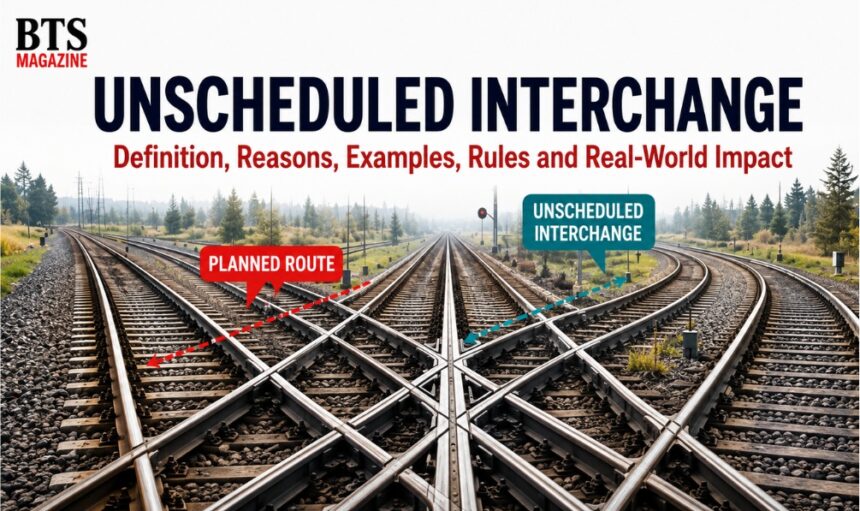
An unscheduled interchange occurs when a shipper’s freight moves over a rail carrier that was not originally planned or contracted in the shipping route. It happens without prior authorization and can lead to extra costs, delays, and service issues.
In simple words, when your rail shipment changes hands unexpectedly between railroads, that’s an unscheduled interchange.
Unscheduled Interchange vs. Scheduled Interchange
| Feature | Scheduled Interchange | Unscheduled Interchange |
|---|---|---|
| Definition | Pre-planned exchange of freight between railroads with prior agreement. | Unexpected exchange of freight between railroads without prior approval. |
| Authorization | Approved in advance by shipper. | Not approved by shipper. |
| Cost Impact | Usually included in the rate. | May result in additional charges. |
| Common Cause | Planned routing, connections, or agreements. | Service disruptions, congestion, or operational issues. |
| Shipper Control | High | Low |
Why Does Unscheduled Interchange Happen?
Several reasons can cause an unscheduled interchange:
- Railroad congestion
- Track maintenance or closures
- Service disruptions
- Equipment shortages
- Operational decisions by the carrier
Impact of Unscheduled Interchange
An unscheduled interchange can affect your shipment in many ways:
- Higher transportation costs
- Delivery delays
- Damage to freight (in some cases)
- Loss of control and visibility
Real-World Example
A steel manufacturer in Chicago ships products to a customer in Texas using Railroad A. Due to track maintenance, Railroad A transfers the shipment to Railroad B without notifying the shipper. The freight arrives 2 days late and with an extra charge. This is an example of an unscheduled interchange.
Key Rules and Regulations
In the United States, the Surface Transportation Board (STB) oversees rail service issues, including
How to Avoid Unscheduled Interchange
Shippers can take steps to reduce the chances of unscheduled interchanges:
Unscheduled Interchange in Supply Chain
In today’s global supply chain, reliability is key. Shippers need more visibility, control, and communication to manage risks like unscheduled interchanges.
FAQs About Unscheduled Interchange
What is an unscheduled interchange?
An unscheduled interchange occurs when freight is transferred between railroads in a way that was not originally planned, authorized, or included in the agreed shipping route.
What causes an unscheduled interchange?
Common causes include railroad congestion, track maintenance, closures, service disruptions, equipment shortages, and operational decisions made by a carrier.
Does an unscheduled interchange increase shipping costs?
It can. An unscheduled interchange may lead to additional transportation charges, depending on the circumstances, carrier agreements, routing, and applicable terms.
Can an unscheduled interchange cause delivery delays?
Yes. When freight is unexpectedly transferred to another railroad, additional handling or routing changes can result in delivery delays and reduced shipment visibility.
How can shippers avoid unscheduled interchange?
Shippers can reduce the risk by using clear routing agreements, maintaining communication with rail carriers, monitoring shipments closely, and confirming how unexpected route or carrier changes will be handled.
Conclusion
An unscheduled interchange happens when rail freight unexpectedly moves between rail carriers outside the originally planned arrangement. While operational problems such as congestion, maintenance, equipment shortages, and service disruptions can make these transfers necessary, they may also create additional costs, delays, and visibility issues for shippers.
Understanding how an unscheduled interchange works helps businesses prepare better shipping agreements, monitor freight movement, and communicate effectively with railroad carriers. With better planning and shipment visibility, companies can reduce the potential impact of unexpected rail transfers and maintain a more reliable supply chain.
Read also: Mastering Mind Games: 10 Psychological Strategies That Help