
If you shop, run a business, or just moved to the Old Dominion, understanding Virginia sales tax matters more than you’d think. The base rate sits at 5.3%, but that’s just the starting point. Depending on where you are, you might pay a little more. Here’s the thing — Virginia keeps it simpler than a lot of states, but there are still a few quirks worth knowing about.
- What Is the Virginia Sales Tax?
- The Virginia Sales Tax Rate by Region
- Grocery and Food Tax in Virginia
- What About Prepared Food and Restaurant Meals?
- Sales Tax Exemptions in Virginia
- Virginia Use Tax Explained
- Alcohol and Other Special Taxes
- Virginia Sales Tax Holiday
- How to File Virginia Sales Tax
- Who Collects and Pays the Tax?
- A Quick Recap of Virginia Retail Sales Tax
- Tips for Staying on Top of It
- Final Thoughts
Let’s break it all down in plain English.
What Is the Virginia Sales Tax?
Virginia sales tax is a tax charged on the sale, lease, and rental of goods and certain services in the state. Most tangible items you buy at a store fall under it.
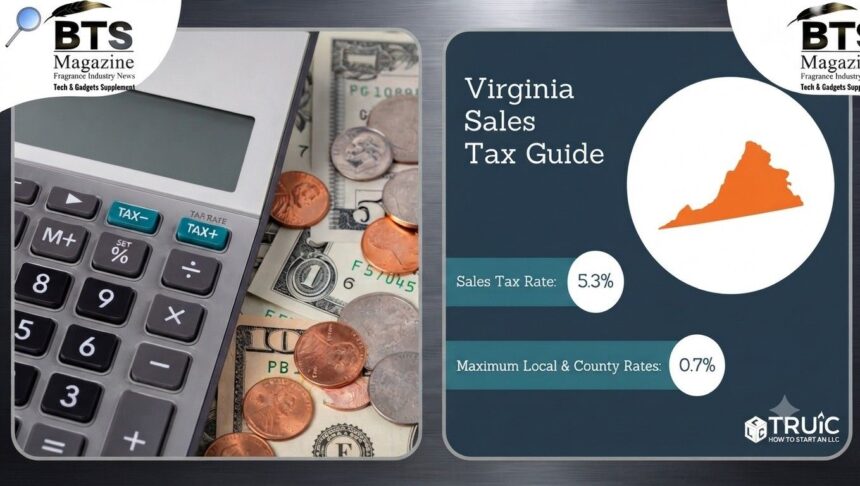
The general base rate is 5.3%. That breaks down into a 4.3% state portion and a 1% local portion. So even the “base” already includes a small local piece.
To be honest, this setup makes Virginia’s system feel pretty consistent compared to states where local rates jump all over the place.
The Virginia Sales Tax Rate by Region
While 5.3% is the general rate, some areas charge more. The extra usually goes toward regional transportation and local projects.
Northern Virginia and Hampton Roads
In Northern Virginia and the Hampton Roads region, there’s an added 0.7% state tax. That brings the total to 6%.
Northern Virginia includes cities like Alexandria, Fairfax, Falls Church, Manassas, and Manassas Park, plus counties such as Arlington, Fairfax, Loudoun, and Prince William.
Hampton Roads covers places like Chesapeake, Norfolk, Virginia Beach, Newport News, and Williamsburg, along with a few nearby counties.
Areas With Even Higher Rates
Some localities tack on an extra 1% for a 6.3% combined rate. These include Charlotte County, Danville, Gloucester County, Halifax County, Henry County, Northampton County, and Patrick County.
A few spots go all the way up to 7%. James City County, Williamsburg, and York County land at that higher mark.
So the Virginia sales tax rate really does depend on your exact location. Always check before assuming.
Grocery and Food Tax in Virginia
Food is where things get a little friendlier for shoppers. Groceries for home consumption are taxed at just 1%.
What’s interesting is that the state eliminated its portion of the grocery tax back in 2023. So that 1% you see now is a local tax only. Certain personal care items get the same reduced 1% treatment.
That’s a nice break when you’re filling up your cart for the week.
What About Prepared Food and Restaurant Meals?
Prepared food is a different story. Restaurant meals and ready-to-eat food get taxed at the standard sales tax rate for your area.
On top of that, cities and counties can add a local “Food and Beverage Tax.” Counties can charge up to an extra 4%, and cities can go up to 6.5%.
This also covers prepared items sold at grocery stores, including ice cream packages smaller than 16 ounces. So that grab-and-go meal costs a bit more than a bag of groceries.
Sales Tax Exemptions in Virginia
Not everything gets taxed. Virginia offers a handful of exemptions that help shoppers and organizations alike.
Items That Are Exempt
- Prescription drugs — exempt
- Non-prescription (over-the-counter) drugs — exempt
- Feminine hygiene products — exempt
These exemptions cover everyday essentials, which is a genuine help for families.
Items That Are Taxed
Clothing, on the other hand, is taxed in Virginia. There’s no special clothing exemption like you’ll find in some neighboring states.
Entity and Use-Based Exemptions
Beyond specific products, sales tax exemptions in Virginia also apply to certain buyers and situations. Nonprofits, government agencies, and religious organizations can often qualify.
There’s also the resale exemption, which is one of the most common. If a business buys goods to resell them, it usually doesn’t pay sales tax on that purchase. Buyers claiming an exemption typically need to provide a proper exemption certificate.
Virginia Use Tax Explained
Here’s one that trips people up. The Virginia use tax applies to items you buy from out of state but use inside Virginia when sales tax wasn’t collected.
The rate matches the regular sales tax rate for your area — 1% for food and hygiene items, and 5.3% to 7% for non-food items.
For individuals, this use tax kicks in on untaxed out-of-state purchases exceeding $100 per year, like items ordered from mail-order catalogs. It’s reported using the Consumer’s Use Tax Form (CU-7), which is due annually.
The sales tax and use tax work together. One or the other applies, so the same purchase isn’t taxed twice.
Alcohol and Other Special Taxes
A few things carry their own tax treatment worth mentioning.
Alcohol Tax
Alcohol in Virginia is taxed at 11.5%. That’s noticeably higher than the general retail sales tax, so keep that in mind for your next celebration.
Disposable Plastic Bag Tax
Certain cities and counties in Virginia charge a 5-cent tax on disposable plastic bags. It’s not statewide — only select localities have adopted it. Still, it’s worth remembering to bring your reusable bags.
Virginia Sales Tax Holiday
Virginia runs a yearly sales tax holiday. During this short window, some items can be purchased without the usual sales tax.
These holidays typically focus on things like school supplies, clothing, and emergency preparedness gear. The exact dates and qualifying items can shift year to year, so check the current details before you plan your shopping trip.
How to File Virginia Sales Tax
If you run a business, filing is a big part of the deal. Dealers collect the tax from customers and then send it to the state.
The New Form ST-1
Starting with the April 2025 filing period, all sales tax filers use Form ST-1. This one form replaces the older ST-9, ST-8, ST-7, and ST-6 forms.
Sales tax filing in Virginia must be done electronically. You can file through eForms or through your business account online.
Filing Frequency and Deadlines
Your filing schedule — either monthly or quarterly — depends on your tax liability. The state decides which one fits you.
Returns are due on the 20th of the month following the close of the filing period. And here’s a key point: you file even if you had no sales to report. Skipping it because business was slow isn’t an option.
Who Collects and Pays the Tax?
Generally, dealers handle the collection. When you buy something, the dealer adds the sales tax at checkout, holds it, then remits it to the state when they file.
So as a shopper, you pay it at the register. As a business owner, you’re responsible for collecting it correctly and sending it in on time. Getting this right keeps you out of trouble with penalties and interest.
A Quick Recap of Virginia Retail Sales Tax
Let’s pull the main points together:
- Base rate: 5.3% (4.3% state + 1% local)
- Northern Virginia & Hampton Roads: 6%
- Some localities: 6.3% or up to 7%
- Groceries: 1% (local only)
- Prescription and OTC drugs: exempt
- Feminine hygiene products: exempt
- Clothing: taxed
- Alcohol: 11.5%
That covers the everyday stuff most people run into.
Tips for Staying on Top of It
A little planning goes a long way. If you’re a business, mark your calendar for that 20th-of-the-month deadline and set reminders.
If you’re a shopper, it pays to know your local Virginia sales tax rate, especially if you live near a regional border where the rate changes. And keep an eye out for the annual sales tax holiday — those savings add up.
When in doubt, the Virginia Department of Taxation is the official source for rates, forms, and exemption rules. Their locality lookup tool makes it easy to confirm the exact rate for any city or county.
Final Thoughts
Virginia sales tax isn’t as complicated as it first looks. Once you understand the base rate, the regional add-ons, and the common exemptions, the whole picture clicks into place. Whether you’re budgeting for groceries or handling sales tax filing in Virginia for your business, knowing these rules saves you time and stress.
If you want to see how Virginia stacks up against other states, the broader picture is fascinating — you can read more about sales taxes in the United States to compare rates, exemptions, and how each state handles things differently.
Continue reading: Definition CBA: What It Really Means and Why It Matters