

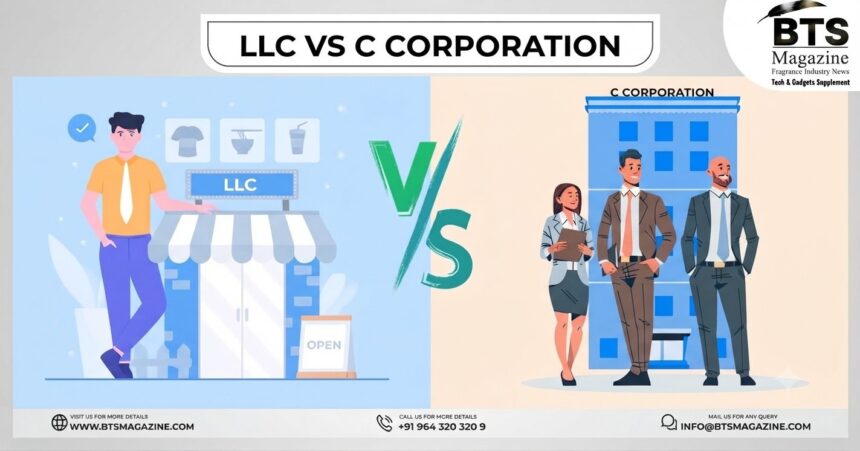
The difference between LLC and Inc trips up a lot of new business owners, and honestly, it’s easy to see why. Both protect your personal stuff if the business gets sued. Both make your company look more official. But underneath, they work in pretty different ways.
- What Does LLC Actually Mean?
- What Does Inc Mean?
- The Core Difference Between LLC and Inc
- Ownership: Members vs. Shareholders
- Taxes: Pass-Through vs. Corporate Tax
- Management: Casual vs. Structured
- Paperwork and Formality
- Liability Protection: Do Both Protect You?
- Flexibility: Where LLCs Win
- Raising Money: Where Corporations Win
- Pros and Cons of an LLC
- Pros and Cons of an Inc
- Which One Should You Pick?
- Common Mistakes People Make
- Can You Switch Later?
- Final Thoughts
Here’s the thing. Picking the right one affects your taxes, your paperwork, and how you actually run things day to day. So let’s break it all down in plain English.
What Does LLC Actually Mean?
LLC stands for limited liability company. It’s a business structure that mixes the simplicity of a sole proprietorship with the protection of a corporation.
The main perk? Your personal assets stay separate from your business. If the company owes money or gets sued, your house and savings usually stay safe. That’s the “limited liability” part.
LLCs are popular with freelancers, small shops, and single-owner businesses. They’re flexible and don’t drown you in rules.
What Does Inc Mean?
“Inc” is short for incorporated. When you see it after a company name, that business is set up as a corporation.
A corporation is its own legal entity. It can own property, sign contracts, and even keep going long after the original owners leave. That’s something an LLC can’t always do as smoothly.
Corporations come in two main flavors: the C-corp and the S-corp. We’ll touch on those in a bit.
The Core Difference Between LLC and Inc
At the simplest level, the difference between LLC and Inc comes down to structure and ownership.
An LLC has “members” who own it. A corporation has “shareholders” who own stock. That single fact shapes how each one raises money, pays taxes, and gets managed.
To be honest, if you remember nothing else, remember this: LLCs are flexible, corporations are formal.
Ownership: Members vs. Shareholders
In an LLC, ownership is pretty relaxed. You can have one member or a hundred. You split profits however you agree to, not always based on who put in the most cash.
A corporation works differently. Ownership is tied to shares of stock. More shares means more ownership and usually more voting power.
What’s interesting is that corporations can sell stock to investors easily. That’s why startups chasing big funding often go the Inc route.
Taxes: Pass-Through vs. Corporate Tax
This is where the difference between LLC and Inc really shows up.
How LLCs Get Taxed
Most LLCs use pass-through taxation. The business itself doesn’t pay federal income tax. Instead, profits pass through to the owners, who report it on their personal returns.
Simple, and it avoids being taxed twice.
How Corporations Get Taxed
A C-corp pays corporate tax on its profits. Then, if it hands out dividends, shareholders pay tax again on that money. People call this “double taxation.”
An S-corp gets around this. It uses pass-through taxation like an LLC, but it has strict rules about who can own shares and how many owners it can have.
Management: Casual vs. Structured
An LLC lets you run things loosely. Members can manage it themselves, or hire someone to do it. No board meetings required.
A corporation has a set structure. You need a board of directors, officers, and regular shareholder meetings. There’s a chain of command baked right in.
If you like keeping things simple, an LLC feels less like a job with extra homework.
Paperwork and Formality
Corporations demand more paperwork. Annual reports, meeting minutes, bylaws, and detailed records are part of the deal.
LLCs are lighter. You still file some documents, but the ongoing rules are far more forgiving.
Here’s the thing though. That extra structure in a corporation can actually help when you’re dealing with investors who want everything documented.
Liability Protection: Do Both Protect You?
Yes, both give you liability protection. That’s the whole point of forming a business entity in the first place.
Whether you go LLC or Inc, your personal finances get a shield against business debts and lawsuits. Just don’t mix personal and business money, or that shield can crack.
So when it comes to protection alone, there’s no huge difference between LLC and Inc. They both do the job.
Flexibility: Where LLCs Win
LLCs are the champions of flexibility. You choose how to split profits. You choose how to manage. You even choose how you want to be taxed.
Want to be taxed like a sole proprietor? You can. Want to be taxed like an S-corp? That’s often possible too.
Corporations don’t bend like that. The rules are the rules.
Raising Money: Where Corporations Win
If you dream of outside investors or going public someday, a corporation makes more sense.
Investors love stock. It’s clean, tradable, and easy to understand. Venture capital firms usually expect a C-corp before they write a check.
An LLC can bring in investors too, but it’s clunkier. So the difference between LLC and Inc really matters here based on your growth plans.
Pros and Cons of an LLC
Let me lay it out simply.
LLC Pros
- Easy to set up and maintain
- Pass-through taxation avoids double tax
- Flexible profit sharing and management
- Solid liability protection
LLC Cons
- Harder to raise big outside investment
- Can’t issue stock
- Some states charge annual fees or franchise taxes
Pros and Cons of an Inc
Now the corporation side.
Inc Pros
- Easy to raise money through stock
- Clear, professional structure
- Can exist forever, even as owners change
- Good for attracting investors
Inc Cons
- More paperwork and formal rules
- Possible double taxation with a C-corp
- Higher setup and upkeep costs
Which One Should You Pick?
There’s no one-size-fits-all answer. It depends on your goals.
Best for Small Businesses and Freelancers
If you’re a solo owner or run a small local business, an LLC usually fits best. Less paperwork, easier taxes, and plenty of protection.
Coming from a sole proprietor setup? An LLC is often the natural next step.
Best for Startups and Growth
Planning to raise venture money or bring on lots of investors? A corporation, especially a C-corp, is probably your better bet.
The structure is exactly what serious investors expect to see.
Common Mistakes People Make
A lot of folks assume the difference between LLC and Inc is just the name. It isn’t.
Others pick a corporation without realizing they’ll face double taxation. Then there are people who skip separating business and personal accounts, which weakens their liability protection.
Take your time. Talk to an accountant if you’re unsure. This choice sticks around for a while.
Can You Switch Later?
Yes, you can. Many businesses start as an LLC and later convert to a corporation as they grow.
It takes some paperwork and maybe a lawyer’s help, but it happens all the time. So you’re not locked in forever if your needs change.
Final Thoughts
At the end of the day, the difference between LLC and Inc comes down to how you want to run, tax, and grow your business. LLCs give you flexibility and simplicity. Corporations give you structure and easier access to funding.
Both offer real liability protection, so you can’t really go wrong on that front. Just match the choice to your actual plans, not what sounds fancier.
If you want to dig deeper into the details, the Wikipedia page on the limited liability company is a solid place to read more and compare notes before you decide.
Continue reading: Your Card Does Not Support This Type of Purchase – Here’s Why and How to Fix It