

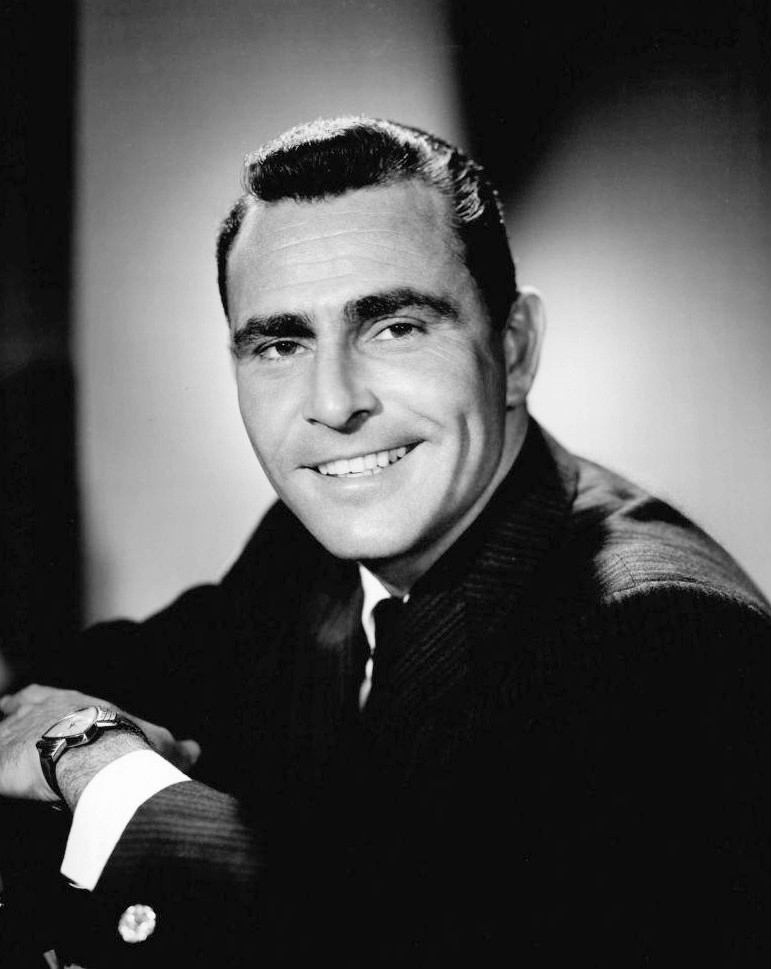
If you typed “serlig” into a search bar, you probably meant Rod Serling. No judgment — it’s one of those names that looks wrong no matter how many times you write it. But the guy himself? Absolutely unforgettable.
- Quick Bio: Rod Serling at a Glance
- So Who Actually Was Rod Serling?
- Growing Up in Binghamton
- The War That Shaped Everything
- College, Carol, and Learning the Craft
- Radio Rejections and the Move to TV
- The Script That Changed Everything
- Building The Twilight Zone
- Night Gallery, Planet of the Apes, and the Later Years
- The Fights He Picked Off-Screen
- Awards and Recognition
- How He Died
- What He Left Behind
- The Bottom Line
Serling created The Twilight Zone, sure. But before that, he survived combat in the Philippines, got rejected by radio stations for years, fought network censors almost daily, and somehow found time to write some of the sharpest television scripts the medium has ever seen. He was complicated, driven, and deeply angry at the world in all the right ways.
This is the full story.
Quick Bio: Rod Serling at a Glance
| Detail | Information |
|---|---|
| Full Name | Rodman Edward Serling |
| Born | December 25, 1924 — Syracuse, New York |
| Died | June 28, 1975 (aged 50) — Rochester, New York |
| Spouse | Carolyn Louise Kramer (married July 31, 1948) |
| Children | Jodi (born 1952), Anne (born 1955) |
| Parents | Esther (née Cooper) and Samuel Lawrence Serling |
| Education | Antioch College, B.A. in Literature, 1950 |
| Occupation | Screenwriter, TV producer, narrator, teacher |
| Notable Works | The Twilight Zone, Night Gallery, Planet of the Apes |
| Awards | 6 Emmy Awards, Peabody, Golden Globe, Hugo |
So Who Actually Was Rod Serling?
Short answer: one of the most important writers American television ever produced.
He got his start writing live TV dramas in the 1950s — a time when nobody quite knew what television was supposed to be. And while most writers were playing it safe, Serling kept picking fights. With sponsors. With executives. With anyone who tried to water down his scripts.
Hollywood nicknamed him “the angry young man,” which honestly tracks. He racked up nine Emmy nominations over his career, winning six times. Not bad for a kid from Binghamton who used to put on plays in his parents’ basement.
Growing Up in Binghamton
Serling was born on Christmas Day, 1924, in Syracuse, New York — the second son of Esther and Samuel Lawrence Serling, a Jewish family navigating the aftermath of the Depression. His dad started out as a grocer, eventually becoming a butcher when the store went under.
The family moved to Binghamton when Rod was two. That small upstate city would stay with him his whole life. Decades later, a plaque near his hometown high school carries the quote: “Everybody has a hometown. Binghamton’s mine.”
The Kid Who Wouldn’t Shut Up
His older brother Robert — who went on to become a novelist — once told a story about a car ride from Binghamton to Syracuse. The whole family stayed quiet to see if Rod would notice nobody was responding to him. He talked the entire hour without pausing once.
In school, teachers mostly wrote him off as a class clown. The one who didn’t was a seventh-grade English teacher named Helen Foley, who pushed him toward debate and public speaking. He ran with it. By high school, he was writing for the school newspaper and giving speeches at graduation.
The War That Shaped Everything
When Serling graduated in 1943, the U.S. was deep into World War II. He enlisted the morning after receiving his diploma — following his brother into the Army — and ended up in the 511th Parachute Infantry Regiment, 11th Airborne Division.
He trained as a paratrooper, boxed as a flyweight (breaking his nose at least twice), and eventually shipped out to the Pacific Theater.
What He Saw in the Philippines
His unit fought in both the Battle of Leyte and the Battle of Luzon. Somewhere along the way, Serling got transferred to a demolition team the men called “The Death Squad” — a nickname that came directly from the casualty rate.
The things he witnessed there never left him. A close friend, Melvin Levy, was killed when a supply crate accidentally fell from a plane above them. Serling led the funeral.
He came home wounded, decorated with the Purple Heart and Bronze Star, and deeply scarred. He later said he turned to writing because he needed to get the war out of his chest somehow. That’s not a metaphor. You can feel the combat in his scripts — the randomness of death, the weight of guilt, the fragility of people.
College, Carol, and Learning the Craft
After his discharge in 1946, Serling used the G.I. Bill to enroll at Antioch College in Ohio. He started in physical education — which makes a kind of sense for a guy who’d just spent three years jumping out of planes — but quickly drifted toward literature and theater.
At the campus radio station, he met a student named Carolyn Louise “Carol” Kramer. She turned him down initially, citing his campus reputation. Eventually she gave in, and they married on July 31, 1948. They stayed married until he died. They had two daughters: Jodi in 1952, Anne in 1955.
One more detail from his college years that’s almost too strange to believe: he tested parachutes and ejection seats for the Army Air Forces on the side. One of those tests paid $1,000 — for a seat that had already killed three people. He took the job anyway.
Radio Rejections and the Move to TV
Serling’s first real professional work was in radio. He volunteered at WNYC in New York after the war, then bounced around Ohio stations writing for whatever they needed.
He won a national scriptwriting competition for the radio program Dr. Christian — his first real taste of recognition. But radio as an industry frustrated him. He watched it get cheaper and lazier, chasing the lowest common denominator. “Radio dug its own grave,” he’d say later.
By 1950, he was earning $75 a week as a continuity writer at WLW in Cincinnati. He kept collecting rejection slips on the side — around forty in those early years — and quietly pivoting toward television.
The Script That Changed Everything
The big break came in 1955. Kraft Television Theatre aired Serling’s 72nd script — a show about brutal corporate politics called “Patterns.” He and his wife had gone out for the night, leaving the babysitter with instructions that nobody would call because they’d just moved.
The phone rang all night.
The New York Times called it “one of the high points in the TV medium’s evolution.” Demand for a second live performance was so high that the network aired it again a month later — essentially inventing the TV rerun. Serling went from struggling freelancer to the most talked-about writer on television almost overnight.
Building The Twilight Zone
Fame didn’t fix the thing that drove Serling crazy: censorship. Sponsors read his scripts before they aired and cut anything that made them nervous. A reference to Emmett Till? Gone. A line of dialogue that named a competitor’s product? Gone.
He once had the phrase “Got a match?” deleted from a script because the sponsor sold lighters.
Fed up, he decided the only way around the gatekeepers was to wrap his ideas in science fiction. Hard to argue that an alien story is offensive to anyone. In July 1959, he signed with CBS, and on October 2, The Twilight Zone premiered.
Five seasons. 156 episodes. Serling personally wrote 92 of them. The show won awards, built a fanbase that never really went away, and got canceled twice before finally ending in 1964. He sold the rights to CBS — partly, his wife later said, because the production costs were bleeding him dry.
The Show That Won’t Die
The serlig legacy is almost entirely tied to that one series now, and for good reason. It’s been revived three times — 1985, 2002, and 2019, with Jordan Peele hosting the latest version. There’s a Disney ride based on it. A U.S. postage stamp. That opening monologue is so embedded in the culture that people quote it without knowing they’re quoting it.
Night Gallery, Planet of the Apes, and the Later Years
After The Twilight Zone, Serling created Night Gallery for NBC in 1969 — a darker, more overtly horror-focused anthology where he played the host introducing each story.
He didn’t have creative control this time, and it showed. Producers added silly comedy sketches between the dramatic segments. Serling hated it. He kept writing for the show anyway, but by season three they were rejecting most of what he submitted.
In between, he co-wrote Planet of the Apes (1968) — the original, with Charlton Heston. If you’ve seen it, you know the ending. Serling’s fingerprints are all over it.
The Fights He Picked Off-Screen
Serling wasn’t content to sneak his politics into fictional stories. He said things plainly when he felt it mattered.
He was openly antiwar, especially as Vietnam dragged on, and publicly supported Eugene McCarthy’s presidential campaign in 1968. He wrote scripts directly inspired by the murder of Emmett Till, even when censors gutted them. His teleplay A Town Has Turned to Dust went after racial bigotry in the American Southwest — one critic called it “a raw, tough and at the same time deeply moving outcry against prejudice.”
He believed, genuinely, that television had an obligation to say something. Not just sell soap.
Awards and Recognition
Six Emmy Awards. A Peabody. A Golden Globe. A Hugo Award for science fiction writing.
In 1985, a decade after his death, he was inducted into the Television Hall of Fame. In 2007, TV Guide put him at No. 1 on their “25 Greatest Sci-Fi Legends” list — the only actual person, not a fictional character, to make it.
The Science Fiction Hall of Fame followed in 2008.
How He Died
Serling smoked constantly — three, sometimes four packs a day by most accounts. In May 1975, he had a heart attack and spent two weeks in the hospital before being sent home. Two weeks after that, a second heart attack.
The decision was made to try open-heart surgery. The procedure lasted ten hours. He had a third heart attack on the operating table and never recovered. He died on June 28, 1975, at Strong Memorial Hospital in Rochester. He was fifty years old.
His funeral was held July 2 at Lake View Cemetery in Interlaken, New York — a place his family had summered for years, going back to his honeymoon.
What He Left Behind
His widow Carol spent the next four decades keeping his work alive. She called the ongoing cultural obsession with The Twilight Zone a “cottage industry” — something that kept “bobbing up” no matter how much time passed. She died in January 2020, at 90.
Binghamton still claims him. Every year the city hosts the Rod Serling Video Festival for students and Serlingfest for fans. In September 2024, a statue of him was unveiled in Recreation Park, the base inscribed with his own words about the hometown that made him.
His influence on how writers use genre fiction — using monsters and aliens to talk about race, war, and power — is harder to measure but everywhere to see.
The Bottom Line
Rod Serling was fifty years old when he died. In that time, he fought in a war that broke something in him, built a career out of pure stubbornness, changed what television was allowed to say, and wrote stories people are still watching decades later.
The name gets misspelled. The work doesn’t get forgotten.
If you want to go deeper, The Twilight Zone is the obvious place to start — but read about the man too. His full biography is documented on his Wikipedia page, and it’s genuinely worth an hour of your time.
Continue reading: William Shatner Warning: What the Star Trek Legend Wants You to Know