

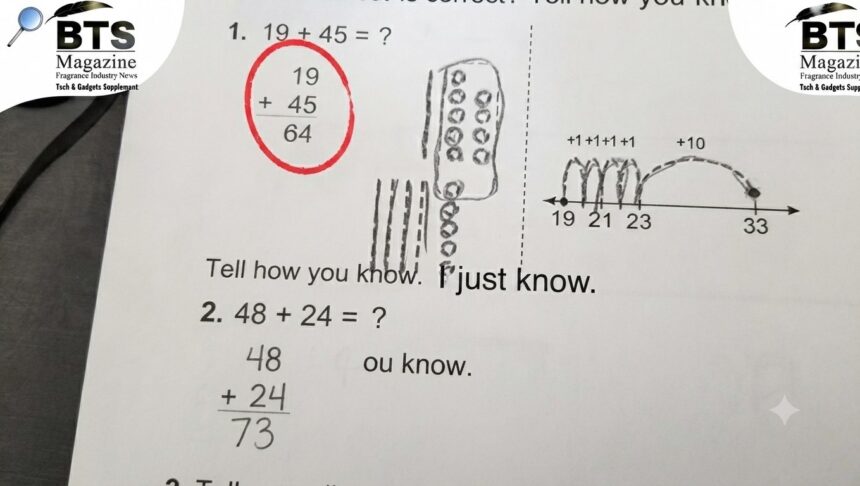
If you’ve ever helped your kid with homework and stared at the page thinking “what is this even asking?”, you’re not alone. The internet is full of ridiculous common core math examples that turned simple arithmetic into brain-twisting puzzles. Parents shared photos, teachers defended the methods, and everyone had an opinion.
- What Is Common Core Math Anyway?
- Why Common Core Standards Focus on “Understanding”
- The Most Ridiculous Common Core Math Examples
- 1. The “Number Line” Subtraction Nightmare
- 2. Breaking Numbers Apart to Add
- 3. The Infamous “Show Your Thinking” Problem
- 4. Drawing Dots for Simple Multiplication
- Why These Examples Went Viral
- What Parents Actually Said
- What Teachers and Experts Say
- Why This Matters More Than You’d Think
- Did Common Core Math Get Better?
- How to Help Your Kid Without Losing Your Mind
- The Bottom Line on Ridiculous Common Core Math Examples
- Frequently Asked Questions
Here’s the thing though. Some of these examples really are confusing. Others just look weird until someone explains the logic. Let’s break it all down.
What Is Common Core Math Anyway?
Common Core is a set of education standards adopted by most U.S. states starting around 2010. The goal was to make sure students across the country learned the same core skills at each grade level.
For math, the idea was simple on paper. Teach kids to understand numbers, not just memorize steps. Sounds good, right? Well, the way it played out on worksheets is where things got messy.
Why Common Core Standards Focus on “Understanding”
The Common Core standards push what’s called number sense. Instead of just teaching kids to solve 27 + 15 the old way, teachers ask them to break numbers apart and think about why the answer works.
To be honest, that’s a reasonable goal. The problem? The methods often look bizarre to anyone raised on traditional math.
Old Math vs. New Math Curriculum
Old math was direct. You lined up the numbers, carried the one, and got your answer. Fast and clean.
The new math curriculum wants students to draw boxes, count up, and use strategies like “friendly numbers.” It takes longer and looks strange, but the aim is deeper thinking.
The Most Ridiculous Common Core Math Examples
This is the part everyone came for. Some of these ridiculous common core math examples went viral for good reason. Let’s look at a few that stumped parents everywhere.
1. The “Number Line” Subtraction Nightmare
One famous example asked students to subtract 12 from 32 using a number line. Instead of just writing 32 − 12 = 20, kids had to draw jumps forward from 12 up to 32 and add the jumps together.
A dad who happened to be an engineer wrote a now-famous letter saying he couldn’t understand his second grader’s homework. That says a lot.
2. Breaking Numbers Apart to Add
Another head-scratcher: solving 8 + 5 by first “making a ten.” Kids are taught to take 2 from the 5, add it to the 8 to make 10, then add the remaining 3.
So 8 + 5 becomes 10 + 3. The math checks out, but for a simple sum, it feels like way too many steps.
3. The Infamous “Show Your Thinking” Problem
Some worksheets marked a correct answer wrong because the student didn’t use the assigned method. One kid solved 5 × 3 as 5 + 5 + 5 and lost points for not writing 3 + 3 + 3 + 3 + 3.
That one drove parents up the wall. The answer was right. The method was just different.
4. Drawing Dots for Simple Multiplication
Instead of memorizing times tables, some early lessons had students draw arrays of dots. Picture a kid drawing 24 tiny dots to figure out 4 × 6.
What’s interesting is the concept behind it isn’t bad. Arrays help kids see multiplication. But it sure looks ridiculous on a homework sheet.
Why These Examples Went Viral
Photos of confusing worksheets spread fast on Facebook and Twitter. Parents felt frustrated and a little embarrassed. If a grown adult can’t do second-grade math, something feels off.
The images were easy to share and easy to laugh at. That’s exactly why these ridiculous common core math examples became such a big deal online.
What Parents Actually Said
Many parents felt shut out of their own kids’ education. They learned math one way and suddenly couldn’t help at the kitchen table anymore.
“I have a college degree and I can’t do my daughter’s homework” was a common complaint. That math homework confusion created real tension in a lot of households.
The Emotional Side of It
Homework used to be a small bonding moment. For some families, it turned into arguments and tears instead. That part often gets lost in the jokes.
What Teachers and Experts Say
Now here’s the flip side. A lot of teachers actually defend these elementary math methods.
They argue that the goal isn’t the weird-looking worksheet. It’s helping kids build a mental toolkit so they can do math flexibly later on. When a child understands why 8 + 5 equals 13, they can handle bigger problems more easily.
Are the Methods Actually Wrong?
Not really. Most of these strategies are things strong math students already do in their heads without realizing it. Common Core just tries to teach it out loud.
The issue is often the worksheet, not the idea. Bad examples and confusing wording made good concepts look ridiculous.
Why This Matters More Than You’d Think
Math skills shape a kid’s confidence for years. If early lessons feel confusing and stressful, some students start believing they’re “bad at math.”
That’s why the debate over Common Core standards got so heated. It’s not just about one worksheet. It’s about how a whole generation learns to think about numbers.
The Gap Between Home and School
Here’s the real problem. Schools changed the methods but didn’t always teach parents the new approach. So families were left guessing.
A quick parent guide or a short video would’ve solved a lot of that math homework confusion. Instead, most parents figured it out through frustration.
Did Common Core Math Get Better?
Over time, some states dropped the Common Core name or tweaked their standards. The core ideas mostly stuck around, though.
Textbook publishers also improved their materials. A lot of the worst worksheets from those early years have quietly disappeared.
How to Help Your Kid Without Losing Your Mind
If you’re facing one of these confusing assignments, don’t panic. Ask your child to show you how the teacher explained it. Kids often know the method better than we expect.
You can also just solve it the old way and the new way together. Getting the right answer matters more than the exact path you take.
The Bottom Line on Ridiculous Common Core Math Examples
So are these examples really ridiculous? Some genuinely are, especially the ones that marked correct answers wrong. Others just look silly until you understand the reasoning behind them.
The truth sits in the middle. The concepts have value, but the rollout confused a lot of good, smart parents. That’s a fair complaint.
Frequently Asked Questions
1. Why does Common Core math look so complicated?
It focuses on understanding why answers work, not just memorizing steps. That extra explanation makes simple problems look longer and more complex.
2. Are the ridiculous common core math examples online real?
Many are real photos of actual worksheets. Some, though, are exaggerated or taken out of context to get more shares online.
3. Is the old way of doing math still correct?
Yes. Traditional methods still give the right answers. Common Core just adds extra strategies alongside them.
4. Why did my kid get a right answer marked wrong?
Usually because the assignment asked for a specific method. The point was to practice that strategy, even if another way also works. Still, plenty of parents find that unfair.
5. How can I help with new math curriculum homework?
Ask your child to explain the classroom method, use online tutorials, and don’t be afraid to solve it both ways together.
Common Core math sparked one of the biggest education debates in recent memory, and the story is still worth understanding. If you want the full background on how these standards started and spread across the country, you can read more on the Common Core Wikipedia page
Continue reading: Emerging Sovereign Group: The Tiger Seed Hedge Fund You Should Know About