

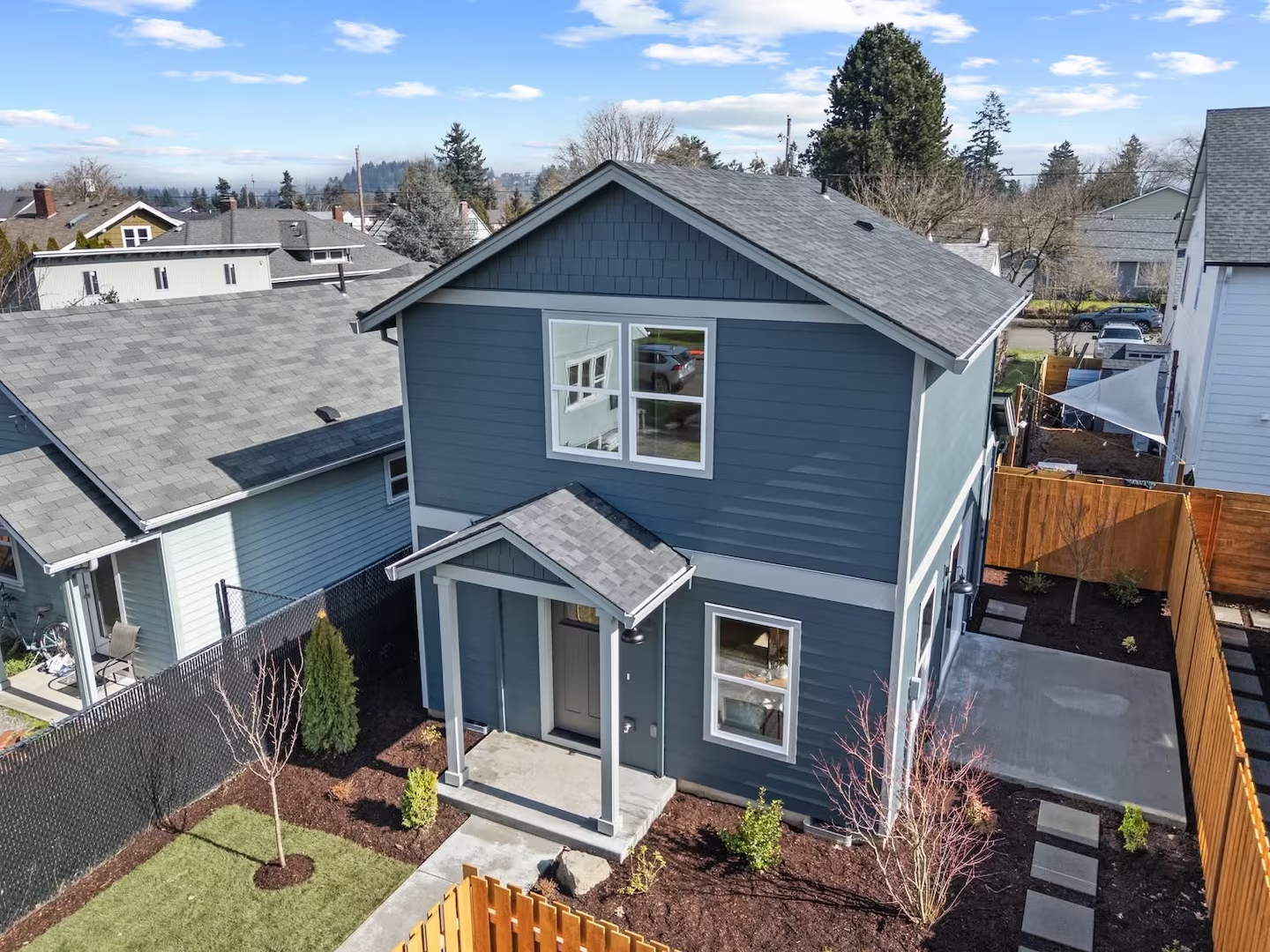
We talk a lot about affordable real estate today, but there is a specific term gaining traction that deserves our attention. If you have been following urban planning or real estate trends, you might have heard the phrase deep housing mentioned a few times.
What does this actually mean for cities, families, and communities?
Here’s the thing. Standard affordable housing often misses the mark for those who need it the most. That is exactly where this concept steps in to fill a massive gap in the market.
Let’s look at what this kind of housing really is, how it works, and why it matters so much right now.
What Exactly Is Deep Housing?
When we talk about deep housing, we are referring to homes priced for people with extremely low incomes. This goes far beyond standard rent control.
Usually, this targets households making less than 30% to 50% of the Area Median Income (AMI).
Regular affordable housing might help a middle-class family afford a city apartment. But deeply affordable units are designed specifically to prevent homelessness and protect the most vulnerable residents.
The Core Meaning of the Term
The “deep” part of the phrase refers to the depth of the subsidy required. Because the rent is so low, the financial assistance needed to build and maintain the building is incredibly high.
To be honest, it is one of the hardest types of real estate to develop.
Builders cannot make a profit on these units without heavy government intervention, grants, or non-profit backing.
The Background Behind Deeply Affordable Homes
Decades ago, housing policies were much simpler. Governments built large public housing projects to house low-income workers.
But over time, funding dried up. Many of those original projects fell into disrepair.
Cities shifted to voucher systems, hoping the private market would fix the problem. Unfortunately, the private market prioritized luxury apartments instead.
Why Normal Affordable Housing Isn’t Enough
What’s interesting is how the definition of “affordable” got warped over the years.
If a city’s average income is very high, an “affordable” apartment pegged to that average is still too expensive for a minimum-wage worker.
This created a hidden crisis. Teachers, retail workers, and fixed-income seniors found themselves completely priced out. That is why advocates started pushing for deep housing solutions that actually match lower-wage realities.
Key Facts About Deep Housing
Understanding this sector means looking at the hard numbers. The math behind these buildings is fascinating.
First, rent is usually capped at exactly 30% of the tenant’s actual income. If a tenant loses their job, their rent often adjusts downward to match.
Second, these buildings rarely stand alone. They are usually mixed-income developments or heavily subsidized non-profit operations.
Who Actually Qualifies?
Qualifications depend entirely on local AMI guidelines.
Usually, priority goes to seniors on fixed social security incomes, people with disabilities, or families transitioning out of shelters.
There are strict vetting processes. Waiting lists for these units can unfortunately stretch for years because demand massively outpaces supply.
Funding and Subsidies Explained
You might wonder who pays for this if the tenants cannot. The answer is a complex web of financing.
Developers often use Low-Income Housing Tax Credits (LIHTC) to fund construction.
They also rely on local trust funds, philanthropic donations, and state grants. It takes a massive team of financial experts just to get a single building off the ground.
How Deep Housing Compares to Market Rate
Market-rate apartments fluctuate based on supply and demand. If a neighborhood becomes trendy, rent shoots up.
Deep housing is immune to these market forces. The rent stays locked into affordability metrics permanently or for very long periods, like 50 to 99 years.
This creates a permanent safe harbor in rapidly gentrifying neighborhoods.
The Rent Calculation Differences
In a market-rate building, the landlord charges whatever people are willing to pay.
In a subsidized unit, the rent calculation is a strict mathematical formula. It looks at gross income, subtracts allowed deductions, and takes exactly 30%.
Area Median Income (AMI) Factors
AMI is the most important metric in this space.
The government calculates the median income for a specific metropolitan area. Then, they create brackets. Deeply affordable units usually target the 0-30% AMI bracket.
If you make more than that bracket allows, you lose your eligibility for these specific units.
The Social Impact of Stable Shelter
We cannot ignore the human element of this topic. Housing is healthcare. It is the foundation of a stable life.
When families secure a deeply affordable home, everything else in their life begins to stabilize.
Kids stay in the same school year after year. Parents can focus on career growth instead of surviving the next rent hike.
Health and Community Benefits
Chronic stress from housing insecurity leads to massive health problems.
Studies consistently show that people in stable, affordable homes visit the emergency room less often.
They also engage more with their local communities. They vote, they volunteer, and they build roots.
Economic Stability for Families
When you only pay 30% of your income on rent, you finally have money left over.
Families can buy better food, save for emergencies, or pay off debt.
This disposable income then flows right back into the local economy. It is a win-win for the city and the residents.
Challenges in Building Deep Housing
If this is so beneficial, why don’t we see deep housing on every corner?
The short answer is money and politics.
Building costs are astronomical right now. Materials, labor, and insurance have all skyrocketed. Building an affordable unit costs exactly the same as building a luxury unit.
Zoning and Land Costs
Finding cheap land in a city where people actually want to live is nearly impossible.
When developers do find land, local zoning laws often prevent them from building multi-family apartments.
Many suburbs only allow single-family homes, effectively locking out any chance for affordable apartment buildings.
Overcoming Neighborhood Pushback
Then there is the “Not In My Backyard” (NIMBY) phenomenon.
Even when funding and zoning line up, wealthy neighborhoods often fight these developments.
They worry about property values or traffic. Advocates spend years in community meetings just trying to get approval for a single building.
The Future of Deeply Affordable Real Estate
Despite the challenges, the future looks somewhat bright.
Cities are finally realizing that ignoring the housing crisis is more expensive than solving it. Homelessness costs taxpayer money through emergency services and policing.
Investing in deep housing is actually a long-term cost-saving measure for local governments.
Innovative Construction Methods
To lower costs, builders are getting creative.
Modular construction, where rooms are built in factories and stacked on-site like blocks, is speeding up build times.
Governments are also starting to offer up unused public land for free, as long as developers promise to build deeply affordable units.
Continue reading: James Carville Wife Health: The Truth About Mary Matalin