
When you think of dessert, you probably picture a classic slice of cake or a warm chocolate chip cookie. But if you step into the kitchen of a molecular gastronomy pastry chef, you will see something completely different.
- What Exactly Is This Role?
- Profession Quick Facts
- The Background of Culinary Science
- Key Facts About the Job
- Popular Techniques You Should Know
- How to Become a Molecular Gastronomy Pastry Chef
- Why This Culinary Art Matters Today
It often looks much more like a high-tech science lab than a traditional bakery.
To be honest, watching these culinary artists work is like watching magic happen right on a plate. They take familiar flavors and completely flip them upside down using science.
If you have ever eaten a dessert that smoked, popped, or vanished on your tongue, you have experienced this art firsthand.
What Exactly Is This Role?
A molecular gastronomy pastry chef is a culinary professional who uses chemistry and physics to create modern desserts.
They do not just mix flour, sugar, and eggs. They manipulate ingredients at a microscopic level to change their textures and shapes.
Here’s the thing. This job is not just about making things taste good. It is about surprising the person eating it.
A dessert might look like a shiny red apple, but when you crack it open, it tastes like vanilla cheesecake. It is all about playing with expectations and creating an unforgettable dining experience.
Profession Quick Facts
While this role is highly specialized, here is a quick look at what the career entails.
| Aspect | Details |
|---|---|
| Profession Name | Molecular Gastronomy Pastry Chef |
| Main Focus | Dessert innovation using science and chemistry |
| Typical Workplace | Michelin-starred restaurants, luxury hotels, R&D labs |
| Key Tools Used | Liquid nitrogen, alginate, immersion blenders, siphons |
| Required Skills | Baking fundamentals, chemistry knowledge, precision |
The Background of Culinary Science
To understand this career, we need to look at how food science found its way into fine dining.
What’s interesting is that combining science and cooking is not actually a brand-new concept. Food preservation and baking have always relied on chemical reactions.
Where Did It All Start?
The actual term “molecular gastronomy” was created in 1988 by a Hungarian physicist and a French physical chemist.
They wanted to study the science behind traditional cooking methods. Why does a soufflé rise? Why does mayonnaise emulsify?
Eventually, creative cooks realized they could use this scientific research to invent completely new ways of preparing food.
Moving From Savory to Sweet
At first, this modernist approach was mostly used for savory dishes in high-end restaurants.
However, it did not take long for dessert menus to catch up. A molecular gastronomy pastry chef quickly realized that sugar, chocolate, and fruit are perfect ingredients for chemical manipulation.
Since baking is already an exact science, adding molecular techniques to desserts was a very natural next step.
Key Facts About the Job
Working in this highly specialized field is incredibly demanding. It requires a unique blend of creativity and strict discipline.
Let’s look at a few facts about what makes this job so different from traditional baking.
It Requires Serious Chemistry Knowledge
You cannot just guess your way through molecular recipes.
If a molecular gastronomy pastry chef uses too much calcium chloride in a recipe, the dessert will taste incredibly bitter.
They have to understand pH levels, gelling temperatures, and how different proteins react to heat and cold.
Precision Is Everything
In a standard bakery, you might add a “pinch” of salt or a “splash” of vanilla. That does not work here.
Every single ingredient is weighed down to the fraction of a gram using highly sensitive digital scales. A mistake of just 0.1 grams can completely ruin the texture of a dessert foam.
Equipment Used in the Kitchen
The tools of the trade are highly specialized and often quite expensive.
Liquid Nitrogen Tanks
Liquid nitrogen sits at roughly -320°F (-196°C). It freezes ingredients instantly, creating ultra-smooth ice creams without any ice crystals.
Vacuum Sealers and Sous Vide
These chefs use vacuum chambers to remove air bubbles from sauces. They also use sous vide machines to cook fruit and custards at exact, continuous temperatures.
Popular Techniques You Should Know
If you want to understand what a molecular gastronomy pastry chef actually does all day, you have to look at their techniques.
These methods transform ordinary ingredients into wild, unexpected textures.
Spherification
This is probably the most famous technique in the molecular world.
It involves turning liquids, like strawberry juice or espresso, into small, caviar-like spheres.
When you bite into the sphere, a thin gel membrane pops, releasing the liquid juice inside your mouth.
Edible Foams and Airs
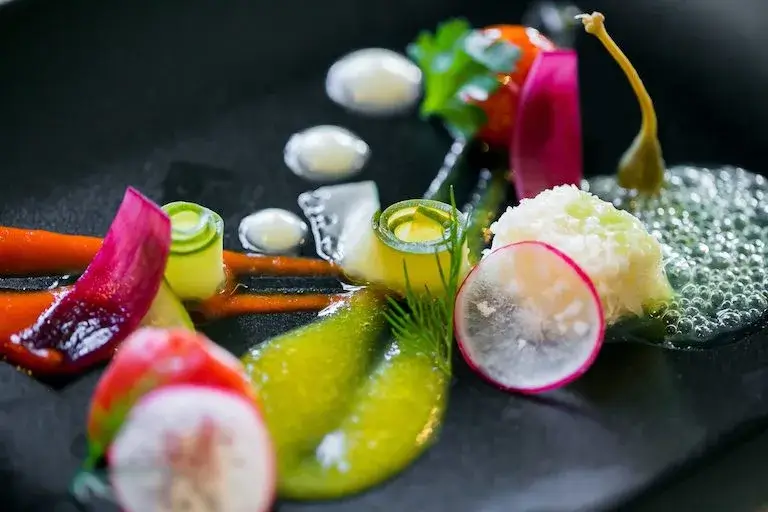
Using soy lecithin and an immersion blender, a molecular gastronomy pastry chef can turn a heavy liquid into a light, bubbly foam.
You get all the intense flavor of a heavy cream or fruit puree, but it feels as light as a cloud.
Smoking and Infusions
Smoke is no longer just for barbecue. Pastry professionals use handheld smoking guns to trap sweet wood smoke inside glass cloches.
When the waiter lifts the glass at the table, a cloud of smoke escapes, adding a campfire aroma to toasted marshmallow or chocolate desserts.
How to Become a Molecular Gastronomy Pastry Chef
There is no single path to landing this job. It takes years of hard work and dedication.
Most people in this field start with a very strong foundation in classic pastry techniques.
Education and Training
Many start by attending a traditional culinary school. You need to know how to bake a perfect sponge cake before you can turn it into an edible sponge powder.
Some schools now offer dedicated courses in food science and modern cooking techniques.
Gaining Kitchen Experience
After school, future chefs usually work under an established molecular gastronomy pastry chef in a fine dining restaurant.
This hands-on apprenticeship is crucial. It is the only way to safely learn how to handle dangerous items like liquid nitrogen and dry ice.
Why This Culinary Art Matters Today
Some people argue that molecular food is just a trend. But the truth is, it has forever changed how we think about dining.
It pushes the boundaries of human creativity and challenges our senses.
A talented molecular gastronomy pastry chef reminds us that food should be fun, surprising, and full of wonder. They turn a simple meal into an interactive, theatrical event.
Continue reading: The Ultimate Guide to the Gastronomy of France